Current Cryptocurrency News for Monday, December 1, 2025: Bitcoin and Ethereum Dynamics, Top 10 Cryptocurrency Analysis, Institutional Trends, and Market Outlook.
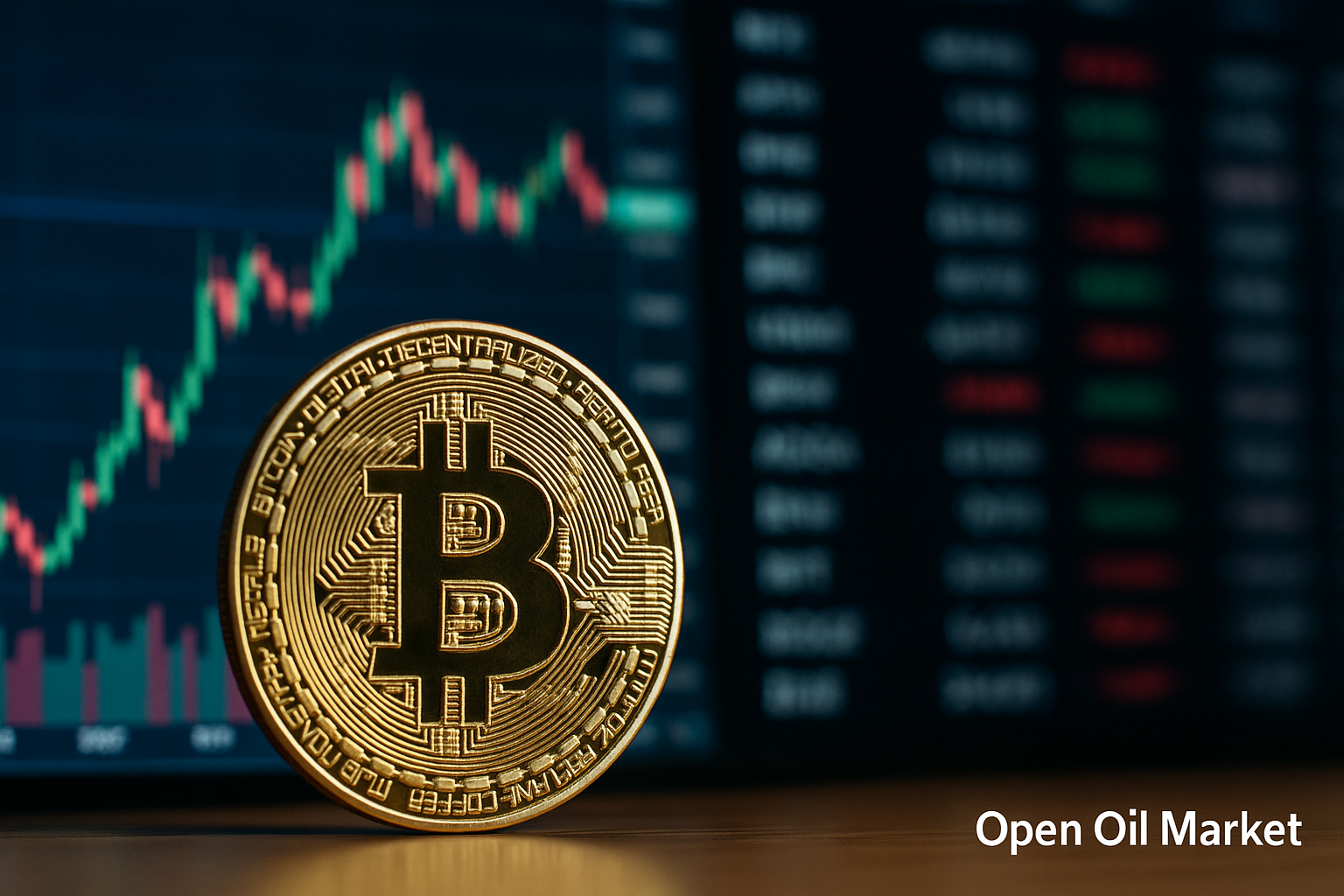
As December begins, the global cryptocurrency market is showing signs of stabilization after significant volatility: the leading cryptocurrency, Bitcoin, is consolidating in the $85,000–90,000 range amid global macroeconomic uncertainty, while institutional investors are shifting their focus to promising altcoins and new ETF products. The total market capitalization remains in the trillion-dollar range, but participant sentiment remains cautious. Investors will closely monitor the Federal Reserve's decisions and upcoming announcements regarding ETF launches in the coming days.
Cryptocurrency Market Overview
- The market leader, Bitcoin, underwent a substantial correction in November following a record rally in October (up to ~$126,000) and is currently trading at around ~$85,000–90,000—its lowest level in multiple weeks. This volatility was accompanied by the largest outflows from Bitcoin ETFs in the past year (over $3.7 billion in November); however, by the end of the month, signs of capital inflows back into this segment were noted.
- Altcoins are attracting increasing attention: the share of alternative cryptocurrencies in trading volume has grown. For example, in just the first week of the ETF rollout for Solana in November, the crypto project received over $0.6 billion, facilitated by staking yields of about 7%. Against this backdrop, U.S. regulators are poised to release ETFs for Dogecoin and XRP, thereby expanding institutional access to these assets.
- Ethereum is holding around $3,000 after a correction: an AI model predicts its price at approximately $3,360 by December 1. The ETH price is influenced by expectations of a major network upgrade and a high percentage of coins being staked (over 29% of the supply), along with accumulation by large holders (whales). Despite a recent outflow of about $1.8 billion from Ethereum ETFs, the fundamental indicators of the network remain strong—the DeFi and NFT ecosystems continue to grow.
- Institutional flows: large investors are re-engaging. After four weeks of significant outflows from Bitcoin ETFs (totaling $4.3 billion), late November saw a rebound in inflows (up to $70–80 million per day), led by funds like ARK and Fidelity. Furthermore, JPMorgan research suggests that Bitcoin could rise to $240,000 in the long run, provided favorable macro conditions remain (investors are increasingly viewing cryptocurrency as an asset class). Additionally, several U.S. states are preparing to create their own digital reserves—Texas has allocated $10 million to purchase Bitcoin via the IBIT ETF, becoming the first state to establish a so-called crypto reserve.
- Regulation and global trends: The People's Bank of China has once again confirmed its complete ban on cryptocurrency and stablecoin trading, intensifying monitoring of illegal activities. The European Union continues to implement MiCA to streamline the digital asset market. In the USA, regulators are expanding legal possibilities for investors as they approve new ETFs, while in Russia, relevant bodies are discussing legislative initiatives for cryptocurrency regulation and integration (currently without significant changes).
- Market sentiment and expectations: Technical indicators suggest oversold conditions. The daily RSI for Bitcoin dipped to two-year lows, which often precedes a local bottom. Investors are hopeful that volatility will wane by December: key factors will include the Federal Reserve's rate decisions and the progress of new investment product launches (ETFs on altcoins, expanded derivatives offerings).
Bitcoin (BTC)
Bitcoin finishes the month at around $85,000–90,000, significantly below its historic high of ~$126,000 in October. The decline is attributed to profit-taking by institutions and an overall market restructuring. However, experts note that many view the current range of $90,000–91,000 as an accumulation zone, which supports the asset's price. JPMorgan believes that Bitcoin could eventually rise to $240,000, reflecting the market's shift toward traditional macro assets.
Technically, Bitcoin is both overbought and oversold: the RSI indicator is at its lowest levels in years, suggesting a potential rebound. Institutional investments provide a crucial support factor: after the November sell-off, capital inflows through ETFs may resume. Amid such sentiments, for the first time among U.S. states, the creation of Bitcoin reserves has commenced—Texas allocated $10 million from its budget to purchase BTC (via the Bitcoin ETF IBIT), while another 15 states are developing similar initiatives.
Ethereum (ETH)
Ethereum remains around $3,000 following a correction of about 15-20% from its local maximums in October (~$3,900). This is supported by expectations of a significant network upgrade in December, which could improve scalability and reduce fees. Furthermore, since February, the first ETFs on ETH in the U.S. have broadened institutional access to Ethereum, strengthening its position. Key fundamental factors are still in play: more than a quarter of all ETH is staked, which limits liquidity, while in October, large holders continued to accumulate the asset (over 1.6 million ETH flowed into investors' wallets).
An AI model forecasts a consolidated ETH price in the range of $3,300–3,400 by early December. Despite recent outflows of about $1.8 billion from Ethereum ETFs (due to awaiting the market leader), many analysts view the current correction as a short-term pause. Under favorable conditions, such as easing monetary policy or the successful implementation of the network upgrade, Ethereum has the potential to rise to new annual highs, restoring investors' confidence.
Altcoins
The mid-market is exhibiting varied dynamics. High-performance blockchains (Solana, Avalanche, Polkadot, etc.) are receiving an additional boost thanks to new investment products and staking. Solana is trading near $140–150, aided by ETF interest (the launch of new products on SOL) and 7% yield from delegated staking. XRP, recovering from regulatory issues, climbed above $3 on news of court rulings; however, by the end of November, it corrected to around ~$2.50. Dogecoin—an iconic meme cryptocurrency—is supported by retail attention and announcements of an upcoming ETF: its price hovers around $0.15, but volatility remains significant.
Some smart contracts, such as Cardano and Tron, retain their positions in the top 10 by market capitalization thanks to their network scales and communities, despite being removed from past peaks. Networks focused on DeFi and NFT (e.g., BNB Chain, Avalanche) continue to expand, positively impacting their tokens. New trends also include projects focused on privacy and scalability (ZK technologies, L2), which could become growth points in the medium term.
Top 10 Most Popular Cryptocurrencies
- Bitcoin (BTC) — ~$90,000. The largest cryptocurrency (~55–58% of market capitalization). Bitcoin serves as the market's primary barometer and is often referred to as "digital gold." Its limited supply (21 million coins) and growing institutional demand support its long-term potential.
- Ethereum (ETH) — ~$3,000. The second-largest cryptocurrency by market cap (~12–13% of the market) and the foundational platform for smart contracts. The transition to Proof-of-Stake and a deflationary model (fee burning) has strengthened trust in ETH. The network serves as the foundation for DeFi and NFTs.
- Tether (USDT) — ~$1, the largest stablecoin (~$185 billion in capitalization). Pegged to the U.S. dollar, it serves as the main means of liquidity transfer between exchanges. USDT provides stability in trading, allowing for quick switches between crypto assets without conversion to fiat.
- Binance Coin (BNB) — ~$920. The native token of the Binance exchange ecosystem (ranked in the top 5 by market cap). BNB is used to pay fees on Binance and participate in various ecosystem services (Launchpad, NFT marketplace, staking, etc.). Despite regulatory pressure in several countries, the token's wide applicability ensures sustained demand.
- USD Coin (USDC) — ~$1, the second-largest stablecoin (~$76 billion in capitalization). Issued by a consortium of companies (Circle and Coinbase) and fully backed by the dollar. USDC garners trust from retail and institutional participants, widely used for transactions and holding funds during market volatility.
- XRP (Ripple) — ~$2.50. The token of the Ripple system for fast cross-border payments. Following favorable legal outcomes in 2025, XRP regained investor trust: in November, it briefly soared above $3 (a maximum since 2018). Banks and fintech companies continue to explore XRP-based solutions for international transfers.
- Solana (SOL) — ~$150. A high-performance blockchain platform for scalable applications. SOL has shown significant growth in 2025 due to the expansion of the DeFi, NFT, and Web3 ecosystems. Institutions highlight Solana's appeal—low fees and rapid transaction speeds—and the launch of ETFs on SOL and participation in staking pools support its price near multi-year highs.
- Cardano (ADA) — ~$0.55. A blockchain developed with a scientific approach. ADA remains in the top ten by market cap due to its active community and prospects for further network upgrades (e.g., increased scalability). Although the current price is far from its historical highs of 2021, the project has strong fundamentals and steady ecosystem growth.
- Dogecoin (DOGE) — ~$0.15. The most famous meme cryptocurrency. DOGE stays in the top ranks thanks to strong community support and periodic media mentions and celebrity endorsements. This asset is highly volatile, with a capitalization of around $20 billion. The development of Dogecoin is driven by retail demand and overall interest in simple "humorous" crypto projects.
- TRON (TRX) — ~$0.30. A cryptocurrency of the Tron blockchain platform, focused on entertainment and digital content. TRX is used for transactions within the Tron ecosystem and the issuance of stablecoins (many USDT are issued on this network). With high throughput and low fees, the platform has attracted payment projects, enabling TRX to solidify its position in the top ten.
Outlook and Predictions
Globally, the cryptocurrency market approaches 2026 in a more mature and resilient state. The strong growth of many coins in 2025 has confirmed a long-term bullish trend: even after the recent correction, most leaders are trading at considerably higher levels compared to the beginning of the year. Increased institutional presence and the emergence of regulated investment products have widened the market base, laying a foundation for further development. Optimists believe that after consolidation, a new round of growth could commence: depending on macroeconomic conditions, forecasts for Bitcoin in 2026 include a range of $150,000–200,000, while Ethereum may reach new all-time highs, provided its technologies and demand are sustained.
On the other hand, risks of short-term volatility remain. The stringent monetary policies of central banks, delays in major technological upgrades within networks, and potential security incidents (mass hacks or scandals) could trigger sell-offs and disrupt sentiment. Experts do not rule out a pause in growth if new drivers do not emerge. Therefore, investors are advised to diversify their portfolios and focus on long-term risk management strategies. Nevertheless, the industry enters the new year in a more matured and resilient state, which instills moderate optimism regarding the further growth of cryptocurrencies.