Current News in the Oil, Gas, and Energy Sectors as of December 1, 2025: Trends in the Oil Market, European Gas Balance, Renewable Energy Development, Coal Sector Dynamics, and Refinery Prospects. Analytics for Investors and Energy Companies.
Current events in the global energy market are unfolding against a backdrop of oversupply and geopolitical uncertainty. Oil prices remain near two-year lows amid weak demand, while European gas reserves are close to record levels, providing reassurance for the heating season. In this context, global investors are actively channeling funds into "green" energy and network modernization, considering long-term trends towards a transition to clean energy. Below is an overview of key news from the oil, gas, and energy sectors as of December 1, 2025.
Oil Market: Supply and Demand Balance
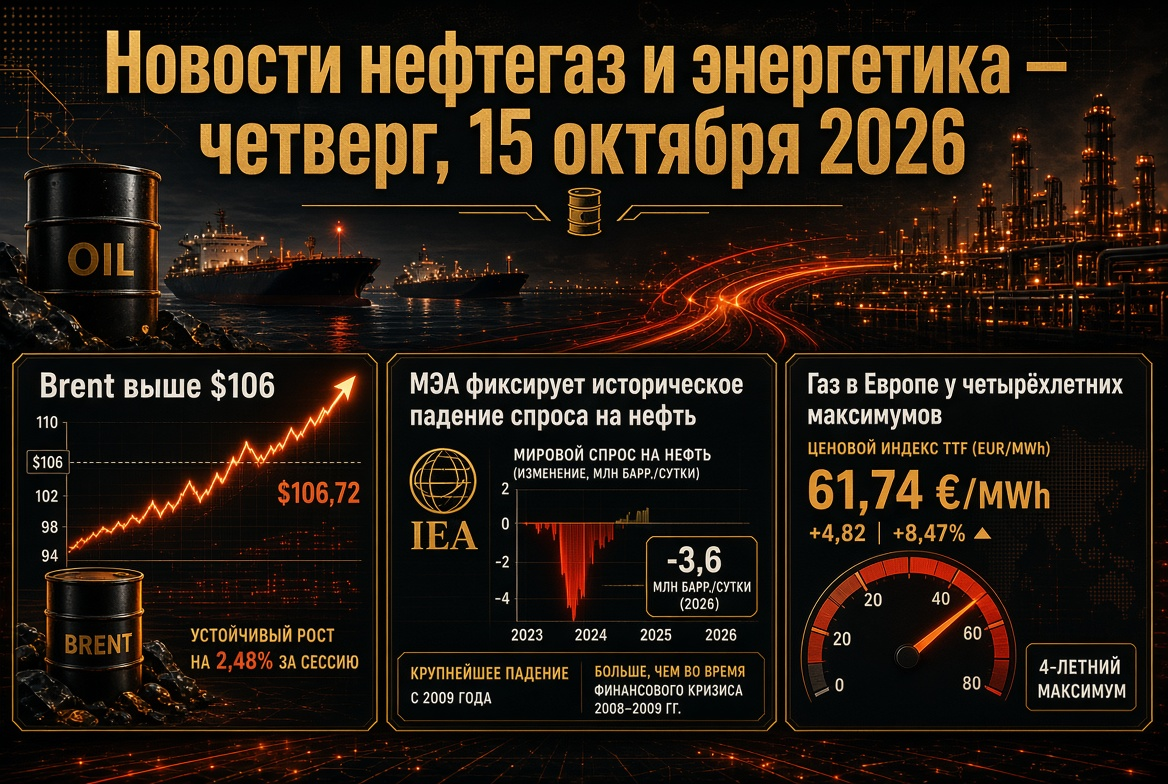
- OPEC+ Production Increase: OPEC+ participants have agreed to a modest increase in quotas for December (approximately +137,000 barrels/day), while maintaining a pause on further increases in Q1 2026 due to concerns over market oversupply. This supports a supply surplus and restricts significant price growth.
- Demand Slowdown: The International Energy Agency reports weak global oil consumption trends. Demand is growing significantly slower than last year, coupled with rising inventories (especially in the U.S.), which exerts downward pressure on prices.
- U.S. Inventories: The level of commercial oil inventories in the U.S. continues to grow (Department of Energy reports indicate an increase last week), while the number of active drilling rigs remains close to historical lows. Meanwhile, U.S. production (13.8 million barrels/day in September) is hitting records, raising concerns about oversupply in the market.
- Geopolitical Context: Negotiations between the U.S., Russia, and Ukraine over conflict resolution remain a focal point for investors. Earlier statements of readiness for peace briefly lowered oil prices (in anticipation of sanctions relief), but the lack of guarantees keeps uncertainty intact. Even in the event of a peace agreement, any lifting of restrictions on Russian oil exports would be gradual, hence its immediate effect on global prices is unlikely.
Gas Market: Inventories and Regional Trends
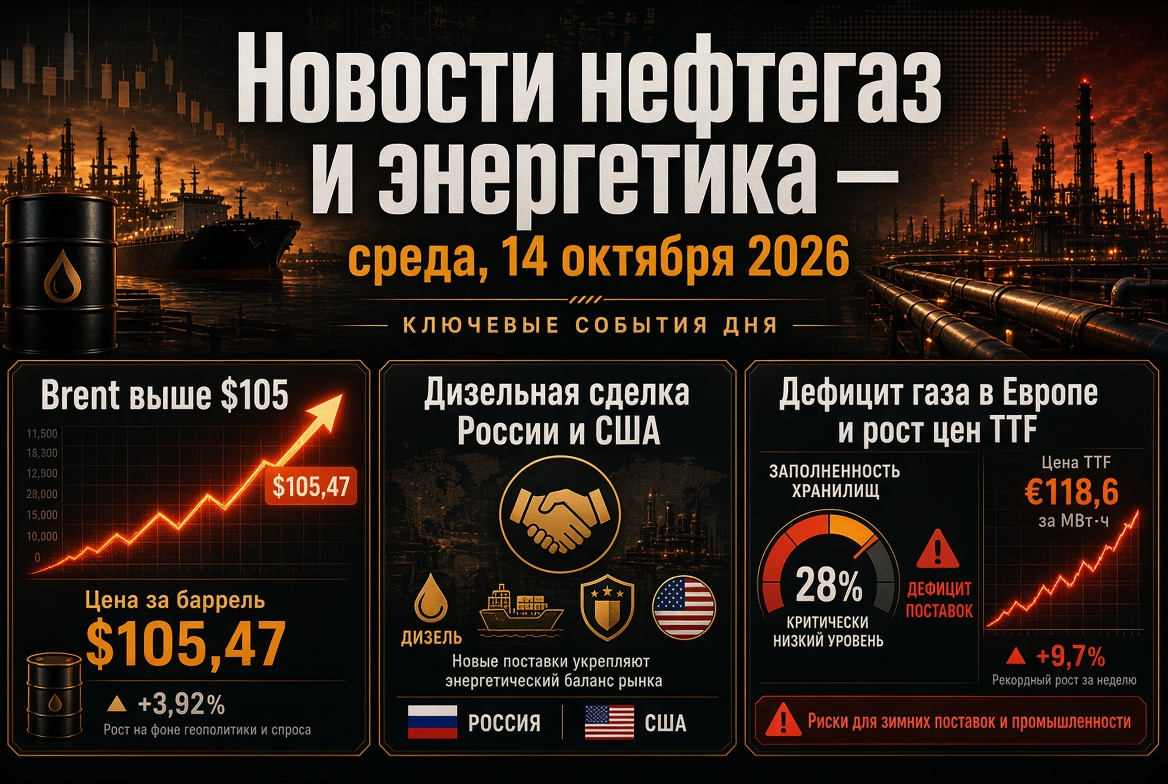
- European Inventories: As of early December, European underground storage is filled to approximately 75-80% of total capacity, significantly exceeding average figures from previous years and providing a buffer during the cold months. This situation eliminates panic buying and sharp price spikes for gas.
- Prices and LNG: European gas prices (TTF) are holding below €30/MWh—the lowest since the onset of the energy crisis. The U.S. and other suppliers are actively ramping up LNG exports (imports of LNG into the EU have doubled compared to the same period last year). At the same time, Russia continues redirecting gas to the east: supplies to China via the "Power of Siberia" are increasing, and Gazprom is boosting deliveries to Turkey, compensating for the complete cessation of transit through Ukraine.
- Route Changes: Europe continues to diversify its supply—additional LNG terminals and inter-regional gas pipelines are under construction (through North Africa, Azerbaijan, and others). Russia is seeking new routes and sales mechanisms, including land routes to China and accelerating LNG flow from "Yamal LNG" and "Arctic LNG", while new pipelines for southern directions are also being discussed.
Electricity and Renewables: Investments and Innovations
- Record Growth in Green Generation: Many countries have set historical records in electricity generation from wind and solar sources. In Europe, the U.S., and China, major wind and solar projects have been completed. Investors are pouring record amounts into expanding clean energy and developing energy storage systems (lithium-ion and alternative batteries) to enhance grid flexibility with a high share of renewable sources.
- Climate Agenda: At the COP30 climate summit in Brazil, world leaders agreed on annual investments of approximately $148 billion in modernizing power grids and energy storage systems, as well as launching a global carbon trading system. However, the final declaration did not include direct calls for a phasing out of hydrocarbons, reflecting an attempt to address the interests of fuel exporters and advocates of the green transition.
- Nuclear Energy: Russia has announced an extensive program for the development of nuclear power plants—by 2042, the introduction of 38 new power units (about 30 GW) is planned, which will raise the share of nuclear generation to a quarter of the energy balance. Concurrently, China, the U.S., and several European countries are investing in new small modular reactors and exploring innovative nuclear technologies to support the role of nuclear energy in ensuring grid stability.
Coal Sector: Demand and Prices
- Growth in Asia: China entered the 2025/2026 heating season with record coal power production—electricity generation from coal-fired plants in October-November exceeded last year's figures by 7-8%. However, production restrictions in China (under "anti-inflationary" measures) are leading to material shortages and rising domestic prices: at port terminals, coal quotes have risen nearly 40% from this year's lows.
- Europe and the World: In contrast to Asia, Europe and the U.S. continue to reduce coal consumption (in favor of gas and renewables). Some countries are systematically closing coal-fired power plants, reducing demand. According to World Bank estimates, global coal demand fell by about 1% year-on-year in the first half of 2025 due to the rapid growth of green generation, although the resumption of industrial growth may alter this dynamic.
- Prices and Trading: Limited production from major exporters (Indonesia, Australia) and rising demand in Asia are supporting global coal prices. European traders are reducing purchases, but volatile funds remain in the market: major players are already signing long-term contracts for coal supplies in 2026, anticipating that prices will continue to rise.
Oil Products and Refineries: Domestic Market and Export
- Tax Incentives Abroad: At the end of November 2025, Russia passed a law allowing oil companies to claim refunds on excise duties paid for processing oil at foreign refineries under a "tolling" scheme. This damping mechanism applies to gasoline and diesel produced from Russian oil at foreign refineries (including Belarusian), stimulating processing abroad and increasing exports of oil products to Asia and Europe.
- Stabilization of the Domestic Market: After an autumn fuel shortage, the government imposed export restrictions on gasoline and diesel and expanded damping tools. By the end of November, domestic wholesale prices for automotive fuel began to decline, allowing for the elimination of shortages at gas stations. This stabilizes retail prices and reduces inflationary pressure on the economy.
Russian Oil and Gas Sector: Finances and Infrastructure
- Financial Results: The total net profit of the largest Russian oil and gas companies fell almost by half (to about 2 trillion RUB) in the first nine months of 2025, while the number of unprofitable enterprises sharply increased. This is attributed to a decrease in the average export price of Urals (to ~$65–70 from $75–80 a year earlier), the strengthening of the ruble, and rising costs (insurance, logistics) under sanctions conditions.
- Gas Segment: Gazprom remains profitable due to high contract prices and market diversification. Despite the complete cessation of transit through Ukraine, the company has increased supplies via "Power of Siberia" and "Turkish Stream". The government supports the industry with programs for modernizing gas transportation infrastructure and building new underground gas storage facilities.
- Oil Segment: Oil production in Russia is near its peak, but revenue is falling due to sanctions and market oversupply. The launch of new projects is hindered by restrictions (sanctions against "Rosneft" and "Lukoil"), prompting "Gazprom Neft" and "Rosneft" to redirect capacities towards petrochemicals and exports to eastern markets, while domestic refineries operate at reduced loads.
Geopolitics and Sanctions: Impact on the Energy Market
- Diplomatic Negotiations: The energy market is highly responsive to reports on the progress of negotiations regarding Ukraine. While there are no real movements toward peace, local price reactions are limited to expectations of future changes. Investors understand that any agreement will lead to only a gradual easing of export restrictions, so the primary influence on pricing remains with fundamental supply and demand factors.
- International Diversification: Western countries continue to systematically reduce their dependence on Russian energy resources. Europe is increasing purchases from the U.S., the Middle East, and other regions, while also expanding programs for green energy. The U.S. and its allies are increasing their own oil and gas production to bolster energy security while simultaneously maintaining sanctions against Russian oil and gas projects.