Current Cryptocurrency News as of March 22, 2026: Bitcoin Dynamics, Market Trends, Regulation, Altcoins, and Key Events for Investors Worldwide
The cryptocurrency market approaches Sunday, March 22, 2026, in a heightened state of sensitivity to macroeconomic factors, monetary policy, and regulatory signals. For investors, this is a period during which digital assets can no longer be analyzed in isolation; the dynamics of Bitcoin, Ethereum, and major altcoins are simultaneously influenced by regulatory decisions, interest rate expectations, geopolitical risks, and the pace of institutional adoption of blockchain infrastructure.
The central theme of the moment is the formation of a new market architecture. On one hand, the industry is gaining more regulatory clarity, particularly in the U.S. On the other hand, rising energy prices, stricter rate expectations, and global capital caution limit risk appetite. This is why the cryptocurrency news on March 22, 2026, is significant not only for traders but also for long-term investors, funds, and companies considering digital assets as part of a global capital allocation.
Bitcoin Maintains Its Status as the Main Indicator of Risk Appetite
Bitcoin remains the central asset of the cryptocurrency market and the primary benchmark for assessing overall investor sentiment. The market currently perceives BTC not only as a growth digital asset but also as an indicator of how willing investors are to take on increased risk in a tense global macroenvironment.
Several factors are coming to the forefront:
- Expectations for interest rates in the U.S. and other developed economies;
- The reaction of institutional investors to higher inflation;
- Resilience of capital inflows into exchange-traded crypto products;
- The ability of Bitcoin to maintain dominance amid weakness in some altcoins.
For the global investor, Bitcoin is not just the largest cryptocurrency; it has become a kind of macro asset of a new generation. Its behavior is increasingly compared to high-risk technology instruments, yet BTC maintains a distinct investment logic related to its limited supply and status as the most recognizable digital asset in the world.
Ethereum and Major Altcoins Trade in Selective Demand Mode
Ethereum, Solana, XRP, and other major cryptocurrencies remain in the market's spotlight; however, their dynamics are increasingly dependent not only on Bitcoin's overall movement but also on their fundamental drivers. Investors are increasingly dividing the market into several levels of quality: major infrastructure networks, payment tokens, stablecoin ecosystems, and speculative coins.
Within this structure, Ethereum continues to be a foundational platform for decentralized finance, tokenization, and smart contracts. Nonetheless, the market’s attitude towards ETH has become more pragmatic: investors are looking for specific evidence of network activity, scalability, and sustained demand from institutional players rather than relying on abstract growth.
What is Particularly Important for Altcoins Right Now
- The quality of the ecosystem and actual business activity on the network;
- The regulatory status of the token and predictability of the legal framework;
- Liquidity and accessibility through major exchange instruments;
- The project's connection to payment themes, tokenization, and digital infrastructure.
This indicates that the cryptocurrency market in 2026 is becoming less homogeneous: capital is no longer distributed across the sector simultaneously but is concentrated in assets with the most comprehensible investment narrative.
Regulatory Clarity in the U.S. Becomes the Main Positive Driver of the Week
One of the most significant events for the crypto market has been the new clarification from the U.S. regulator regarding the classification of digital assets. This is an important turning point for the entire industry, as investors have long awaited clearer rules of engagement. For the market, this means a reduction in some of the legal uncertainty that has held back infrastructure development, product launches, and participation from traditional financial players for years.
For investors, the implications of this step are strategic:
- Large capital gains a clearer framework for risk assessment;
- Issuers and platforms can more accurately craft their business models;
- The likelihood of new institutional products increases;
- The market begins to better differentiate between "quality" and vulnerable crypto assets.
It is the regulatory issue that is currently shaping the foundation for the next phase of growth in the digital asset market. However, this positivity is not instantaneous; it operates as a long-term factor rather than guaranteeing immediate rallies.
Legislative Delays Limit the Potential for Rapid Growth
Despite progress in regulation, the market continues to face slowdowns in legislative initiatives. This remains a crucial limiting factor for cryptocurrencies, as significant institutional capital prefers to work not only with regulatory interpretations but also with a full-fledged legislative framework.
This creates a dual effect for the market. On one hand, digital assets receive support from greater clarity. On the other, the absence of definitive political resolutions limits the potential for new large-scale capital inflows. Consequently, investor sentiment remains mixed: interest in cryptocurrencies persists, yet the willingness to aggressively build positions is currently lower than during an unambiguous bull market phase.
Macroeconomics Again Pressuring Cryptocurrencies Through Rates, Inflation, and Oil
For the global cryptocurrency market, what happens outside the industry is now critically important, including the behavior of oil, bonds, the dollar, and interest rate expectations. Rising energy prices amplify inflation risks, which diminishes the likelihood of rapid monetary policy loosening. In such an environment, investors become more cautious regarding risky assets, including digital currencies.
The key takeaway for investors is straightforward: the cryptocurrency market at this stage does not live in a vacuum. If the global cost of capital remains high and bond yields are rising, some market participants prefer more conservative instruments. Therefore, even positive industry news may have limited effects if the external backdrop remains strained.
Stablecoins Become One of the Strongest Fundamental Narratives of the Year
The stablecoin segment deserves separate attention. If speculation and retail activity were the main drivers in previous cycles, payment scenarios, cross-border transactions, and the integration of blockchain infrastructure into traditional financial services are becoming increasingly significant.
The market increasingly recognizes that stablecoins are not a secondary element but one of the primary bridges between traditional finance and digital assets. For investors, this is important for two reasons:
- The practical utility of blockchain solutions is growing;
- The likelihood of long-term institutional demand for infrastructure crypto projects is increasing.
In 2026, one of the most mature investment narratives is forming around stablecoins: less speculative noise, more real payment functionality, and integration into international transactions.
Top 10 Most Popular Cryptocurrencies: What the Global Market is Watching
At this juncture, global investors are primarily focused on the largest digital assets by market capitalization and liquidity. These are the assets that set the tone for the entire cryptocurrency market and form the basis of institutional strategies.
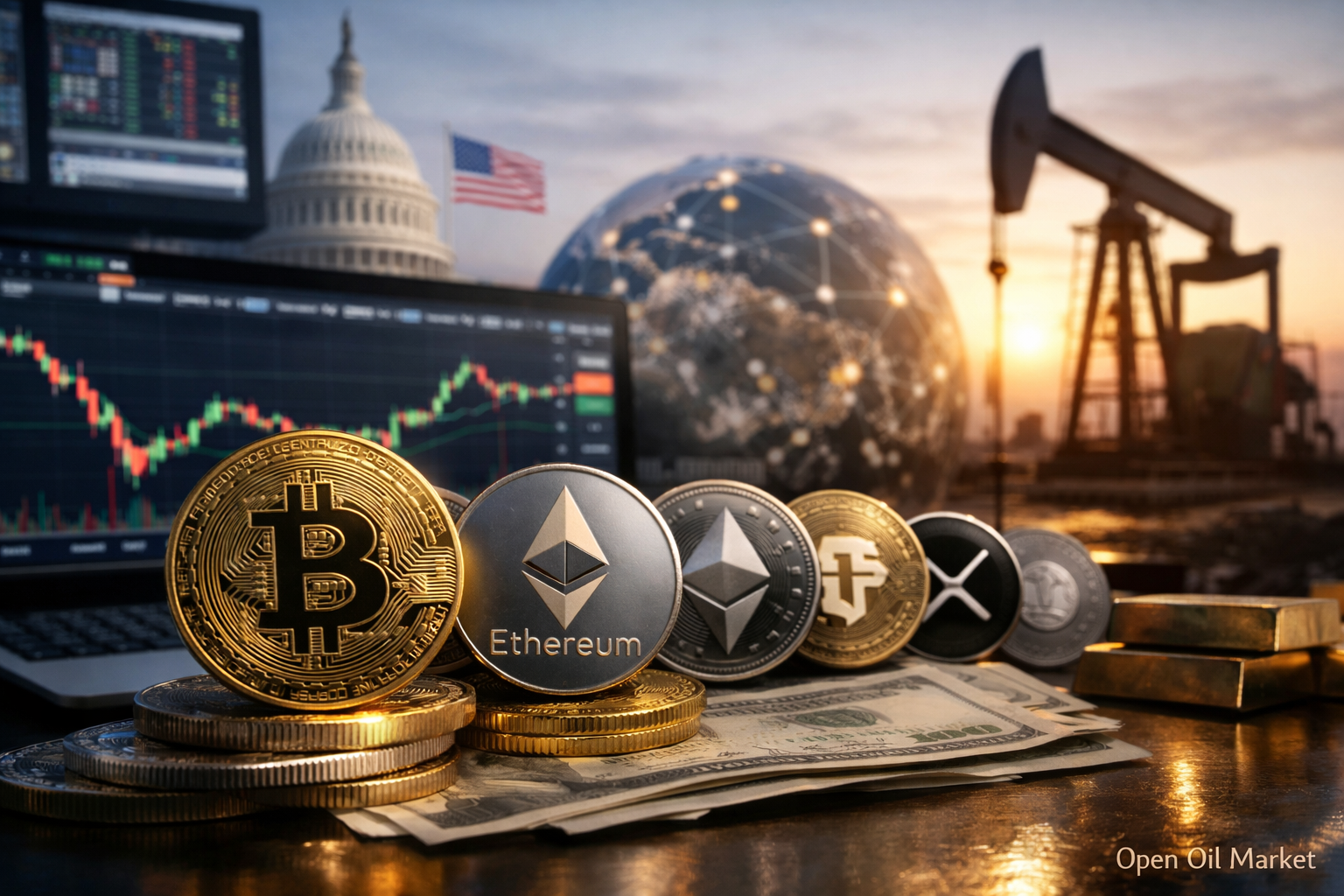
The most popular cryptocurrencies in the market include:
- Bitcoin (BTC)
- Ethereum (ETH)
- Tether (USDT)
- XRP (XRP)
- BNB (BNB)
- Solana (SOL)
- USDC (USDC)
- Dogecoin (DOGE)
- Cardano (ADA)
- TRON (TRX)
This list is important not only as a popularity ranking. It illustrates the structure of demand: the market is divided between "digital gold," infrastructure blockchains, stablecoins, and liquid networks with high recognition. For both retail and institutional investors, this means that liquidity and recognition remain the primary filter when selecting crypto assets.
What This Means for Investors on March 22, 2026
Investors should assess the cryptocurrency market not through a single scenario but through several parallel lines of development. At this point, the movements of quotes, as well as the quality of the news behind these movements, are important.
In the immediate future, it will be wise to monitor the following indicators:
- Will interest in Bitcoin remain as the primary reserve digital asset;
- Will Ethereum and major altcoins gain new institutional drivers;
- Will regulatory easing for the crypto industry in the U.S. continue;
- Will macroeconomic pressures escalate volatility across the sector;
- How quickly will stablecoins integrate into global payment chains.
Overall, cryptocurrency news for Sunday, March 22, 2026, reflects a mature yet contradictory market. The industry is receiving greater institutional recognition and clearer rules; however, it simultaneously faces pressure from significant global uncertainty. For investors, this means one thing: the era of simple growth for "everything at once" is over, and the focus now shifts to selecting quality assets, discipline, and understanding the global macro backdrop.