Current Cryptocurrency News for Thursday, December 11, 2025: Bitcoin Consolidates Before the Fed's Decision, Ethereum Outpaces the Market, Hopes for a Year-End Rally Remain, Top 10 Cryptocurrencies
By the morning of December 11, 2025, the cryptocurrency market is demonstrating relative stability after recovering from a downturn in November. One of the worst Novembers in recent years has been followed by a cautious rise in early December: Bitcoin has rebounded from local lows and is consolidating, while key altcoins show moderate growth after recent volatility. The total market capitalization of the crypto market is holding steady at around $3.2 trillion, with Bitcoin's dominance at approximately 60%. The Crypto Fear and Greed Index remains in the "Fear" zone, reflecting the cautious sentiment of investors. Market participants are assessing whether the current consolidation will lead to a pre-holiday rally or if volatility will continue.
Bitcoin: Consolidation Before the Fed's Decision
In early fall, Bitcoin (BTC) reached a new all-time high of about $126,000 (on October 6), after which it experienced a sharp correction. Mass profit-taking and a cascade of liquidations of margin positions in October and November brought the price down to around $85,000 by the end of November (the lowest level in recent months). However, in December, the leading cryptocurrency is showing signs of recovery: the price has returned to levels above $90,000 and has been trading in the range of approximately $90,000 to $95,000 in recent days, consolidating after the rebound. The current price of BTC is nearly 10% higher than the November lows. The market capitalization of Bitcoin is estimated to be around $1.8 trillion, which constitutes about 59-60% of the total cryptocurrency market capitalization.
Investors are cautiously awaiting the results of the Federal Reserve's December meeting, which could significantly impact Bitcoin's dynamics. The Fed's decisions on interest rates (a signal for a potential cut for the first time in several years is expected) could act as a catalyst for the crypto market: a loosening of monetary policy would enhance liquidity and risk appetite, supporting BTC’s price. Analysts at the London Crypto Club note that in the near term, liquidity injections through the Fed's policy easing may boost the growth of the first cryptocurrency.
At the same time, traders are preparing for increased volatility. The team at QCP Capital believes that in the coming weeks, Bitcoin will "chop sideways," fluctuating within a broad range of approximately $84,000 to $100,000 in response to macroeconomic news. Some experts are skeptical about the so-called "Santa Claus rally": Bloomberg strategist Mike McGlone warns that a pre-holiday surge may not occur and predicts that BTC will be trading below $84,000 by year-end.
Major financial institutions have revised their short-term price targets for Bitcoin after the recent downturn. For instance, Standard Chartered Bank has lowered its BTC price target for the end of 2025 from the previous $200,000 to $100,000, taking into account November's correction. However, the long-term bullish outlook remains intact: Standard Chartered still forecasts Bitcoin will reach $500,000, albeit over a longer horizon (by 2030, instead of the previously predicted 2028). Overall, despite the recent fluctuations, Bitcoin retains its status as "digital gold" and remains in demand from both retail and institutional investors, who view it as a store of value amid global economic uncertainty.
Ethereum and Major Altcoins
Following Bitcoin, Ethereum (ETH) also underwent a correction in the second half of the fall. Back in early November, the second-largest cryptocurrency reached a multi-year high (with ETH prices exceeding $5,000 at the peak of the rally), but then declined along with the market. Currently, Ethereum is trading around $3,300, recovering from November's lows (which dipped below $2,800). Over the past week, ETH has grown faster than Bitcoin, posting double-digit gains (over +10%), while BTC only added about 4%. The market capitalization of ETH is approximately $400 billion (around 13% of the total market). Ethereum continues to serve as a foundational platform for decentralized finance (DeFi) ecosystems and NFTs, and recent technical upgrades (transition to the Proof-of-Stake algorithm, network scalability improvements) strengthen investor confidence in the long-term value of this asset.
The other leading altcoins are generally following the overall market trend, showing moderate recovery after the decline at the beginning of December. Many of the top 10 digital assets have returned to levels where they stabilized after market consolidation. For example, Solana (SOL), after significant growth in 2025, is currently holding around $140-$150 per coin (with a market cap of about $70 billion), partially recovering from the downturn; the Solana ecosystem continues to develop, attracting investors with DeFi and GameFi projects, as well as the anticipation of launching ETFs on SOL. The cryptocurrency Cardano (ADA) has recently become one of the growth leaders among the majors, rising approximately 7-8% in just one day and approaching the $0.60 mark. ADA remains in the top 10 due to its active community and ongoing technological improvements to the network — even after the volatile fluctuations in the fall, the Cardano platform retains investor trust and plans to launch new financial products based on ADA.
Overall, the altcoin market is gradually stabilizing. XRP, BNB, DOGE, TRX, and other major tokens are maintaining their positions in the top 10, showing slight price increases following November's slump. Notably, there is significant technological progress in the industry: the Polygon blockchain team successfully activated a major network upgrade called Madhugiri, which reduced consensus time to 1 second and increased Polygon's throughput by about 30%. This hard fork, including several optimizations (limiting excessive gas consumption, enhancing calculations, and introducing a new type of transaction for interacting with Ethereum), aims to enhance speed and stability for the network. The example of Polygon demonstrates that despite price fluctuations, technological innovations in the cryptocurrency world continue, creating a foundation for future growth in the values of promising altcoins.
Institutional Players: Banks Enter the Crypto Market
One of the key trends of 2025 has been the strengthening role of institutional investors in the cryptocurrency market and the integration of traditional financial institutions. This fall in the U.S. saw the launch of the first Bitcoin Spot Exchange-Traded Funds (Bitcoin-ETFs), providing professional investors with an easy and regulated way to invest in digital assets. In December, the U.S. banking regulator took another step toward the crypto industry: The Office of the Comptroller of the Currency (OCC) officially allowed American national banks and federal savings associations to act as intermediaries in cryptocurrency transactions. Essentially, this means that large banks will be able to directly facilitate their clients' purchase and sale of cryptocurrencies, acting as a link between buyers and sellers. This operational mechanism is built on an agency model: the bank simultaneously enters into a deal with the selling client and a corresponding deal with the buying client, providing liquidity and ensuring back-to-back execution, while not holding cryptocurrencies on its balance sheet or bearing price risks. This initiative, according to the OCC, aims to shift part of the operations from unregulated shadow segments into the transparent realm of traditional finance. Of course, strict conditions are set for banks — from verifying the legality of each transaction to having expertise in risk management — but the mere fact of allowing banks into this market could significantly ease access for a wider array of investors to cryptocurrencies through familiar financial institutions.
Interest from large institutions in crypto assets remains high, even amid recent volatility. Many global banks and hedge funds are expanding their range of crypto products. For instance, major asset management firms have launched investment trusts and funds tied to digital assets, and in 2025 several cryptocurrency companies made their public markets debut through direct listings and SPAC deals. Recently, the investment firm Twenty One Capital, which holds over 43,500 BTC, became the third-largest public holder of Bitcoin after going public — underscoring the growing scale of institutional participation.
At the same time, institutional analysts are generally optimistic about the long-term prospects of the industry. According to Coinbase Institutional, the November pullback served a healthy role for the market, "clearing" it of excessive speculative leverage and creating a foundation for recovery by year-end. Analysts note that the usage of leverage and risk strategies significantly decreased after the correction: many short-term speculators were pushed out of the market, while long-term investors capitalized on the reduced prices to increase their positions. Matt Hougan, Chief Investment Officer at Bitwise, stated that over the next decade, the digital asset market could grow 10-20 times. He backed this confidence with a forecast from SEC Chair Paul Atkins about the deep integration of blockchain technologies into the traditional financial system. In other words, the largest players in the financial sector see cryptocurrencies not as a short-term bubble, but as a strategic asset class that will increasingly intertwine with global finance. The emergence of regulated ETFs, bank participation, and support from influential financiers signal that institutional adaptation to the crypto market is ongoing, which could attract new billions of dollars to the market in the future.
Cryptocurrency Regulation: Global Trends
By the end of 2025, the regulatory landscape of the crypto industry is undergoing significant changes worldwide. In the U.S., a new wave of regulators is softening the approach to digital assets. SEC Chairman Paul Atkins, in a recent speech, noted that most token sales (ICOs) should not automatically be classified as security offerings, and hence fall outside the SEC's mandate. Such a comment signals a more lenient approach from the regulator towards crypto startups: the SEC is willing to allow blockchain projects to grow without undue pressure if their tokens do not exhibit characteristics of securities. Furthermore, Atkins announced the launch of a temporary regulatory regime — a sort of "sandbox" — that will allow crypto and fintech companies to test innovative products with simplified compliance requirements starting in 2026. The new SEC leadership is evidently intent on moving away from the stringent punitive line characteristic of the Gary Gensler era towards more open and transparent regulation. At the same time, final decisions on the classification of crypto assets will largely depend on the U.S. Congress, where discussions are ongoing about the adoption of a comprehensive law distributing oversight powers among regulatory bodies (SEC and CFTC) in the crypto market.
Other American regulators are also taking steps to integrate cryptocurrencies into the financial system. The Commodity Futures Trading Commission (CFTC) has launched a pilot program allowing the use of cryptocurrencies as collateral in derivatives markets. In the first phase, Bitcoin, Ethereum, and the USDC stablecoin have been included in the list of permitted collateral assets. This innovation aims to enhance the flexibility of settlements on futures and options exchanges, enabling traders to use digital assets for margin collateral alongside fiat currencies.
In Europe, Directive DAC8 will come into effect on January 1, 2026, significantly strengthening tax oversight over cryptocurrency transactions. Under the new rules, cryptocurrency exchanges and other service providers are required to report detailed transaction and customer account information to tax authorities in EU countries. This measure aims to combat tax evasion and enhance transparency — effectively, the European Union is implementing an international standard for the exchange of tax information tailored for cryptocurrencies. Additionally, the EU continues with the phased implementation of the MiCA regulation, which establishes uniform rules for stablecoin issuance, cryptocurrency exchanges, and custodians. Together, these initiatives are shaping a more defined and predictable regulatory environment for crypto businesses in Europe, which may facilitate an influx of institutional capital into the market.
In Asian jurisdictions, government attention to the crypto market is also increasing. The Hong Kong government has announced the commencement of public consultations on the implementation of international standards for tax control over crypto assets. Essentially, one of the leading Asian financial centers is preparing for cryptocurrency transactions to fall under tax reporting rules — a step indicating the recognition of the crypto industry as part of the legal economy. In other regional countries, similar measures are being taken: in Japan and South Korea, updates to laws governing the activities of cryptocurrency exchanges and investor protection have been released over the year, and several Middle Eastern countries have established special economic zones for blockchain companies with unique regulatory conditions. Overall, the global trend is clear: instead of an outright ban or ignoring cryptocurrencies, governments are working to develop clear rules while integrating digital assets into the existing financial and legal systems. While heightened regulation increases compliance costs, in the long run, it raises the level of trust in the market and attracts major players who value legal certainty.
Macroeconomics and its Influence on the Crypto Market
External macroeconomic factors continue to significantly influence the sentiments of crypto investors. In recent weeks, there has been a noticeable increase in the correlation between the dynamics of cryptocurrency prices and traditional risk assets, particularly technology stocks. This can be explained by the influx of institutional capital into the digital asset market, and cryptocurrencies are increasingly being perceived alongside other investment assets. Against the backdrop of persistently high inflation this year and a prolonged period of elevated interest rates, investors have become more cautious about investing in high-risk assets, including cryptocurrencies.
Many market participants expected that by the end of 2025, the U.S. Federal Reserve and other central banks would begin a cycle of interest rate cuts, easing monetary policy. However, signs of a decisive turnaround remain unclear: the Fed has maintained a tight course throughout the year in its fight against inflation. Doubts around the quick reduction of rates by the Fed and the European Central Bank are dampening risk appetite — this uncertainty has been reflected in cryptocurrencies, restraining their rise in the fall. At the same time, any hints at a policy easing quickly impact price quotes: for instance, hints of slowing inflation in the U.S. or decisions to ease monetary conditions could spur growth in the crypto market.
Market players are now closely monitoring economic news and central bank decisions, as they are instantly reflected in Bitcoin and altcoin prices. For example, the release of stronger-than-expected labor market data in the U.S. this fall led to a strengthening of the dollar and, consequently, a temporary decrease in BTC prices. Conversely, positive incidents that reduce global risks support crypto assets: in early November, investors reacted with relief to the resolution of the budget crisis in the U.S. (Congress managed to avoid a government shutdown), and against a backdrop of increased risk appetite, Bitcoin and Ethereum received a short-term boost. External geopolitical factors also contribute to volatility: for instance, sharp statements from the U.S. regarding tariffs or sanctions against China earlier in October triggered an immediate sell-off of cryptocurrencies, demonstrating how sensitive the market is to global shocks.
Overall, uncertainty in the global economy and traditional financial markets is currently generating increased volatility in the crypto market. Traders and investors increasingly consider macroeconomic indicators (interest rates, inflation, the dollar exchange rate, commodity prices) when making decisions, which signifies the industry's maturation and its gradual integration into the global financial system. While cryptocurrencies previously often lived their own lives, in 2025 their behavior largely reflects the overall sentiments in capital markets. The future trajectory of crypto prices will depend, among other factors, on the actions of central banks: the first hints at the lowering of borrowing costs could serve as the trigger that many crypto investors are awaiting, hoping for a new rally.
Market Sentiment and Volatility
The rapid rise and subsequent fall in valuations over recent months have been accompanied by spikes in short-term volatility in the cryptocurrency market. The sentiment index (Fear and Greed) for the crypto market fell to extremely low levels (around 10 points out of 100, corresponding to the "Extreme Fear" level) at the end of November amid panic sell-offs. As of mid-December, the indicator has slightly risen but remains in the "Fear" zone (around 30-40 points), reflecting prevailing caution. This means that despite the significant price pullback from the peaks, investor confidence has not fully recovered — the market is undergoing a phase of reflection on the recent events.
However, there are signs of stabilizing sentiment: panic selling has ceased, and the fear/greed index has moved away from extreme lows, signaling a partial return of trust. An important factor in the market's recovery has been the reduction of speculative leverage. The November correction "cleared" excessive leveraged positions from the market: according to Coinbase Institutional, the total open interest in perpetual futures on Bitcoin, Ethereum, and Solana fell by about 16% compared to the October peak. At the same time, U.S. spot crypto ETFs recorded outflows in the range of several billion dollars over the month, while funding rates for BTC futures have dropped below their quarterly average. All these factors have led to the stabilization of the systemic leverage ratio at about 4-5% of the total market capitalization (compared to 10% in the summer of 2025). In simple terms, there is significantly less excessive borrowed capital in the market now than before the crash, reducing the risk of new price collapses and making further growth more sustainable.
Nevertheless, short-term volatility will remain elevated. Ahead of key events (such as the Fed's decision), traders are pricing in the potential for sharp movements, which is reflected in the wide daily price fluctuations. Over the last 24 hours, Bitcoin's price fluctuated in the range of approximately $89,500 to $94,600, while Ethereum ranged from $3,090 to $3,320, indicating ongoing nervousness. Many players still prefer to hedge: derivative positions are actively hedged, and a significant number of traders lock in profits on any substantial price rise, limiting the development of momentum. However, the market, cleansed of excessive optimism, may find its "second wind" if new positive drivers emerge. Analysts note that the current consolidation at relatively low levels has created room for upward movement — should the news backdrop improve, investor sentiment may quickly shift to a more upbeat tone, laying the groundwork for a rally.
Top 10 Most Popular Cryptocurrencies
Below is a list of the ten largest and most significant cryptocurrencies as of the morning of December 11, 2025 (by market capitalization), along with a brief description of their current status:
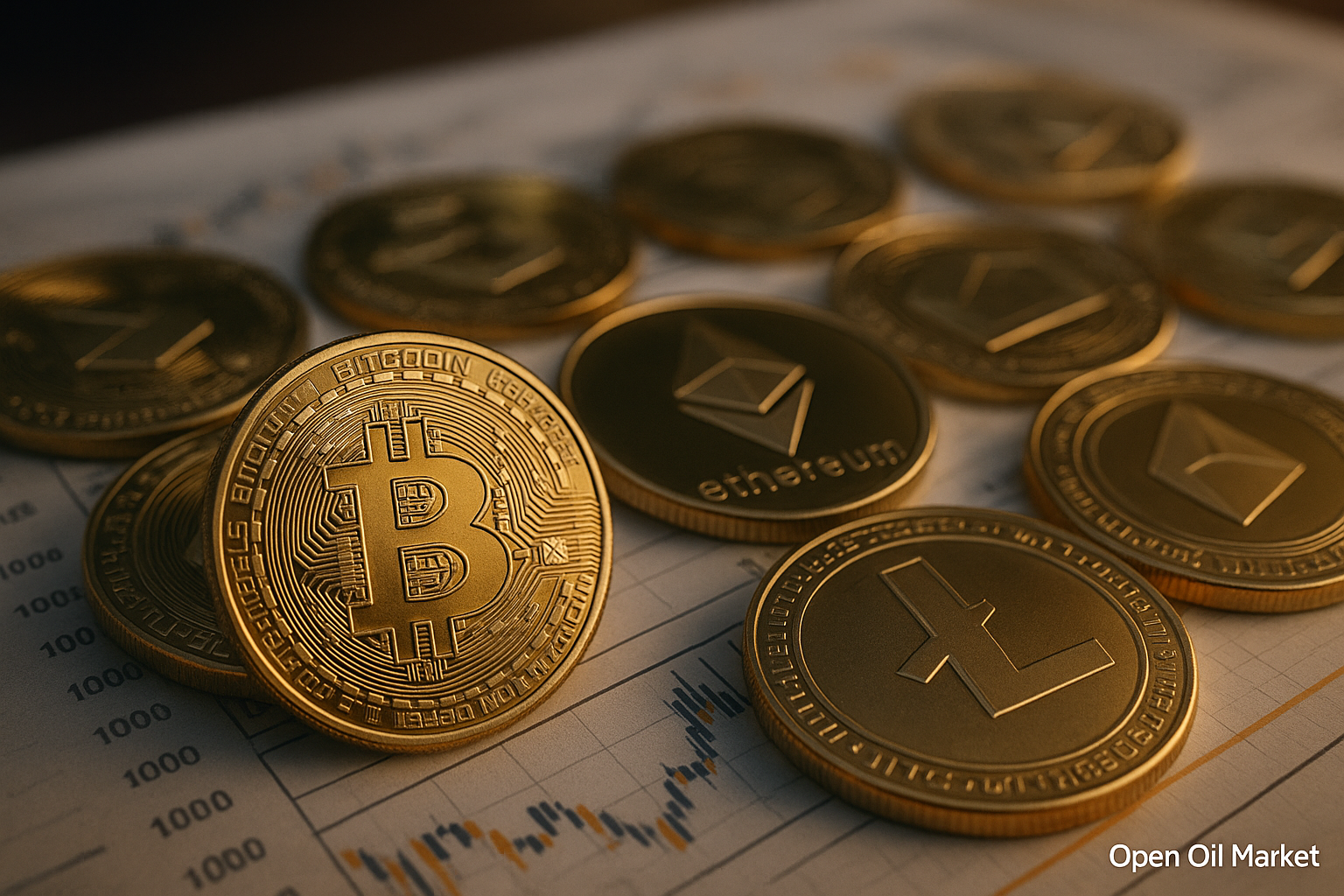
- Bitcoin (BTC) — the first and largest cryptocurrency, often referred to as "digital gold." BTC is currently trading at around $95,000 per coin after a recent correction (market capitalization approximately $1.8–1.9 trillion, which is about 60% of the total market). The limited issuance of 21 million coins, increasing recognition of Bitcoin by major financial companies, and its perception as a safe-haven asset help maintain BTC's dominant position in the market.
- Ethereum (ETH) — the second-largest digital asset by market capitalization and the leading platform for smart contracts. ETH is priced at approximately $3,300. Ethereum serves as the foundation for DeFi ecosystems, NFTs, and a multitude of decentralized applications; its market capitalization is about $400 billion (≈13% of the market). Continuous technical upgrades (transitioning to Proof-of-Stake, enhancing scalability and efficiency with updates like Shanghai/Danksharding) and extensive application in the blockchain industry reinforce Ethereum's strong position.
- Tether (USDT) — the largest stablecoin pegged to the U.S. dollar at a 1:1 ratio. USDT is widely used by traders for transactions and holding funds, providing high liquidity in the crypto markets. Tether's market capitalization is around $160 billion; the coin consistently holds a price of $1.00, acting as a kind of "digital dollar" and intermediary currency for trading crypto assets.
- Binance Coin (BNB) — the native token of the largest cryptocurrency exchange, Binance, and the native asset of the BNB Chain blockchain network. BNB is used to pay trading fees on the exchange, participate in token sales on Launchpad, and execute smart contracts in the Binance ecosystem. Currently, BNB is trading around $600+ (market capitalization ~ $100 billion). Despite regulatory pressure on Binance in various countries, the BNB token remains in the top 5 due to its wide range of uses and value-supporting mechanisms (such as regular coin burning).
- XRP (Ripple) — the token of the Ripple payment network, focused on fast cross-border transactions between banks. XRP is trading at about $2.1 per coin (market capitalization ~ $110 billion). In 2025, XRP significantly strengthened due to Ripple's court victory over the SEC and the launch of the first spot XRP ETF, returning the token to the market leaders. XRP is in demand for banking blockchain solutions for international transfers and remains one of the most recognized cryptocurrencies globally.
- Solana (SOL) — a high-performance blockchain platform offering fast and low-cost transactions; a competitor to Ethereum in the smart contract space. SOL is priced around $140 (market capitalization approximately $70 billion) following substantial growth in 2025. The Solana ecosystem attracts investors with the development of DeFi and GameFi projects, as well as expectations for the launch of ETFs on SOL. The network's rapid performance and support from major projects have enabled SOL to enter and establish itself in the ranks of the top cryptocurrencies.
- Cardano (ADA) — a blockchain platform emphasizing a scientific approach to network development (its development is based on academic research and validations). ADA is currently priced at about $0.60 (market capitalization ~ $20 billion) after volatile fluctuations in the fall. Despite retreating from peak values, Cardano stays in the top 10 owing to its solid community, continuous network updates (scalability improvements, new features), and plans to launch investment products based on ADA, fostering interest from long-term investors.
- Dogecoin (DOGE) — the most well-known meme cryptocurrency created as a joke, but which gained immense popularity over time. DOGE is holding at around $0.15 (market capitalization ~$20-30 billion) and continues to be among the largest coins due to community loyalty and periodic attention from celebrities. Historically, Dogecoin's volatility is very high; however, this coin has consistently shown remarkable resilience of investor interest, remaining a "people's coin."
- TRON (TRX) — a blockchain platform for smart contracts originally focused on entertainment and content. TRX is currently priced around $0.28 (market capitalization ~ $25-30 billion). The TRON network is known for its low fees and high throughput, which has made it popular for issuing and transferring stablecoins (a significant portion of USDT circulates on TRON). The platform is actively developing and supports decentralized applications (DeFi, gaming), enabling TRX to maintain its position in the top 10 global cryptocurrencies.
- USD Coin (USDC) — the second-largest stablecoin, issued by Circle and fully backed by U.S. dollar reserves. USDC consistently trades at a rate of $1.00, and its market capitalization is about $50 billion. The coin is widely used by institutional investors and in the DeFi sector for transactions and preserving value due to the high transparency of reserves and regular audits. USDC competes with Tether by offering a more regulated and transparent stablecoin model, making it attractive to conservative market participants.
Prospects and Expectations
The main question concerning investors in December 2025 is whether the recent correction will serve as a springboard for a new crypto rally or if the market will continue to experience turbulence. Historically, the end of the year often accompanies increased activity and rising cryptocurrency prices, but there are no guarantees of a repeat of such a scenario. Optimists note that the major negative factors of the recent downturn are already priced in: the weakest players capitulated in November, the market "cleared" of excess optimism, and ahead lie potential positive triggers (such as the approval of new crypto ETFs or long-anticipated signals of central banks easing policy). Furthermore, a number of analysts at major banks remain bullish: forecasts suggest that over the next year, Bitcoin could once again reach six-figure prices ($150–170k and higher) if the macroeconomic environment is favorable.
On the other hand, maintaining high costs of borrowed funds in the global economy and any new shocks (geopolitical escalation, tighter regulation, major bankruptcies in the industry) could prolong the period of instability in the crypto market. Many experts agree that for a return to a confident bullish trend, several conditions need to be met simultaneously: a decrease in inflation and interest rates, an influx of new capital (including institutional), and the recovery of trust in the industry following the turmoil of the past year.
For now, the market shows cautious optimism: key cryptocurrencies are holding important support levels, negative news is decreasing, and investors are gradually returning after the November shock. Likely, in the coming weeks, the cryptocurrency market will continue to balance between hopes for renewed growth and concerns regarding remaining risks. Nevertheless, most observers look to 2026 with cautious optimism, expecting a new wave of industry development and a gradual recovery of the upward trend as external conditions improve.