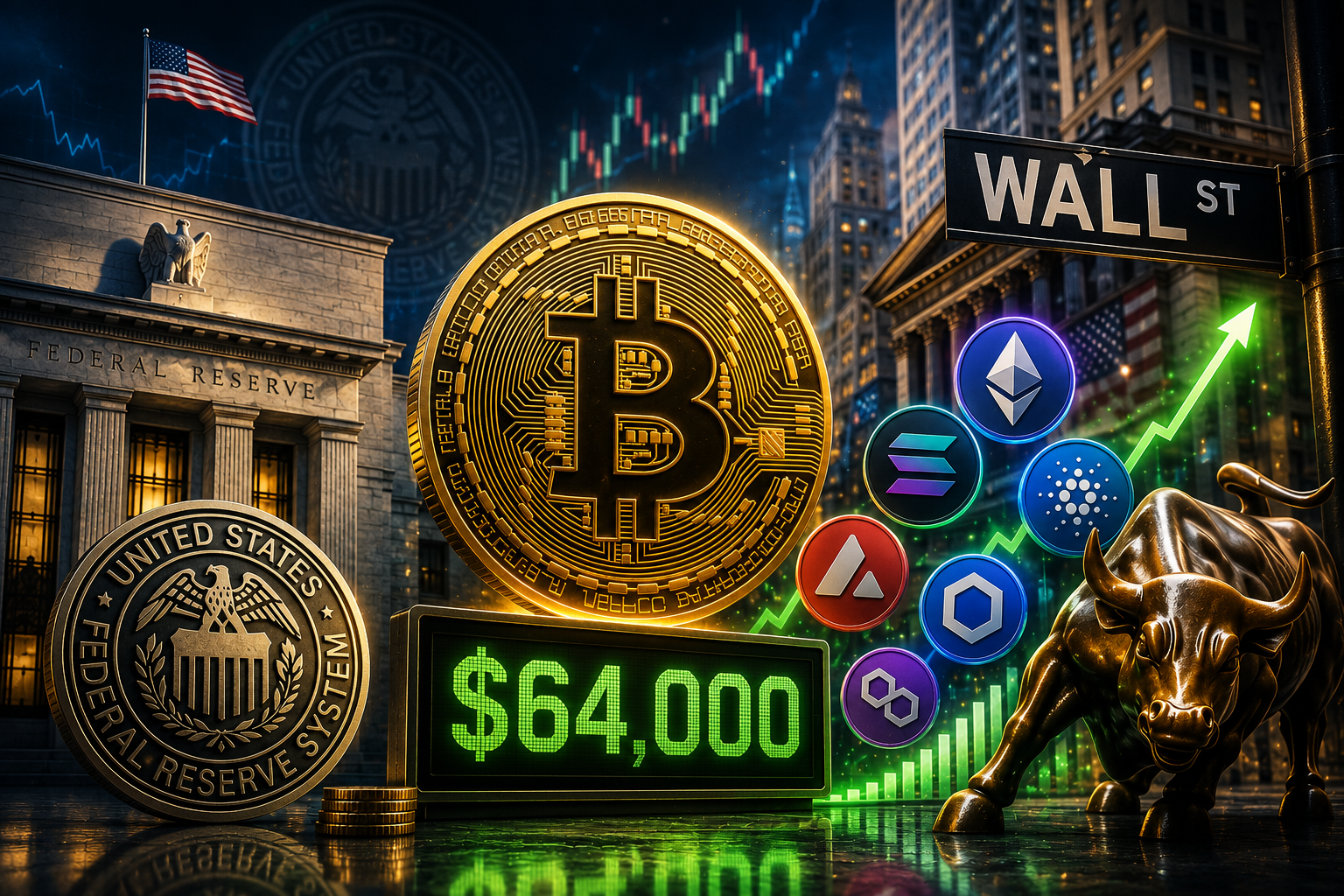
Global Cryptocurrency Market on May 28, 2026: Bitcoin Under Pressure, Ethereum Awaits ETF Demand, Stablecoins Become the Main Regulatory Topic, and Investors Assess the Top 10 Digital Assets on the Global Market
The cryptocurrency market enters Thursday, May 28, 2026, with heightened caution. Following attempts at recovery, Bitcoin finds itself under pressure once again, Ethereum holds key levels, and investors worldwide are closely monitoring capital flows into cryptocurrency ETFs, regulatory developments for digital assets in the U.S. and Europe, as well as the evolution of the stablecoin market.
The main theme of the day for the cryptocurrency market is not a sharp rise in individual tokens, but rather a test of the resilience of the entire sector. Digital assets are increasingly integrating into the global financial system; however, this makes them more dependent on macroeconomic factors, stock markets, interest rates, regulatory decisions, and institutional demand.
Overall Picture of the Cryptocurrency Market on Thursday, May 28, 2026
As of May 28, the cryptocurrency market maintains a mixed dynamic. Bitcoin is trading around 75,000 dollars, Ethereum hovers near the 2,000 dollar mark, while major altcoins exhibit moderate declines or sideways movement. For investors, this means the market has yet to receive a sufficiently strong signal for a new rally.
A significant feature of the current moment is the divergence between cryptocurrencies and global stock markets. While stocks in several regions demonstrate resilience, cryptocurrencies remain more sensitive to capital outflows, rising bond yields, and declining risk appetite.
- Bitcoin remains the key sentiment indicator in the digital asset market;
- Ethereum's performance depends on ETF demand, DeFi activity, and infrastructure solutions;
- Stablecoins have become a central topic for regulators and banks;
- Altcoins are not exhibiting sustainable independent momentum;
- Institutional investors are acting cautiously, awaiting regulatory clarity.
Bitcoin: The Market Tests Support and Awaits Institutional Demand
Bitcoin remains the primary asset in the cryptocurrency market, but its dynamics leading up to May 28 appear subdued. After recovering to higher levels, buyers are facing resistance, and some short-term investors are taking profits. For the market, this presents a crucial test: if Bitcoin maintains its current range, digital assets may stabilize; if pressure increases, investors' focus may shift to lower support levels.
For long-term investors, Bitcoin retains its status as a digital analog to gold and a hedge against monetary inflation. However, in the short term, its price is increasingly influenced by flows into ETFs and the behavior of large funds. Institutional capital has become one of the main market drivers following the launch of spot products, but during liquidity outflows, this same factor amplifies volatility.
Ethereum: Focus on ETF Demand, DeFi, and Infrastructure Trust Level
Ethereum remains the second most significant asset in the cryptocurrency market and the primary blockchain for smart contracts, DeFi, tokenization, and Web3 infrastructure. On May 28, investors are assessing not only the price of ETH but also the actual use of the network: decentralized applications activity, staking volumes, fees, the development of Layer 2 solutions, and interest from institutional players.
A key question for Ethereum is whether it can regain its premium over the rest of the market. If demand for Ethereum ETFs improves and the DeFi sector shows growth, ETH may once again become the primary beneficiary of institutional interest in blockchain infrastructure. Conversely, if the market remains risk-averse, Ethereum will likely move in tandem with Bitcoin and the overall risk appetite.
Stablecoins: The Central Front in the Battle Between the Crypto Industry, Banks, and Governments
Stablecoins are becoming one of the most important topics for the global cryptocurrency market. They are utilized for trading, cross-border payments, settlements, holding dollar liquidity, and entry into digital assets. As a result, regulators are paying increasingly close attention to this segment.
Competition is intensifying in the market among dollar stablecoins, euro initiatives, and local digital currencies. Tether's plans to launch a token pegged to the Georgian Lari indicate that private stablecoin issuers are beginning to move beyond the classic model of dollar-pegged tokens. For investors, this is a signal that the stablecoin market could evolve into not only an infrastructural segment but also a geopolitical direction within the crypto economy.
In Europe, regulators are taking a cautious approach to the expansion of stablecoins. The European Central Bank is concerned that rapid growth in such instruments could impact bank deposits, lending, and monetary policy. This creates different developmental regimes in the market: the U.S. and some emerging jurisdictions may support stablecoins more actively, while Europe is opting for stricter control and a digital euro.
U.S. Regulation: The Clarity Act Remains a Key Event for the Crypto Market
For global investors, U.S. cryptocurrency regulation remains a crucial focus. The advancement of the Clarity Act in the Senate has marked a significant step for the digital asset industry. Its goal is to clarify which tokens qualify as securities, which as commodities, and which require a different approach.
If the U.S. can establish a clearer legal framework for cryptocurrencies, it could enhance interest from institutional investors, banks, brokers, and asset managers. At the same time, the market understands that regulation does not necessarily imply only growth. Stricter requirements for issuers, exchanges, DeFi projects, and stablecoins may increase companies' costs and reduce the attractiveness of weaker tokens.
Top 10 Most Popular Cryptocurrencies for Investors
As of May 28, 2026, the focus of global investors remains on the largest cryptocurrencies by market capitalization, liquidity, and infrastructural role. This list is important not as a buying recommendation, but as an indicator of where the main capital flows are concentrated.
- Bitcoin (BTC) — the leading digital asset in the market and a benchmark for institutional investors.
- Ethereum (ETH) — the foundational infrastructure for smart contracts, DeFi, tokenization, and Web3.
- Tether (USDT) — the largest dollar stablecoin and a primary liquidity tool on cryptocurrency exchanges.
- BNB (BNB) — the token of the Binance ecosystem and BNB Chain.
- XRP (XRP) — an asset related to payment infrastructure and cross-border settlements.
- USD Coin (USDC) — a regulated dollar stablecoin, essential for institutional transactions.
- Solana (SOL) — a high-performance blockchain network for DeFi, consumer applications, and tokenized assets.
- TRON (TRX) — a network widely used for stablecoin transfers and settlements.
- Dogecoin (DOGE) — the largest meme coin, known for its high recognition and speculative liquidity.
- Cardano (ADA) — a blockchain platform focused on a research-oriented approach and ecosystem development.
Altcoins: Investors Choose Liquidity, Infrastructure, and Real Use Cases
The altcoin market remains heterogeneous. Investors are increasingly reluctant to purchase tokens solely based on expectations of future growth. The primary demand is concentrated in projects with liquidity, users, fees, a developer ecosystem, and a clear role within the crypto infrastructure.
Solana continues to attract interest due to its high network speed and application activity. XRP remains in the spotlight because of its payment-related theme. BNB depends on the resilience of the Binance exchange and blockchain ecosystem. TRON continues to play a significant role in stablecoin transfers. Meanwhile, smaller tokens remain in a high-risk zone, especially if the market does not receive strong momentum from Bitcoin.
Key Risks for the Cryptocurrency Market
For investors as of May 28, it is essential to consider not only growth potential but also the systemic risks within the cryptocurrency market. The key threats relate to regulation, capital outflows from ETFs, declining liquidity, cybersecurity, and technological challenges.
- Regulatory risk: new rules could change the business models of cryptocurrency exchanges, stablecoins, and DeFi projects.
- Liquidity risk: weak ETF flows may increase pressure on Bitcoin and Ethereum.
- Macro-economic risk: high bond yields reduce interest in risk assets.
- Technological risk: the advancement of quantum computing intensifies discussions about the future of cryptographic security for blockchains.
- Concentration risk: a significant portion of liquidity is concentrated in the largest tokens and stablecoins.
What Investors Should Watch on May 28, 2026
On Thursday, May 28, investors should monitor several indicators. The first is Bitcoin's ability to maintain its current range and the market's reaction to any downward attempts. The second is the dynamics of Ethereum and demand for infrastructure assets. The third is news regarding ETFs and institutional flows. The fourth concerns statements from U.S. and European regulators regarding stablecoins and tokenization.
For global investors, cryptocurrencies remain a high-risk yet strategically important asset class. The market has already transcended its speculative niche: Bitcoin competes for the role of a digital reserve asset, Ethereum is shaping the infrastructure of a tokenized economy, and stablecoins are becoming part of international settlements.
The key takeaway as of May 28, 2026, is that the cryptocurrency market is not in a phase of euphoria, but rather in a phase of maturity testing. For investors, this means the necessity of opting for not the loudest tokens but the most liquid and fundamentally significant digital assets. In the coming days, market direction will be dictated by Bitcoin, ETF flows, regulation in the U.S., Europe's stance on stablecoins, and the readiness of institutional capital to return to risk.