Current Cryptocurrency News as of November 6, 2025: Bitcoin Stabilizes Around $110,000 After Recent Correction, Ethereum Prepares for Major Network Upgrade, and the Altcoin Market Shows Mixed Dynamics
As of the morning of November 6, 2025, the global cryptocurrency market remains robust despite increased volatility in recent weeks. Bitcoin has recently corrected after hitting new price heights in the fall, now consolidating around the $110,000 mark, significantly higher than levels at the beginning of the year, which is fostering optimism among investors. Many leading altcoins have also seen substantial growth over recent months. In this environment, regulatory news and monetary policy signals are increasingly impacting the market: decisions by central banks and legislative initiatives from various countries are noticeably reflected in the industry. Below, we will examine the current situation in detail—ranging from Bitcoin and Ethereum’s dynamics to actions by institutional investors and regulatory steps.
Bitcoin: Retaining Key Positions
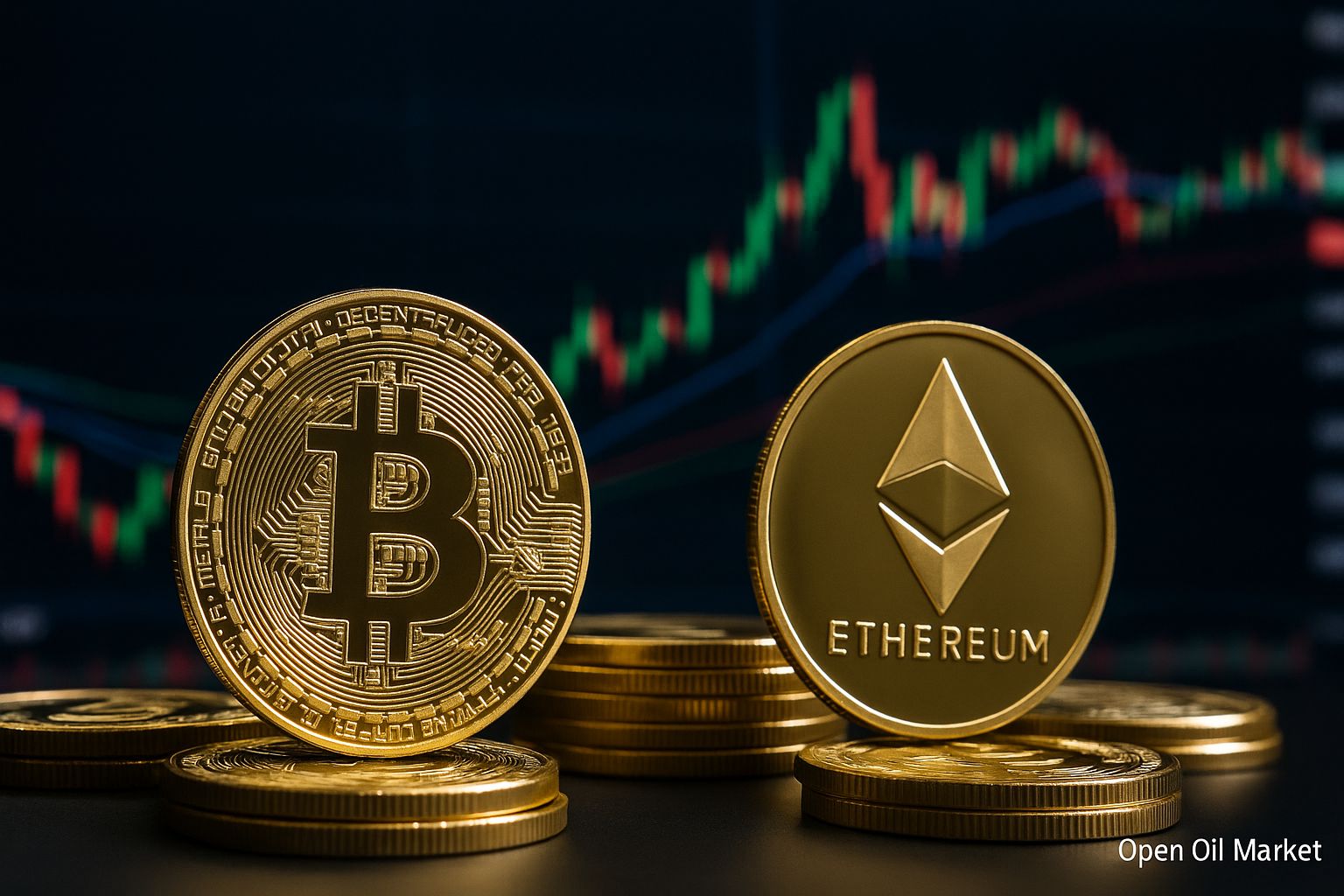
The flagship Bitcoin (BTC) recently set a new all-time high, surpassing $125,000, followed by the expected correction. At the beginning of November, the price briefly dipped to around $105,000; however, it quickly stabilized around $110,000. This range serves as important support: maintaining BTC above approximately $105,000 keeps the upward trend intact. The nearest resistance zone is located around $120,000—a decisive break above this level would open the path for Bitcoin to new records.
The factors that sparked the BTC rally remain in play. Investors are anticipating a forthcoming easing of monetary policy in the U.S.: it is expected that the Federal Reserve will begin lowering interest rates in 2025–2026, which traditionally boosts demand for risk assets, including cryptocurrencies. Institutional players continue to increase their investments through exchange-traded funds (ETFs) and other products. Regulators are also signaling positivity towards the industry. At the same time, risks are escalating: a sudden increase in inflation or a sharp tightening of the Federal Reserve's rhetoric could temporarily cool appetite for digital assets. For example, at the end of October, tough comments from the Fed triggered a short-term outflow from crypto funds and a decline in BTC prices; however, buyers quickly returned prices to previous levels.
Overall, Bitcoin demonstrates resilience. Long-term holders are not in a rush to sell their coins, viewing BTC as "digital gold" and a hedge against inflation. Major companies and funds continue to accumulate Bitcoin—during the recent price decline, they collectively added thousands of BTC to their balances, capitalizing on the pullback. This influx of capital from "big players" supports the market and indicates that the current bullish cycle is far from over.
Ethereum: Upward Trend Ahead of Upgrade
The second-largest cryptocurrency by market capitalization, Ethereum (ETH), has been steadily increasing in 2025. Early in the week, the ETH price held around $4,000, although it briefly dipped below $3,600 during the early November correction. Ethereum is currently trading within the range of approximately $3,800–$4,000, with a market capitalization exceeding $450 billion (about 12% of the market). Despite recent fluctuations, ETH has significantly strengthened since the beginning of the year and is nearing multi-year highs (the all-time peak of approximately $4,867 was recorded in 2021).
Ethereum's growth is supported by both high institutional demand and fundamental factors. This year, investors have been pouring record amounts into Ethereum-based funds and ETFs, with inflows into these products surpassing similar figures for Bitcoin funds. One reason for optimism is the expected launch of the first spot ETF on Ethereum in the U.S.: if regulators approve it, a broader array of investors will gain access to Ethereum, potentially driving prices up further.
Moreover, the Ethereum ecosystem continues to evolve. A significant network upgrade is scheduled for early December, aimed at reducing fees and increasing security—this technological factor is drawing market attention. Overall, Ethereum remains a key platform for thousands of decentralized applications (DeFi, NFTs, etc.), and following the transition to Proof-of-Stake and the implementation of a deflationary issuance model, many investors view ETH as a promising asset. All this fuels expectations that Ethereum could soon surpass the $4,600 mark and approach its historical peak.
Altcoin Market: Mixed Trends
The broader altcoin market in 2025 has also shown growth, albeit with increased volatility in this segment. Following Bitcoin’s rally, investor interest has partially shifted to altcoins, many of which previously experienced sharp price spikes followed by corrections. Consequently, the dynamics among leading altcoins are currently heterogeneous: some tokens are holding around multi-year highs, while others have pulled back from their peaks.
For instance, XRP exceeded $3 (the highest since 2018) after Ripple’s legal victory over the SEC; BNB rose to around $850 amid increased activity on Binance; Solana is hovering around $180, buoyed by the launch of the first ETF. Meanwhile, some coins (Cardano, Dogecoin) have noticeably decreased from their summer peaks. Nevertheless, interest in alternative cryptocurrencies remains high, particularly for projects with active ecosystems and positive news.
Institutional Interest at Record Levels
Major banks, funds, and corporations have invested unprecedented amounts of capital in digital assets in 2025, leading to a record inflow into crypto funds and the launch of exchange-traded ETFs. At the end of October, there was a short-term profit-taking: investors withdrew over $1 billion from spot Bitcoin and Ethereum ETFs, which temporarily lowered prices. However, major players quickly returned to buying on dips, and the overall volume of institutional investments since the beginning of the year is approaching record levels. This influx of capital creates a solid foundation for the market and reinforces expectations for the continuation of the bullish cycle.
Regulation and Integration: A Global Overview
Regulators worldwide are increasingly setting rules for the crypto industry. In the U.S., steps are being taken to establish a comprehensive legal framework: Congress is discussing legislation on digital assets, and the new SEC leadership is softening its approach (legal disputes with exchanges are winding down, and clear criteria for tokens are being developed). In the European Union, the Markets in Crypto-Assets (MiCA) regulation has come into effect, introducing uniform requirements for crypto exchanges, wallets, and token issuers.
Other regions are also integrating cryptocurrencies. China is utilizing the financial platform in Hong Kong to launch the first regulated stablecoins pegged to the yuan; in Latin America, Brazil’s parliament is discussing the idea of including Bitcoin in national reserves (up to 5%); in Russia, internal control is tightening (banks are blocking suspicious cryptocurrency transactions, and measures against illegal transactions are being intensified), alongside the development of a digital ruble (launch expected in 2026). Thus, governments are gradually integrating digital assets into the financial system through clear rules, mitigating risks for investors and recognizing cryptocurrencies as part of the global economy.
Top 10 Most Popular Cryptocurrencies
- Bitcoin (BTC) — ~$110,000 (≈55% of the market). The first and largest cryptocurrency. Limited supply (21 million coins) gives BTC properties akin to digital gold. Used as a savings vehicle; demand remains high.
- Ethereum (ETH) — ~$4,000 (≈13% of the market). Leading smart contract platform (the backbone of DeFi and NFT). Transition to PoS and deflationary issuance model have strengthened ETH's position as a high-tech asset.
- Tether (USDT) — ~$1.00. The largest stablecoin pegged to the U.S. dollar. A crucial source of liquidity in the crypto market, allowing for rapid “parking” of capital between trades.
- Binance Coin (BNB) — ~$800. Token for the Binance exchange ecosystem (BNB Chain). Used for paying fees, accessing services, and participating in DeFi projects. Despite regulatory pressure, BNB remains in the top 5 due to its wide range of applications.
- USD Coin (USDC) — ~$1.00. The second-largest stablecoin (issued by Circle and Coinbase). Fully backed by reserves in dollars and regularly audited, making it one of the most reliable digital assets.
- XRP (Ripple) — ~$3.0. Token of the Ripple network for fast international transfers. In 2025, XRP surpassed $3 for the first time since 2018 due to Ripple's victory over the SEC and expectations of an ETF launch. Attracts banks and funds as an effective tool for cross-border settlements.
- Solana (SOL) — ~$180. Layer-1 blockchain known for high transaction speeds and low fees. SOL experienced a sharp increase in value due to the expansion of its ecosystem (DeFi, NFTs) and the launch of the first Solana-based ETF.
- Cardano (ADA) — ~$0.80. Blockchain platform with a PoS algorithm and scientific approach to development. Although ADA’s price is far from its records, the coin remains in the top 10 due to its large market capitalization and active community.
- Dogecoin (DOGE) — ~$0.22. The most well-known meme cryptocurrency, now one of the largest by market capitalization. Used for micropayments and online tips. Thanks to its dedicated community and periodic surges in interest, DOGE retains its place among the leaders, although it is known for its high volatility.
- TRON (TRX) — ~$0.35. Token of the Tron platform aimed at decentralized services and content. Gained strength amid increased use of the network for stablecoins and asset tokenization. Low fees and high throughput helped Tron enter the top ten cryptocurrencies.
In conclusion, as of November 6, 2025, the cryptocurrency market demonstrates mixed dynamics. Fundamental factors and the influx of institutional capital remain positive, while the largest coins are maintaining important levels. However, short-term economic and regulatory uncertainty is prompting investors to exercise caution. In the coming days, it will be essential for market participants to monitor the movements of key cryptocurrencies and news about the potential launch of new ETFs to timely respond to changes in trends.