Key Economic Events and Corporate Reports for Wednesday, February 25, 2026: Australia's CPI, Germany's GDP, Eurozone Inflation, EIA Oil Inventories, and Earnings Reports from Major Public Companies in the U.S., Europe, and Asia. Analysis for CIS Investors.
- Inflation and Rates: Australia's CPI and Eurozone's CPI are direct triggers for interest rate expectations and the assessment of growth stocks.
- European Growth: Germany's GDP provides insights into the resilience of the Eurozone core economy and the risk of a “soft landing.”
- Oil and Inflation Expectations: U.S. oil inventories (EIA) often reflect in WTI/Brent prices and inflation expectations.
- Corporate Reports: A high concentration of earnings reports in the U.S. (including S&P 500 constituents) can potentially overshadow the macroeconomic backdrop.
Markets: Where Volatility Is Likely
The day primarily focuses on the reevaluation of discount rates. If the CPI reinforces expectations for a tighter policy, pressure often arises in the technology sector and “growth stocks”; if the CPI is softer, risk assets and long bonds gain support. Oil adds a separate channel of influence through inflation expectations and the energy sector.
- FX: AUD post-Australian CPI, EUR after Euroblock, USD — reflecting oil and yields.
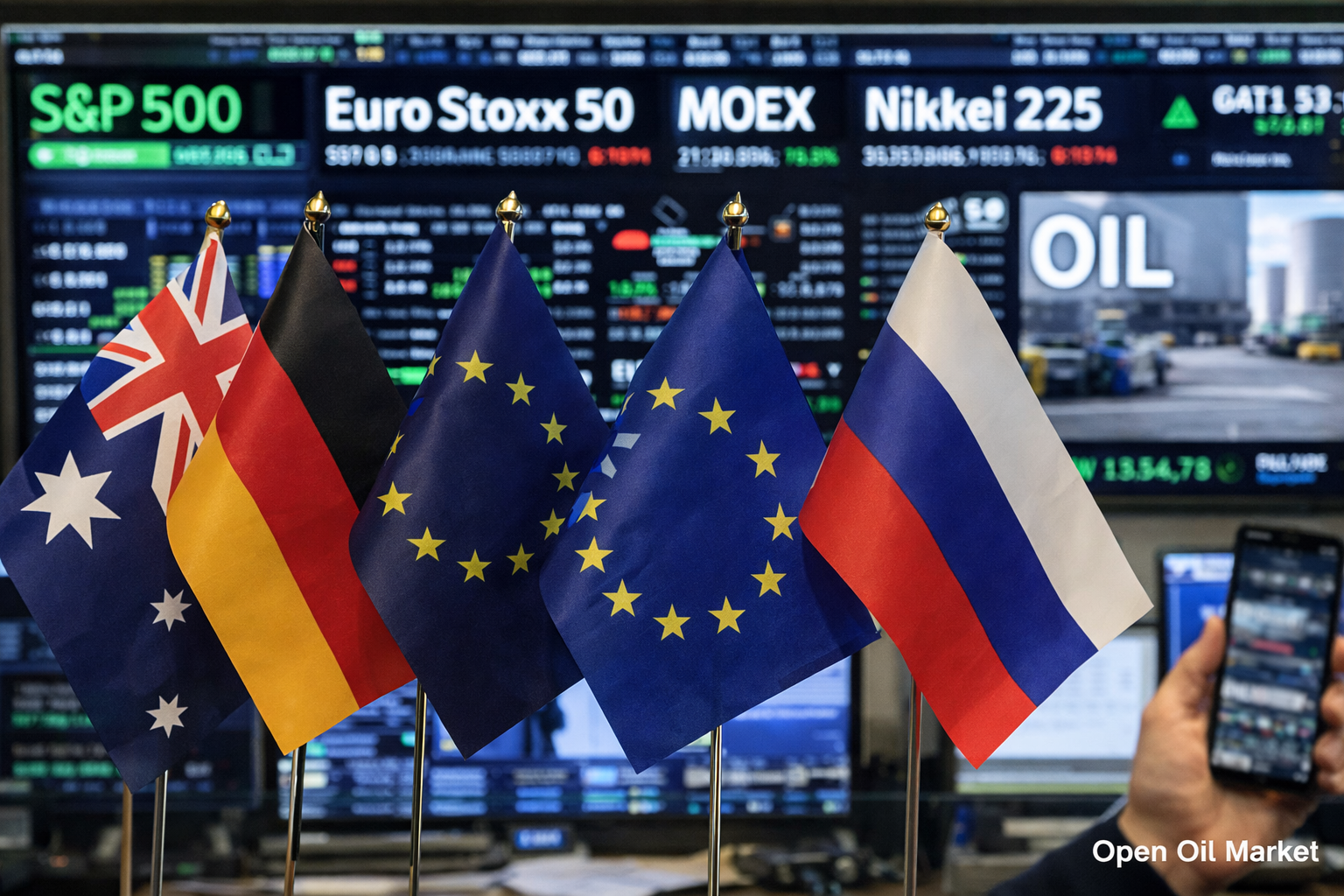
- Indices: Focus on the S&P 500 and Nasdaq due to heavy earnings reports later in the day; in Europe — Euro Stoxx 50; in Asia — Nikkei 225 reacts through global risk appetite.
- Russia: The ruble, OFZ bonds, and stocks on MOEX are sensitive to weekly inflation and expectations for the key rate.
Economic Calendar: Events and Times in Moscow
| Time (MSK) | Country/Region | Event | Key Market |
|---|---|---|---|
| 03:30 | Australia | CPI (January) | AUD, bonds, Asian indices |
| 10:00 | Germany | GDP (detailed data for Q4) | EUR, rates, European stocks |
| 13:00 | Eurozone | CPI / HICP (January, detailed) | EUR, yield curve, banks/insurers |
| 18:30 | USA | EIA Oil Inventories | oil, energy, inflation expectations |
| 19:00 | Russia | Weekly CPI | RUB, OFZ, rate expectations |
Australia: CPI and RBA Policy Expectations
The release of Australia's CPI during the early Asian session often sets the tone for the AUD and rate expectations. For a global portfolio, the dynamics of “core” inflation and the breadth of price increases are essential: the wider the pressure, the harder it is for the market to price in a soft rate trajectory, and the higher the sensitivity of growth stocks to yields.
Europe: Germany's GDP and Eurozone Inflation
In Europe, investors are focused on the balance of “growth vs inflation.” Detailed data on Germany's GDP helps assess demand dynamics and the resilience of industry, while the Eurozone CPI solidifies (or changes) expectations regarding rates and the ECB’s rhetoric. As a result, the most sensitive are: EUR, yields, credit spreads, banks, insurers, and export-oriented companies within the Euro Stoxx 50.
USA: Oil, EIA, and Market Effects
EIA data quickly reflects in WTI/Brent prices and can impact inflation expectations, especially when the market concurrently evaluates the rate trajectory. In this “global environment,” it serves as an important bridge between the macro block (CPI) and corporate earnings: rising oil prices amplify the inflation channel, while falling prices reduce pressure on yields.
Key points to watch in the EIA report details include:
- Crude oil and inventories in Cushing (signal for the physical market);
- Changes in refining and refinery utilization rates (demand from the real sector);
- Gasoline and distillates as proxies for household and logistics demand.
Corporate Reports: Who Is Reporting on This Day
Below are the major public companies scheduled to release earnings reports on February 25, 2026 (or conduct their results calls on this day). For convenience, tickers and session timings (pre-market / post-market) are provided. In the U.S., this is particularly crucial: volatility often comes right after the market closes, affecting the next day in Asia and Europe.
If you're building a portfolio based on indices (S&P 500, Euro Stoxx 50, Nikkei 225, or MOEX), the logic is straightforward: technology reports set the risk mode, retail confirms the state of the consumer, while banks and utilities provide signals on the cost of capital and dividends.
U.S. and Americas: Pre-Market
- Lowe’s (LOW), The TJX Companies (TJX), Circle (CRCL), Hut 8 (HUT), Photronics (PLAB), ODDITY Tech (ODD), Valens Semiconductor (VLN), Blackstone Secured Lending Fund (BXSL), Trinity Capital (TRIN), Ionis Pharmaceuticals (IONS).
U.S. and Americas: Post-Market
- NVIDIA (NVDA), Salesforce (CRM), Snowflake (SNOW), Synopsys (SNPS), The Trade Desk (TTD), Agilent (A), Pure Storage (PSTG), Nutanix (NTNX), Nu Holdings (NU), IonQ (IONQ), Array Technologies (ARRY), Paramount Skydance (PSKY).
Europe and the UK
- HSBC (HSBA), Diageo (DGE), Iberdrola (IBE), Novonesis (NVO), Eiffage (FGR), Fnac Darty (FNAC), Aston Martin Lagonda (AML).
Asia
- Oversea-Chinese Banking Corporation (O39 / OVCHY), Delta Electronics (2308.TW).
Russia
- VTB (VTBR): annual IFRS report (according to the issuer’s calendar).
Investor Focus by the End of the Day
- Check for Time Constraints: macro releases in Europe and EIA come out before the U.S. earnings block; better to plan risk positions in advance.
- Split Risk into Two Windows: (a) CPI and rates during the day, (b) earnings from major tech companies later at night according to MSK.
- Look at Guidance: forecasts and management commentary are often more significant than the actual earnings for the quarter.
- Monitor Oil: an unexpected surprise from the EIA could amplify movements in inflation expectations and indices.
- For Ruble-based Portfolios: weekly CPI and VTB's earnings report are key local catalysts for MOEX.
- Don’t Forget About Liquidity: during earnings releases after the U.S. market closes, spreads and “gaps” at the next day’s opening occur more frequently than usual.
February 25, 2026, is a busy day for global markets, where the economic calendar for CPI and GDP coincides with a dense corporate earnings schedule. The most likely “points” for increased volatility are the middle of the European session and the period after the U.S. market closes.