Current News in the Oil, Gas, and Energy Industry as of January 1, 2026: Oil, Gas, Electricity, Renewable Energy, Coal, and Oil Products. A Global Overview for Investors and Industry Participants in the Energy Sector.
Global Oil Market
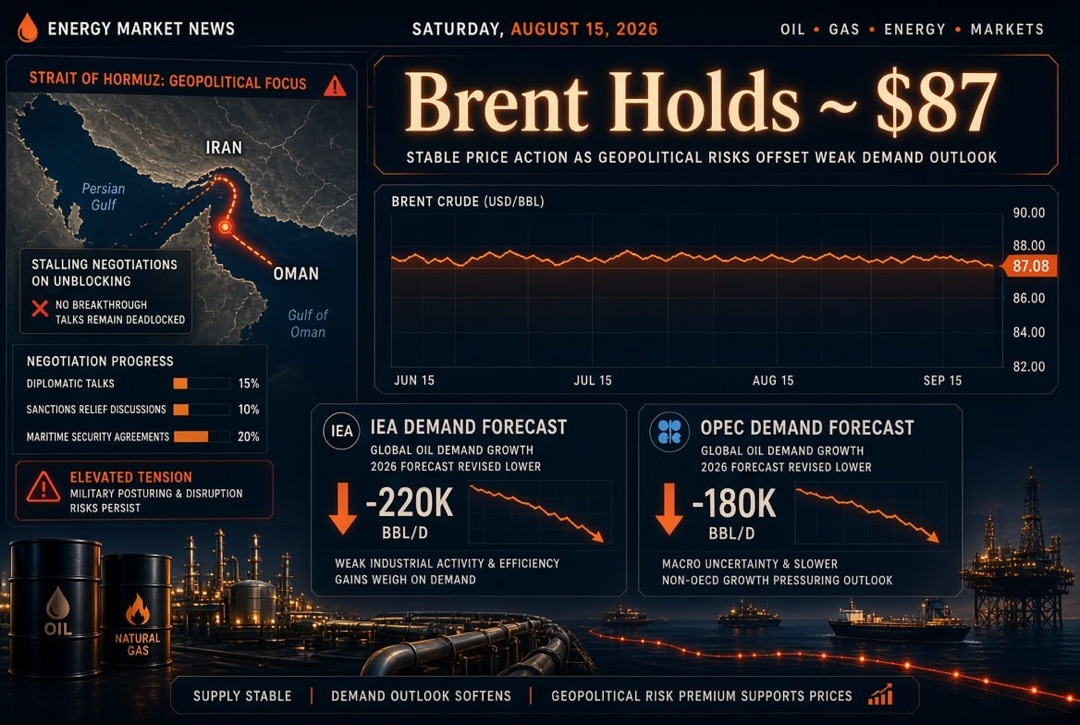
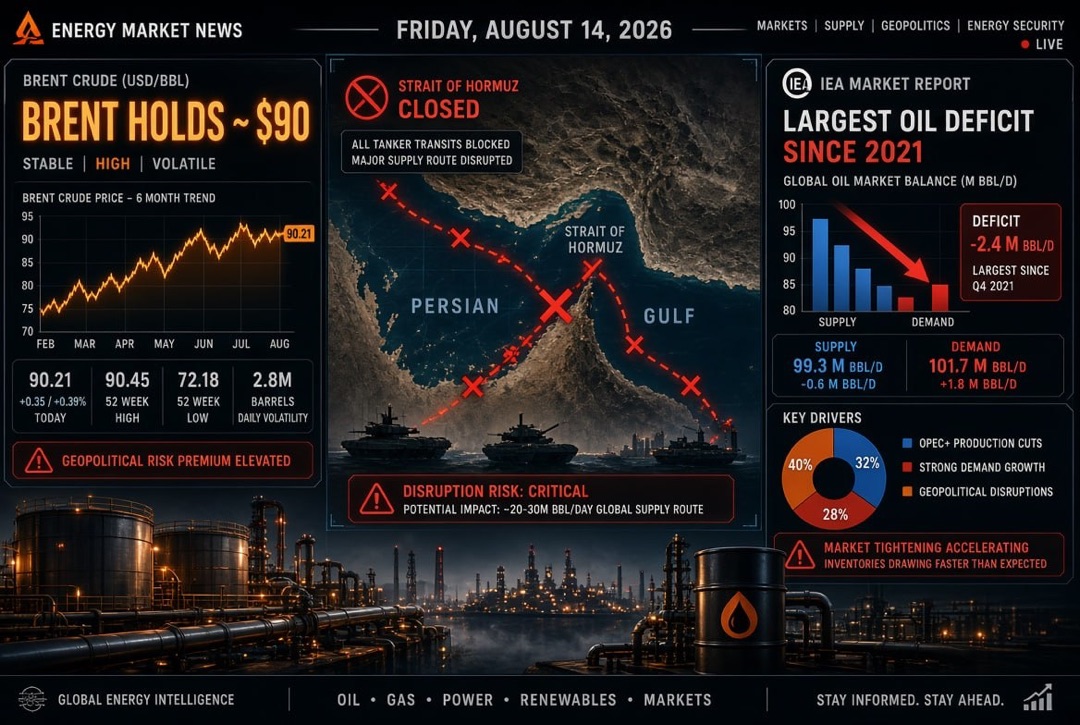
The price of Brent crude oil at the end of December 2025 hovered around $60–64 per barrel, exhibiting slight pullbacks following a brief uptick ahead of the New Year. Overall, experts note that global oil supply significantly exceeds demand: new volumes are increasing from the U.S., Brazil, Canada, and other countries at a faster rate than consumption, creating downward pressure on prices. OPEC+ is expected to maintain current quotas without increasing production at its meeting on January 4, in an effort to address the excess supply growth.
- Supply: Major producers are ramping up output, leading to a surplus of oil in the market.
- Political Risks: U.S. actions regarding Venezuelan oil and attacks on tankers are heightening the risk premium on prices.
- OPEC+: At the January meeting, OPEC+ countries are expected to maintain a pause on increasing production, curbing further export growth.
- Demand: Global demand remains moderate amid economic uncertainty. Growth in consumption from petrochemicals and aviation only partially offsets declines in other sectors.
Thus, despite fundamentally excessive oil stocks, current prices are supported by adverse geopolitical dynamics. With global oil storage nearing record fill levels and supply situations remaining unstable, significant price reductions are not anticipated.
Global Gas Market
Natural gas on the global market exhibits mixed dynamics: European prices continue to decline due to record LNG imports from the U.S., while Asian demand remains restrained by high fuel costs. Gas storage in European underground facilities exceeds 85%, providing a "safety cushion" heading into the winter season. In the U.S., wholesale gas prices (Henry Hub) are fluctuating around $4 per MMBtu, showing moderate seasonal growth during the cold period.
- Europe: Generating companies are actively purchasing LNG, with more than half of European import volumes supplied by America, partially offsetting decreased Russian gas supplies. The excess influx of fuel is leading to falling prices and narrowing the gap between European and Asian quotes.
- Asia: LNG imports are decreasing due to high prices and moderate economic demand. China, the largest consumer, is boosting its own gas production and pipeline imports from Russia and Central Asia, thereby reducing dependence on expensive LNG.
- Local Trends: Compared to the beginning of the year, European gas prices have fallen by approximately 45%, despite cold weather. Gas markets are becoming increasingly integrated due to a steady flow of LNG from the U.S.
The increase in U.S. LNG export supply remains a key factor: record supply is displacing more expensive imports and stabilizing gas prices in Europe and Asia, making gas markets interconnected and less susceptible to seasonal shocks.
Fuel Markets and Oil Products
The situation in oil product markets is characterized by a cautiously bullish sentiment. Due to global maintenance campaigns at refineries and drone strikes on Russian oil refineries, the supply of diesel and gasoline is facing constraints, supporting high margins. Global refineries are operating at nearly maximum capacity; many companies plan to increase refining to take advantage of favorable price discrepancies between crude hydrocarbons and products.
- Market Demand: Daily gasoline and diesel consumption remains stable, but fuel shortages are observed at gas stations in certain regions.
- Reforming: The autumn-winter technical maintenance season has affected key refineries in Europe, the U.S., and China, sustaining high oil product prices despite an excess of crude oil.
- Refinery Margins: The diesel spread has risen to four-year highs amid fierce competition for limited supplies and robust demand for fuel for transportation and industrial uses.
- Russia: The Russian government has extended the temporary export ban on gasoline and diesel until the end of February 2026 to curb rising prices in the domestic market and eliminate local fuel shortages.
Consequently, fuel markets remain volatile: increasing refining capacity may smooth price peaks, but export restrictions and local logistics disruptions will maintain tension. Investors and market participants are closely monitoring news from refineries and fuel stock reports, as these factors will dictate upcoming trends in the oil product sector.
Electricity and Renewable Energy Sources
The global electricity sector continues its transition to low-carbon technologies. By the end of 2025, the share of generation from renewable sources (RES) has set new records: in many countries, solar panels and wind turbines have produced maximum energy output for the year. Analysts note that global capacity for new RES installations has significantly increased compared to the previous five-year period, and energy storage systems (ESS) are being implemented for network stability. The outcomes of the COP30 climate summit reinforce the global community's commitments to increasing "clean" generation.
- Growth of Solar Energy: Asian and Middle Eastern countries have built dozens of gigawatts of new solar parks, while Europe has streamlined approval processes for such projects.
- Wind Energy Generation: In Europe and China, annual wind production has increased: in some regions (e.g., Northern Europe), wind power plants have provided record electricity output.
- Energy Storage: Investments in large battery systems are rapidly increasing, enabling the smoothing of fluctuations in wind and solar generation and reducing reliance on fossil reserves during peak hours.
- Hybrid Energy: To maintain a balance in renewable generation, countries are building new nuclear power plants and upgrading existing reactors, viewing nuclear energy as a key element of a sustainable transition.
Energy companies are expanding their RES project portfolios: many traditional oil and gas giants have announced significant investments in wind and solar power plants, as well as hydrogen projects, reflecting a long-term shift in industry priorities. Experts emphasize that for a successful transition, active updating of electrical grids and infrastructure development is essential; otherwise, the rapid growth of "clean" generation may be restricted by technical barriers.
Coal Sector
Coal markets are showing mixed dynamics. In developed countries, coal demand continues to decline due to accelerated decarbonization and the replacement of coal-fired power plants with gas and renewable sources. However, in Asia, especially in India and some Southeast Asian countries, coal consumption remains high due to the need to ensure base load. Analysts expect that global coal consumption will stabilize or slightly decrease after record growth in 2025.
- Developed Markets: In Europe and the U.S., many coal-fired power plants have been decommissioned or converted to gas, and U.S. coal exports are declining.
- Asia and the Middle East: Rapid industrial growth in China, India, and other countries keeps coal demand high, despite efforts to transition to alternative sources.
- Prices and Trading: After the rise in the first half of 2025, coal prices have stabilized at moderate levels. Chinese coal purchases abroad remain a significant factor for Australia and Indonesia.
Thus, the coal sector is undergoing a redistribution phase. While coal retains its role as a backup source during peak demand periods, investment trends are gradually shifting towards "clean" technologies, reflecting the prospects of a long-term energy transformation.
Market Prospects and Forecasts
Most analysts expect that oil prices will remain at moderately low levels in the first quarter of 2026. Experts estimate that the average Brent price at the beginning of the year will be around $55 per barrel, despite possible short-term fluctuations. The price of U.S. gas (Henry Hub) may rise to ~$4.30 per MMBtu in the winter of 2025/26, but then return to around $4 as demand stabilizes. Electricity consumption is expected to continue growing by 1–2% per year in developed countries, supported by an increase in the share of RES. Global coal consumption is forecasted to be lower by 2026 than in the previous year.
- Oil: A supply surplus is expected to persist at least until the summer of 2026, which will continue to suppress prices unless OPEC+ returns to reducing quotas.
- Gas: Further increases in U.S. LNG exports will keep prices low in Asia and Europe, although winter demand peaks may temporarily elevate quotes.
- Electricity: The increase in RES generation will gradually reduce dependence on fossil sources. Energy companies continue to invest in expanding "clean" generation and modernizing networks.
- Investments: Energy companies plan to diversify their assets: a rise in investments in renewable projects, hydrogen initiatives, and exploration of new fields is expected.
Overall, energy markets are entering 2026 with moderate optimism: the balance of supply and demand is supporting relative price stability for now. However, any significant changes in geopolitics or economic activity could rapidly alter the trend direction. Investors continue to closely monitor industry news and reports on global energy reserves, which will serve as key directional factors in the coming months.
The Open Oil Market team extends warm wishes to all readers for a prosperous New Year 2026 and success in their endeavors in the fuel and energy markets!