Current News from the Oil, Gas, and Energy Sector for Friday, June 12, 2026: Hormuz Strait, Rising Geopolitical Premiums in Oil, LNG Market, Oil Products, Refineries, Electricity, Renewable Energy Sources (RES), and Coal
Friday, June 12, 2026, finds the global fuel and energy complex in a state of heightened volatility. The main topic of the day is the geopolitical premium in oil, risks of supply through the Hormuz Strait, realignment of LNG flows, increased refining margins, and the strengthening role of the U.S. as an exporter of oil and oil products. For investors, oil companies, fuel traders, refineries, gas operators, electricity producers, and the renewable energy sector, this is no longer a local crisis but a global test of energy infrastructure resilience.
The global oil, gas, electricity, coal, and oil products market is responding simultaneously to several factors: restrictions on Middle Eastern logistics, high demand for diesel and jet fuel, rising gas prices in Europe, accelerated solar generation, network strain, and revised forecasts for oil demand. In such an environment, the key factor is not just the price levels of Brent, WTI, LNG, or coal, but the ability of companies to quickly adjust routes, procurement, processing, and hedging.
Oil: The Market is Pricing in Risk Premiums Once Again
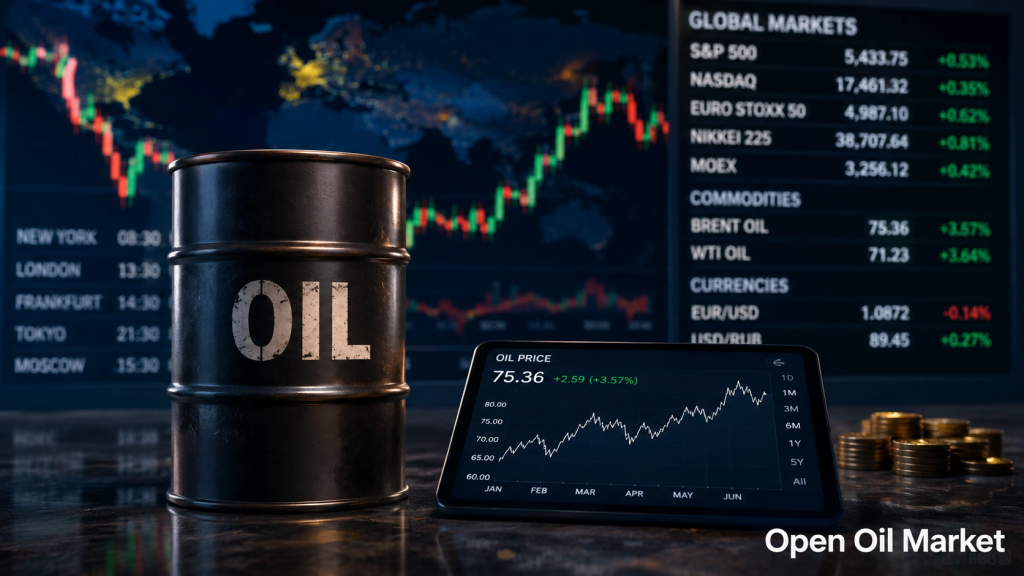
The oil market remains in the spotlight of the global energy sector. Brent is holding at elevated prices, while WTI is also trading with a noticeable geopolitical premium. The reason lies in the persistent risks surrounding the Hormuz Strait, through which a significant portion of global oil, LNG, and oil product trade passes.
For oil companies and investors, this means that the market has shifted from merely assessing the standard supply-demand balance to evaluating the risk of physical shortages. Even if some shipping continues, insurance premiums, freight costs, shipment delays, and route changes are increasing the cost per barrel for the end consumer.
- For producers, high oil prices support cash flow.
- For refineries, risks of raw material shortages and rising procurement costs are increasing.
- For fuel companies, pressure on working capital is intensifying.
- For consumers, the risk of rising prices for gasoline, diesel, and jet fuel is increasing.
OPEC Revises Demand: The Market Becomes Less Clear-Cut
OPEC has once again lowered its forecast for global oil demand growth in 2026. This is an important signal: even with high prices and geopolitical risks, the cartel sees signs of cooling consumption. For investors, this creates a dual picture. On one hand, supply constraints support prices. On the other hand, expensive oil begins to dampen demand in transportation, industry, and petrochemicals.
The most sensitive segments include aviation, freight transport, the construction sector, petrochemicals, and importing countries heavily reliant on fuel. If oil and petroleum product prices remain high, the market could face not only a supply shortage but also a forced reduction in consumption.
The U.S. Strengthens Its Role in Global Oil Trading
One of the key structural changes is the growing role of the U.S. as an exporter of oil, LNG, and petroleum products. The American shale industry, Gulf Coast refineries, and export infrastructure are gaining additional significance against the backdrop of supply issues in the Middle East and instability in traditional shipping routes.
For Europe and Asia, this means a further pivot to American energy resources. For the U.S., it signifies enhanced geopolitical influence through the export of oil, gas, diesel, gasoline, and LNG. For the energy sector, this also means a deeper dependence of prices on American logistics, inventory levels, shipping rates, and export policies.
Gas and LNG: Europe and Asia Compete for Flexible Supplies
The gas market remains tense. The European TTF is trading at elevated levels compared to last year, while the LNG market is reacting to supply risks from the Middle East and rising demand in Asia. The main question for gas companies and traders is how quickly Europe can fill its underground storage facilities before winter and whether it will enter direct price competition with Asia for available LNG cargoes.
For gas market participants, three areas are crucial:
- Availability of available LNG cargoes on the spot market;
- The cost of freight and tanker insurance;
- The rate of gas injection into European storage facilities.
The growth in LNG exports from the U.S. partially mitigates risks but does not eliminate the problem entirely. If Asian demand increases due to heat waves, industrial recovery, or disruptions in coal generation, European buyers may have to pay a premium.
Oil Products and Refineries: Diesel Again Becomes a Strategic Commodity
Oil refining remains one of the most profitable yet vulnerable segments of the energy market. Decreasing inventories of oil products at major trading hubs, including Asia, show that shortages are affecting not only crude oil but also finished fuels. Diesel, marine fuel, jet fuel, and gasoline blending components are particularly sensitive.
High refining margins support the stocks and cash flows of refineries, especially in the U.S., India, South Korea, and the Middle East. However, for independent fuel companies, this means rising procurement costs, increased credit burdens, and the need for precise inventory management.
- Diesel remains a key indicator of industry and logistics health.
- Jet fuel reflects pressure on air transport and tourism.
- Gasoline indicates the resilience of consumer demand.
- Fuel oil and marine fuel depend on maritime trade and sanction logistics.
Electricity: Demand Increases Due to Data Centers and Electrification
The global electricity sector is entering a period of accelerated load growth. Data centers, artificial intelligence, electric vehicles, heat pumps, industrial electrification, and new manufacturing capacities are driving up electricity demand. This is particularly evident in the U.S., Europe, India, China, and the Persian Gulf states.
For energy companies, this creates new investment opportunities in generation, networks, energy storage, and demand management. However, the risk of grid capacity shortages is simultaneously increasing. Even with rapid construction of solar and wind power plants, the primary limitations are not the panels and turbines, but grid connections, transformers, storage solutions, and dispatching.
RES: Solar Energy Becomes Coal's Main Competitor
The renewable energy sector continues to strengthen its position. Solar generation is becoming one of the main sources of global electricity growth, and renewable energy is increasingly competing with coal in the global energy balance. For investors, this means that the energy transition is not halted, even amid high oil prices, high gas prices, and political disputes over subsidies.
At the same time, renewable energy sources are facing a new type of risk. Europe is tightening control over equipment for solar power plants, including inverters, due to cybersecurity concerns and dependency on Chinese manufacturers. This could slow down the commissioning of new projects and increase capital expenditures, but it simultaneously opens a window of opportunity for local equipment manufacturers, storage systems, and digital solutions for networks.
Coal: Temporary Demand Support Does Not Cancel Long-Term Pressure
The coal market remains heterogeneous. In Asia, coal continues to play an important role in electricity generation, especially during hot weather, increased air conditioning, and gas supply constraints. However, in Europe and the U.S., coal is increasingly being displaced by gas, renewable energy, and energy storage solutions.
For coal companies, the current environment may provide short-term support, particularly in the thermal coal segment for Asia. However, the long-term investment thesis is becoming increasingly complex: banks, funds, and large industrial consumers continue to factor in carbon risks, regulations, and emission costs.
Implications for Investors and Energy Sector Companies
The main takeaway as of June 12, 2026, is that the global energy sector is in a phase of risk reassessment. Oil and gas remain strategic assets, oil products are becoming a bottleneck in global logistics, and electricity is evolving into the central infrastructure of the new economy. It is crucial for investors to look beyond just the price of Brent or TTF, but to consider the entire value chain—exploration, transportation, refining, storage, trading, distribution, and generation.
Key factors to watch in the coming days include:
- The situation surrounding the Hormuz Strait and insurance rates for tankers;
- The dynamics of Brent, WTI, and regional grades of oil;
- Stocks of crude oil, diesel, gasoline, and jet fuel;
- The rate of gas injection into European storage facilities;
- Spot prices for LNG in Europe and Asia;
- Refinery margins and availability of raw materials for processing;
- The load on electrical grids due to data centers and industry;
- Investments in RES, energy storage, and grid infrastructure.
For oil companies, the current situation supports revenue but increases operational and logistics risks. For gas companies, LNG and access to flexible contracts remain crucial. For refineries and fuel companies, inventory and working capital management take center stage. For the electricity sector and RES, a lengthy investment cycle emerges, linked to rising electricity consumption, grid modernization, and storage development.
On a global scale, the energy market is entering a new phase: supply security is becoming as crucial as pricing, and infrastructure flexibility is becoming the main competitive advantage. This is why the news from the oil, gas, and energy sector on June 12, 2026, is significant not just for traders but also for investors, industrial consumers, fuel companies, and all participants in the global energy market.