Oil Market: Weekly Growth While Maintaining a Risk Premium
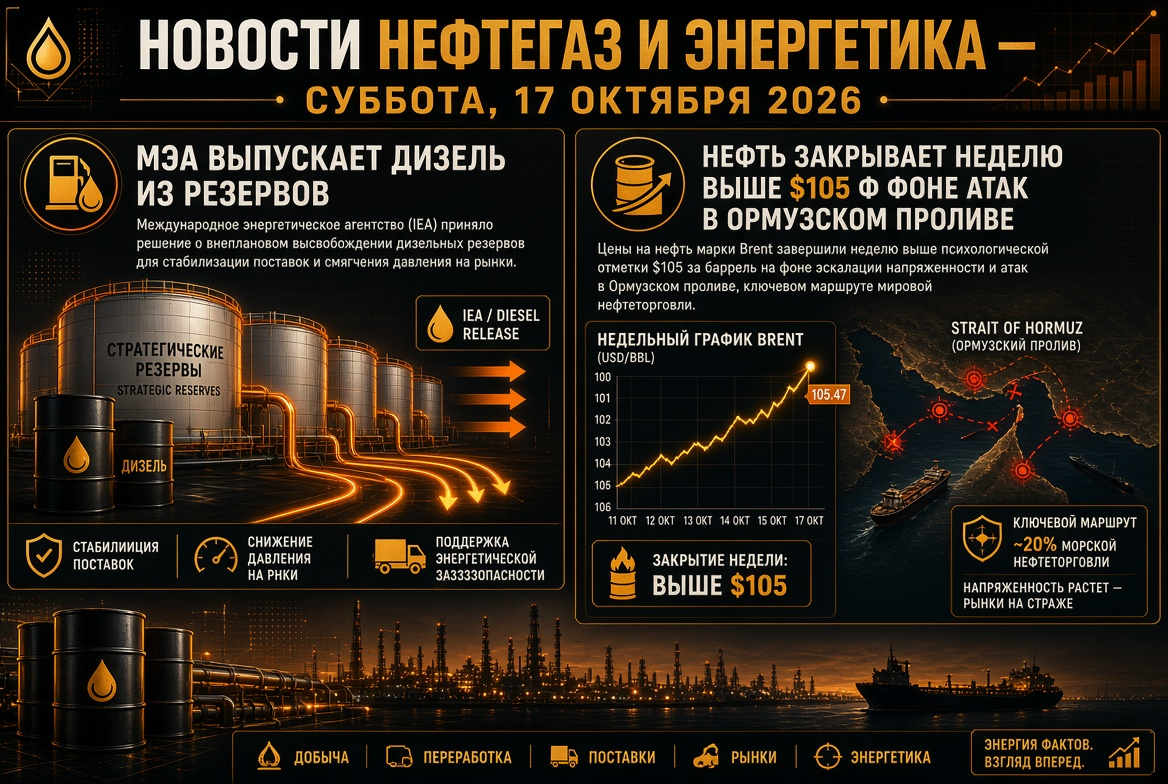
On Friday, oil prices experienced a modest decline, but the week finishes positively for the oil market. The December futures for Brent traded in the range of $105–105.5 per barrel, while WTI hovered around $97.
- Weekly Dynamics: Brent increased by less than 1%, while WTI rose by about 6%.
- U.S. Stocks: Commercial oil inventories fell by 8.5 million barrels for the week ending October 9, contrary to expectations for a slight increase. This marks the largest decrease since the onset of the war.
- Hurricane Factor: Some production in the Gulf of Mexico was temporarily halted, supporting the American benchmark.
- Brent-WTI Spread: The spread narrowed to approximately $8 per barrel after surpassing $9 earlier in the week.
Brent remains approximately 70% more expensive than a year ago. Analysts note that the market still carries a significant geopolitical premium, which can only be alleviated through an agreement between the U.S. and Iran.
Strait of Hormuz: Oil Flows Recover but Unsteadily
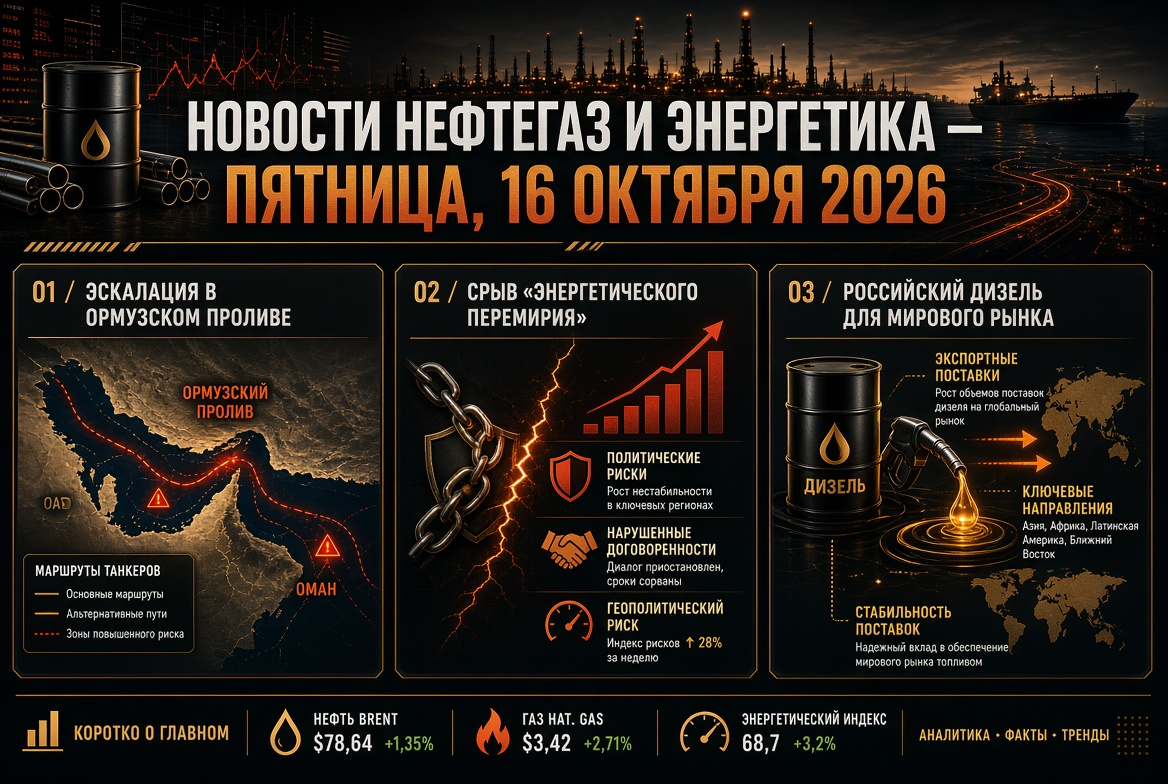
The situation in the Strait of Hormuz remains the primary pricing factor for oil, LNG, and petroleum products.
- Crude Flows: In the week leading up to October 13, an average of about 11.6 million barrels per day passed through the strait, approximately 68% of the pre-war level of 17.15 million.
- Shipping: The number of transits for the week fell to 131. Many container lines have rerouted their paths to bypass the strait.
- Incidents: Following the sinking of the container ship GFS Pride, new reports have emerged about a fire on a tanker in the Gulf of Oman.
- Conflicting Signals: Tehran claims to have closed the strait, while U.S. military sources report the passage of over 19 million barrels of oil per day under escort.
High prices make voyages commercially viable even amid military risks: demand from Asian buyers incentivizes ship owners to continue transportation.
IEA and G7: Second Major Reserve Release this Year
The IEA has decided to release an additional 100 million barrels to the market as part of the March agreement, including over 20 million barrels of diesel fuel. This follows the G7 countries' agreement from October 2 to release reserves over a four-month period, prioritizing diesel supply in the first 20 days.
- The diesel refining margin in Europe fell by almost 2% after the announcement.
- Several analysts believe that reserves only partially alleviate tension in the middle distillate market.
- The U.S. is considering easing sanctions against vessels belonging to the "shadow fleet" to reduce record freight rates.
Fuel Oil — A New Narrow Segment
In addition to diesel, the shortage of bunker fuel is intensifying. According to Vitol's estimates, the conflict in the Middle East has reduced fuel oil supplies from the Persian Gulf by about 800,000 barrels per month, with additional losses of 1 million tons per month due to strikes on Russian refineries. For bunker companies and shipping, this signifies sustained high fuel prices.
OPEC+: Quotas on Hold, Production Below Targets
Seven key OPEC+ participants — Saudi Arabia, Russia, Iraq, Kuwait, Kazakhstan, Algeria, and Oman — have kept the quotas for November unchanged.
- Target levels stand at approximately 10.5 million barrels per day for Saudi Arabia, 9.9 million for Russia, and 4.4 million for Iraq.
- The actual production of the alliance's core members in August was about 25 million barrels per day, roughly 5 million below the pre-war level.
- About 2 million barrels per day in cuts remain in effect.
- An audit of production capacities will establish the baseline production levels for 2027.
The next meeting of the alliance is scheduled for November 1. The influence of OPEC+ on the physical oil market remains limited: logistics in the Persian Gulf play a decisive role.
Gas and LNG: Europe Enters Winter with Supply Shortages
The European gas market remains one of the most pressured segments of the global energy sector.
- Prices: TTF futures are trading around €86 per MWh, roughly 2.6 times higher than the level recorded a year ago.
- Storage: EU gas storage facilities are approximately 74% full, with a five-year average target of about 89%. Brussels has lowered the target from 90% to 80%.
- Asia: The JKM indicator hovers around $26 per MMBtu, with Europe and Asia competing for every LNG shipment.
During the Russian Energy Week, the notion of a "golden age" for gas was discussed: it is no longer viewed solely as a transition fuel. Notably, SOCAR announced its intention to purchase gas from Gazprom — a signal of a restructuring in regional gas flows.
Coal: Expensive LNG Revives Demand in Asia
Newcastle thermal coal is trading around $150 per ton. The October high of $152.20 is the highest level since October 2024, with a year-on-year increase exceeding 40%.
- Quality thermal coal is approximately $20 per MMBtu cheaper than LNG in key Asian markets.
- Combined coal imports by China, Japan, and South Korea in Q4 could increase by about 20 million tons.
- In Russia, industry estimates suggest that losses for coal producers may decrease by about 200 billion rubles by 2027.
Power and Renewables: A Focus on Reliability
The energy crisis accelerates investments in both renewable energy and backup generation.
- In Europe, energy companies are combining solar plants with storage, reducing dependence on gas during peak hours.
- In Russia, Gazprom Energoholding plans to establish new stations in Moscow with a capacity of up to 480 MW, while distributed generation is being discussed as a necessary measure.
- On October 29, the IEA will present its Renewables 2026 report with updated forecasts for renewable capacity additions.
Russia: The Oil Product Market, Refineries, and Production
The domestic fuel market in Russia is demonstrating short-term stabilization in the context of restrictions and the diesel deal with the U.S.
- Retail: the average price of gasoline is 78.68 rubles per liter, and diesel fuel is 86.67 rubles. Since the beginning of the year, gasoline has increased by 21.4%, while diesel has risen by 13.5%.
- Exports: the ban on gasoline exports is in effect until January 31, 2027, while restrictions on diesel exports have been lifted early.
- Diesel Deal: supplies to the U.S. and global markets are set at 300,000 tons in October, 500,000 tons in November, and 1 million tons in December.
- Production: The Laya Vozhskoye field in the NAO has been put into pilot industrial operation. The Ministry of Energy and the Ministry of Finance are adjusting tax incentives for hard-to-recover reserves.
The key risk for the refining sector is the state of the refineries following the breakdown of the "energy truce": the export volumes of petroleum products depend directly on the utilization of the plants.
What Matters for Energy Sector Investors Next Week
- Strait of Hormuz: An increase in oil flows could reduce the risk premium, while new attacks could drive Brent back to $110.
- IEA Reserves: The pace of diesel entering the market will determine the dynamics of crack spreads and refinery margins.
- Sanctions Against the "Shadow Fleet": An official decision from the U.S. could lower freight rates.
- EIA Data on U.S. oil reserves is due on October 21.
- Bank of Russia Meeting on October 23: inflation has accelerated to 7.2%, which is important for assessing oil and gas company shares.
- Political Calendar: OPEC+ meeting on November 1 and U.S. midterm elections on November 3.
The week's conclusion: the global oil, gas, coal, and petroleum products markets remain structurally deficient. The release of strategic reserves and new logistical schemes mitigate price spikes but do not eliminate the primary cause of tension — instability in supplies from the Persian Gulf. For energy market participants, prioritizing hedging price risks, diversifying supplies, and controlling refinery margins remains essential.