Oil Refining, Diesel Market, Oil Tankers, LNG, Electricity, and Renewable Energy — Energy Sector News for July 13, 2026
On Monday, July 13, 2026, the global fuel and energy complex is entering a state not characterized by a classic oil shock but rather a more intricate imbalance: crude oil appears more stable than during the acute escalation around the Strait of Hormuz; however, the market for petroleum products, diesel, gasoline, and refining remains tense. For investors, market participants in the energy sector, fuel companies, oil companies, and refinery operators, the primary concern is not just the price of Brent or WTI but the availability of physical fuel, the resilience of logistics, the condition of refining capacities, and the ability of the power sector to withstand growing demand.
A key theme of the day is the divergence between the more moderate dynamics of oil and the persistent shortages in the downstream segment. This changes the risk structure: oil companies with access to refining and export logistics are benefiting from margin support, while consumers of diesel, jet fuel, gasoline, fuel oil, and industrial fuel are facing increased costs.
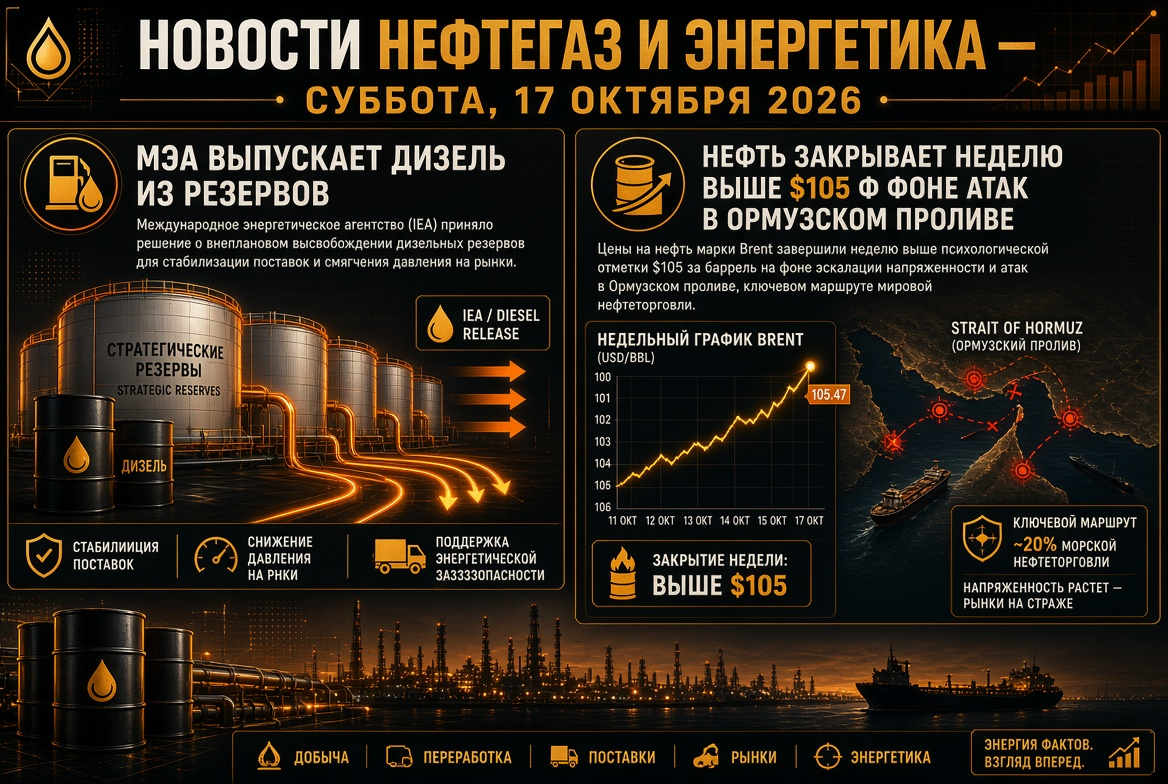
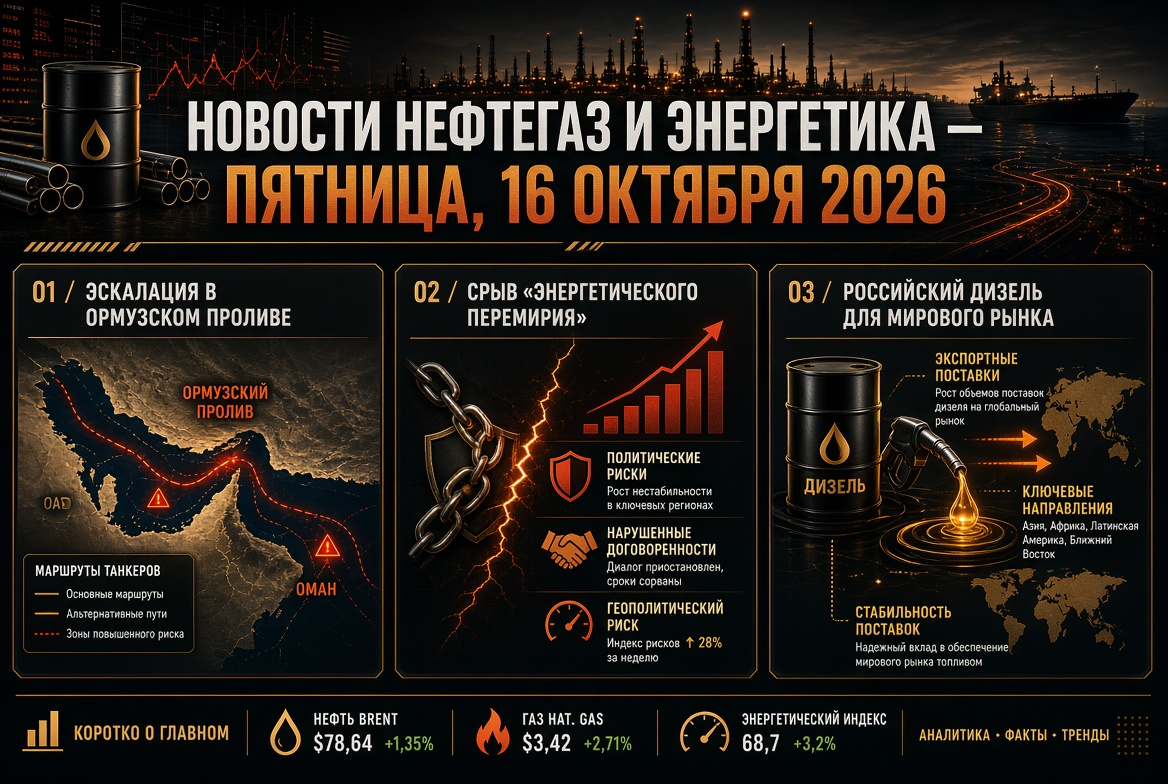
Oil: Brent and WTI Retreat from Peaks, but Geopolitical Premium Persists
After a spike in volatility induced by a new phase of tension between the United States and Iran, the oil market is attempting to return to a more balanced regime. Brent is trading near a zone that has become an intermediate corridor for investors between military premiums and expectations of surplus supply in 2027. WTI also remains below spring's extreme levels, but any news regarding tankers, the Strait of Hormuz, or new sanctions quickly brings buyers back into the market.
For oil companies, this means the baseline scenario for the coming weeks revolves around three factors:
- the pace of recovery of maritime supplies through the Middle East;
- decisions by OPEC+ regarding increasing or curbing production;
- actual demand for oil from Asia, the U.S., and Europe during the summer fuel consumption period.
In the raw material sector, investors will be closely monitoring not only Brent quotes but also time spreads, OECD inventories, volumes of oil at sea, and buyer behavior in India, China, South Korea, and Japan. If the market sees a sustainable recovery of flows through the Persian Gulf, pressure on oil may intensify. If geopolitics strikes logistics once more, the risk premium will quickly return.
OPEC+, Saudi Arabia, and Strategic Control Over Raw Material Supply Chains
Saudi Arabia is strengthening the connection between energy, industry, and mineral resources. For the global energy sector, this is an important signal: the largest oil producers no longer view energy as a separate sector. Oil, gas, petrochemicals, metals, refining, logistics, and infrastructure are all becoming part of a unified industrial strategy.
For OPEC+, the current situation is twofold. On one hand, increasing production helps stabilize the market and contain prices for consumers. On the other hand, a too-rapid increase in supply during the recovery of maritime logistics could bring discussions of oil surplus back to the forefront. In this configuration, it is crucial for investors to monitor not only official quotas but also actual production, export prices from Saudi Aramco, and trends in supplies from the UAE, Iraq, Kazakhstan, the U.S., and Brazil.
Refineries and Petroleum Products: The Main Center of Tension Has Shifted to Refining
The hallmark of the current moment is that oil no longer fully explains the situation in the fuel market. Even with calmer raw material prices, gasoline, diesel, and gasoil remain expensive due to refining constraints. Attacks on Russian energy infrastructure, shutdowns of major refineries, disruptions in the U.S., and incomplete recovery of export refining capacities in the Middle East are creating a global deficit of petroleum products.
For fuel companies, this means that the importance of operating reliability in refineries is increasing. The key considerations now include:
- flexibility in refining between gasoline, diesel, jet fuel, and fuel oil;
- access to maritime freight and terminals;
- inventories of petroleum products in key hubs;
- the ability to redirect batches between Europe, Asia, the U.S., Latin America, and the Middle East.
Refineries are becoming not just industrial assets but strategic nodes for energy security. Companies with modern refining capabilities and a high yield of light petroleum products can maintain strong margins even with moderate oil prices.
Diesel: Russian Export Restrictions Intensify Global Shortages
The diesel market is the most sensitive part of today’s energy agenda. Diesel is used in freight transportation, agriculture, construction, industry, power generation, and the extraction sector. Therefore, rising diesel prices quickly translate into inflation, logistics, and the production costs of raw materials.
Restrictions on Russian diesel exports have intensified competition for alternative supplies. Countries that previously procured Russian fuel now have to compete with Europe, Latin America, and other importers for American and Middle Eastern volumes. This is particularly critical for Brazil, Turkey, Mediterranean countries, and emerging markets, where diesel directly affects the cost of electricity, agricultural production, and transportation infrastructure.
For investors in oil and energy, the key takeaway is straightforward: the petroleum products market can remain tense even when Brent prices stop rising. Therefore, the stocks of refiners, traders, logistics operators, and companies with access to export terminals require separate assessment.
Gas and LNG: Energy Security Now Overrides Minimum Pricing
The gas and LNG market is also influenced by Middle Eastern geopolitics, demand in Asia, and European preparations for winter. Europe continues to strengthen its strategic gas reserves, and Germany is discussing the creation of an additional state emergency reserve. This indicates that after several years of energy crisis, gas security remains a priority even amid the development of renewable energy sources.
In Asia, the situation is even more complicated. Developing economies require electricity for industry, data centers, and urbanization, but LNG projects necessitate time, infrastructure, and guaranteed supplies. Vietnam is considering expanding coal generation as the development of LNG power plants is lagging behind the growth of electricity demand.
For gas companies and investors, this means that long-term contracts, regasification terminals, floating LNG solutions, and pipeline infrastructure are once again receiving a premium for reliability. Gas remains a transitional fuel, but its value is increasingly determined not only by extraction volumes but also by delivery routes.
Electricity: AI, Data Centers, and Industry Are Shifting Demand Structure
The electricity sector is becoming the central focus of the global energy complex. The growth of data centers, artificial intelligence, transportation electrification, and industrial automation is placing increased strain on networks. The United States is anticipating new electricity consumption records in 2026 and 2027, and energy companies are already facing shortages of transformers, connections, and network infrastructure.
For the market, this means that generation, networks, and backup capacity will be valued by investors more highly than in previous years. Key priorities include:
- gas-fired power plants as a quick balancing source;
- nuclear energy and small modular reactors;
- solar and wind generation combined with energy storage;
- network equipment, transformers, and load management systems.
Electricity is no longer a background sector. It has become the infrastructure base for AI, industry, mining, cloud services, and technological competition among the U.S., Europe, China, India, and the Middle East.
Renewables and Nuclear Energy: The Energy Transition Becomes More Pragmatic
Renewables continue to demonstrate structural growth, particularly solar energy, but the current crisis indicates that simply adding new capacities is insufficient. Sustainable energy requires networks, storage, backup generation, flexible consumption, and long-term mechanisms for capacity payment. Therefore, the energy transition is becoming less ideological and more pragmatic.
Interest in nuclear energy is growing amid rising electricity demand from data centers and industry. Companies involved in the nuclear fuel cycle, small modular reactors, nuclear power plant maintenance, and the restart of older capacities are receiving increased attention from investors. This does not negate the growth of renewables but adds reliable base generation to energy strategy.
Coal: Asia Reintroduces It as a Tool for Energy Resilience
Coal remains a controversial but important element of global energy. In Asia, the demand for thermal coal is supported by industry, hot weather, LNG restrictions, and governments' desire to avoid electricity shortages. China, India, Vietnam, Japan, and South Korea are balancing their climate commitments with the physical reliability of energy systems.
For the raw materials sector, this indicates that coal is not disappearing from the investment map. However, the market is becoming more regional: logistics, coal quality, environmental restrictions, port infrastructure, and regulation play as crucial a role as basic demand. In the long run, coal remains pressured by renewables and gas, but in the short term, it is once again being used as a backup resource.
What Matters to Investors, Oil Companies, and Energy Market Participants
As of Monday, July 13, 2026, the global energy landscape demonstrates not one crisis but several interconnected imbalances. Crude oil is stabilizing, but petroleum products remain expensive. Gas remains a transitional fuel, but LNG is facing infrastructure limitations. Electricity is growing as a strategic market, but networks are lagging behind AI and data centers. Renewables are advancing but require storage and reserves. Coal retains its importance where reliability trumps decarbonization.
Investors and energy market participants should monitor the following indicators:
- dynamics of Brent, WTI, and oil time spreads;
- refinery margins, crack spreads for diesel, gasoline, and gasoil;
- export of petroleum products from the U.S., Russia, the Middle East, and Asia;
- fill levels of gas storage facilities in Europe and LNG prices in Asia;
- growth rates of electricity demand from AI and data centers;
- investments in gas-fired power plants, nuclear energy, renewables, and networks;
- coal imports in Asia and policies regarding backup generation.
The main takeaway of the day: the global energy sector is entering a new phase where oil prices are no longer the sole barometer of energy risk. In 2026, the key advantage will accrue to companies that control not only extraction but also refining, logistics, storage, electricity generation, and access to end consumers. For oil companies, fuel operators, refineries, and investors, this means a shift from merely betting on raw materials to analyzing the entire value chain in energy.