Current News in the Oil, Gas, and Energy Sector for Friday, January 9, 2026: Oil and Gas Market, Energy, Renewable Energy Sources, Coal, Oil Products, Refineries, and Key Global Trends in the Fuel and Energy Complex.
The latest events in the global fuel and energy complex as of January 9, 2026, capture the attention of investors and market participants with a combination of supply surplus and escalating geopolitical tensions. In the early days of the year, the price of Brent crude oil fell below the psychological threshold of $60 per barrel amid an oversupply of oil and modest demand. Simultaneously, unprecedented actions by the U.S. in Venezuela—namely, the capture and arrest of President Nicolas Maduro along with a subsequent plan to resume Venezuelan oil exports—are reshaping supply routes and straining relations between Washington and Beijing. The European gas market is navigating the winter with stability, as high storage levels and record LNG imports keep prices at moderate levels. The global energy transition is also gaining momentum, with new records in power generation from renewable energy sources (RES) being recorded worldwide, though traditional resources continue to be essential for system reliability. In Russia, following last year's fuel crisis, measures of state regulation of the domestic oil products market remain in effect, including the extension of export restrictions. Below is a detailed overview of key news and trends in the oil, gas, electricity, and commodity sectors as of this date.
Oil Market: Oversupply Pressures Prices, OPEC+ Signals Readiness to Act
Global oil prices are under notable pressure at the start of 2026 due to supply exceeding demand. The price of North Sea Brent crude has dipped to ~$58–59, for the first time in recent years falling below the $60 mark, while American WTI is trading around $55 per barrel. Industry experts estimate that total oil production surged significantly in 2025 (OPEC countries increased exports, and non-OPEC growth was even more substantial), suggesting a supply surplus of up to 2–3 million barrels per day may occur in the first half of 2026. The slowdown in global economic growth is exacerbating the situation, with oil demand increasing by only about 1% annually (compared to typical growth of 1.5% prior to the crisis). Additionally, geopolitical factors are creating pressure on oil prices: the unexpected U.S. operation in Venezuela and Washington's plans to lift the oil embargo on Caracas have led to expectations of substantial volumes of "new" Venezuelan oil entering the market. Market participants are factoring in this potential increase in supply into prices, contributing to their further decline. In such conditions, the OPEC+ alliance is compelled to consider emergency measures to support the market. Saudi Arabia and its partners are signaling a willingness to return to production cuts if oil prices continue to fall below levels comfortable for producers. While no new official agreements have been announced, the rhetoric of key players provides investors with some hope for coordinated actions that could stabilize the oil market.
Gas Market: Europe Confidently Navigates Winter Thanks to Reserves and Record LNG Imports
The gas market is primarily focused on Europe, which displays a much more resilient position compared to the crisis winters of 2022-2023. EU countries welcomed 2026 with gas storage facilities filled to an average of over 60% capacity—an unprecedented high level for mid-winter, significantly exceeding historical norms. Moderately warm weather in December, along with record volumes of liquefied natural gas (LNG) imports, allowed Europeans to reduce withdrawals from storage. As a result, early January gas prices in Europe are being maintained at relatively low levels: the key Dutch TTF index hovers around €28–30 per MWh (approximately $9–10 per MMBtu). Although colder winter weather has caused a slight rise in demand, prices remain significantly lower than the peak two years ago.
European energy companies are successfully compensating for the halt of pipeline supplies from Russia by increasing LNG imports from around the world. In 2025, LNG imports to Europe grew by approximately 25% year-over-year, reaching around 127 million tons—primarily driven by the U.S., Qatar, and African countries. Recently introduced floating LNG regasification terminals in Germany, the Netherlands, and other countries have expanded receiving capacities and bolstered regional energy security. Analysts expect that by the end of the heating season, the EU will retain a significant volume of reserves (around 35–40% of the capacity of underground gas storage by spring), which instills confidence in the absence of gas shortages entering the next winter period. In Asian countries, LNG prices are traditionally somewhat higher than European prices (the Asian JKM index remains above $10 per MMBtu), but the global gas market is generally in a state of relative balance due to abundant supply and restrained demand.
International Politics: U.S. Redirects Venezuelan Oil, Sanctions Confrontation Continues
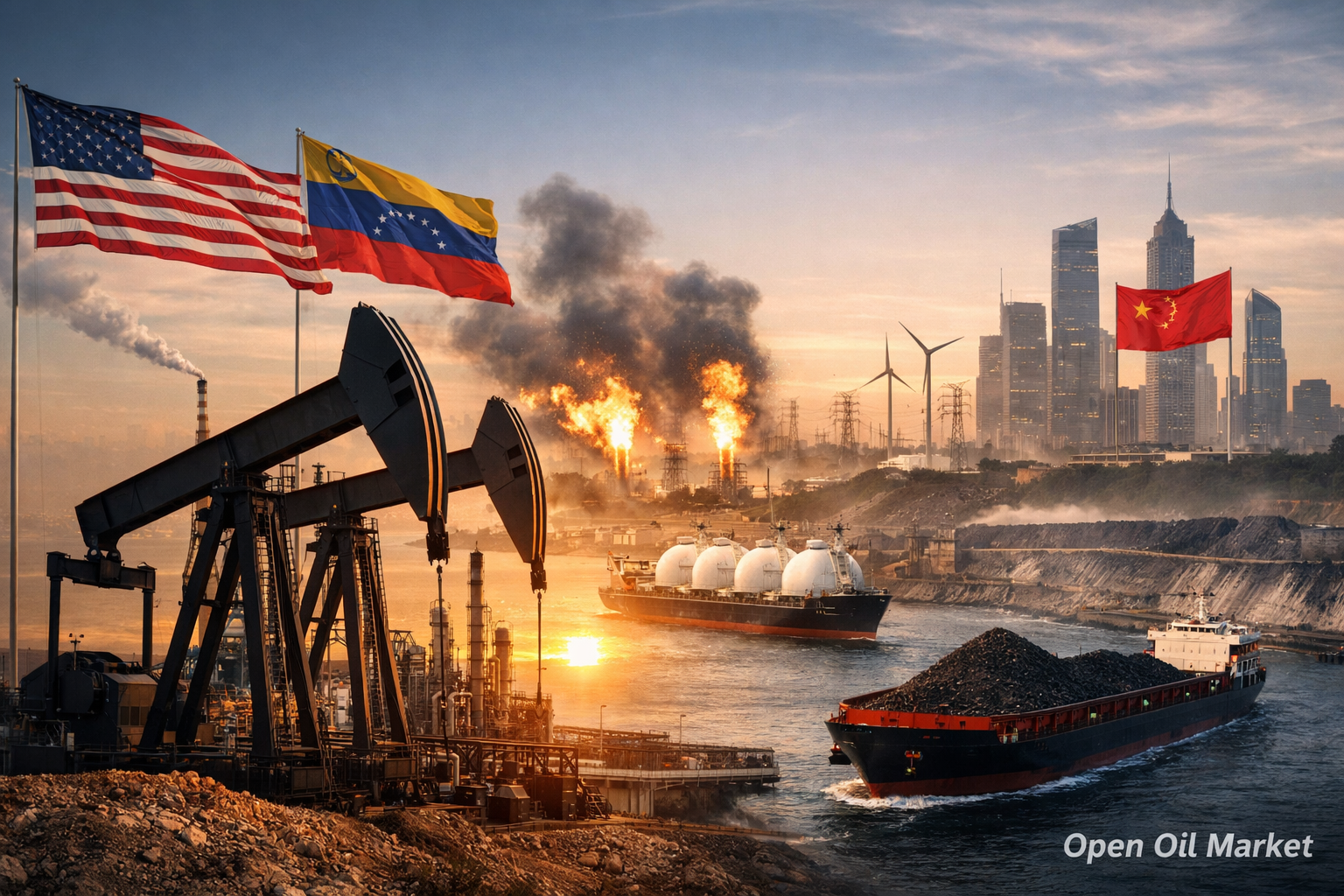
Geopolitical factors have come to the forefront at the start of 2026 and are significantly influencing the energy landscape. In the first days of the new year, the U.S. conducted an unprecedented operation, effectively changing the regime in Venezuela: Washington announced the detention of President Nicolas Maduro and plans to lift some oil sanctions on Venezuela. The Trump administration has already negotiated the supply of up to 50 million barrels of Venezuelan oil to the U.S., redirecting a substantial portion of Venezuela’s exports that previously went to Asian markets, particularly China. America presents this deal as a step towards enhancing its own energy security and gaining control over Venezuela's largest oil reserves. However, such actions have exacerbated tensions with Beijing: China, still the main buyer of Venezuelan oil, has sharply condemned American interference, calling it a violation of sovereignty. Beijing has indicated that it intends to safeguard its energy interests—specifically, China is expected to increase purchases of Iranian and Russian oil to compensate for any possible shortfall in Venezuelan volumes.
Meanwhile, the sanctions confrontation between Russia and Western countries in the energy sector remains largely unchanged. Moscow has extended the decree prohibiting the supply of Russian oil and petroleum products to buyers adhering to the G7/EU price cap until June 30, 2026, reaffirming its stance of non-recognition of Western restrictions. The European Union and the U.S. also maintain all previously imposed sanctions against the Russian fuel and energy complex, leading global energy resource trade to be completely restructured under these restrictions—Russian oil and gas are mostly redirected to Asia, the Middle East, and Africa. There are no expectations of a quick easing of the sanctions regime: direct dialogue between Russia and the West is stagnant, and energy companies are forced to operate in a new paradigm separated by sanction barriers. Nonetheless, the continuation of targeted contacts (for example, concerning grain deals or prisoner exchanges) keeps minimal chances for a partial thaw in relations in the future, which could also reflect on energy markets. At present, however, investors are factoring in the maintenance of a stringent sanctions confrontation and the associated redirection of oil and gas flows into prices.
Asia: India Advocates Energy Security, China Increases Resource Extraction
- India: Despite unprecedented pressure from Western countries demanding a reduction in cooperation with Russia, New Delhi firmly adheres to the goal of ensuring its own energy security. India continues to actively import Russian oil and gas, arguing that a sharp reduction in imports from Russia would be detrimental to its economy. Moreover, Indian refiners are negotiating favorable terms: Russian companies are offering increased discounts on Urals crude (estimated at about $5 off the Brent price) to maintain the Indian market. As a result, Russian oil still holds a significant share in India’s import balance, while the Indian government publicly states the unacceptability of external pressure jeopardizing the country’s access to critically important energy resources.
- China: Against the backdrop of increased geopolitical uncertainty, Beijing is betting on developing its own resource base. In 2025, China increased oil and natural gas production to record levels, investing in the development of fields both onshore and offshore. Simultaneously, the country boosted coal production (over 4 billion tons per year) to ensure energy supply for its industry and population. These measures are aimed at reducing dependency on energy imports, especially when supplies could become targets of sanctions or geopolitical pressure. Additionally, China is diversifying its external sources—boosting purchases from the Middle East, Africa, and Russia and Iran alike, aiming to avert shortages even amid changing global dynamics.
Energy Transition: Records in Renewable Generation and the Role of Traditional Energy
The global transition to clean energy reached new heights in 2025. Many countries registered record levels of electricity generation from renewable sources—solar, wind, and hydro. Solar and wind farms are being deployed at an accelerated pace, and investments in energy storage technologies and hydrogen energy are on the rise. Preliminary data indicate that the global installed capacity for renewable energy has increased by over 15% over the past year. Major energy companies and oil and gas corporations are also becoming involved in this trend by investing in renewable energy projects and low-carbon fuels, seeking to adapt to the changing market.
At the same time, experts emphasize that traditional generation—gas, coal, and nuclear—remains crucial for the reliability of energy systems. Renewable energy sources are susceptible to weather and seasonality impacts, thus for meeting peak loads and ensuring uninterrupted electricity supply, a reserve of traditional capacities is still necessary. Many governments, while declaring goals to phase out fossil fuels, plan for a transition period of 10–20 years during which oil, gas, and especially natural gas as the cleanest fossil fuel will play a bridging role towards fully green energy. Thus, the current energy transition is not an instantaneous transformation but a gradual process merging record growth in renewable energy with maintaining a balance between new and old energy sources.
Coal: High Demand Supports Market Stability
Despite the environmental agenda, the global coal market continues to demonstrate resilience due to consistently high demand. The demand for coal remains strong primarily in the Asia-Pacific region: economic growth and electricity needs in China, India, and Southeast Asia drive intense consumption of this fuel. China, the world's largest consumer and producer of coal, burned nearly record levels of coal in 2025, extracting over 4 billion tons and meeting the lion's share of its demand from domestic mines. India, possessing considerable reserves, is also increasing coal usage: over 70% of electricity in the country is still generated from coal-fired power plants, and absolute fuel consumption is growing in alignment with economic growth. Even other developing economies (Indonesia, Vietnam, Bangladesh, etc.) are introducing new coal-fired power plants to meet the demand for electricity from their populations and industries.
Supply in the global coal market is adapting to this demand, enabling prices to remain in a relatively narrow and predictable range. Major exporters—Indonesia, Australia, Russia, and South Africa—have increased coal extraction and exports in recent years, stabilizing the supply situation. Following price peaks in 2022, the price of thermal coal has returned to normal levels: current quotes at the European ARA hub stand around $100 per ton (down from over $300 two years ago). The balance of demand and supply in the industry appears to be well-matched: consumers are guaranteed access to the necessary fuel, while producers achieve stable sales at favorable prices. Despite many countries announcing ambitious plans to reduce coal usage to meet climate goals, in the next decade, this energy source will remain an irreplaceable energy provider for several nations, especially in Asia. Consequently, the coal sector is currently experiencing a period of relative equilibrium, where the market meets both the needs of the global economy and the profitability of mining companies.
Russian Oil Products Market: Continuation of Measures to Stabilize Fuel Prices
In the domestic fuel market of Russia, emergency measures are still in effect following last year’s crisis, aimed at preventing a new surge in gasoline and diesel prices. In the summer of 2025, the country faced a severe fuel crisis: wholesale gasoline prices reached historic highs, and shortages of fuel occurred in several regions due to high seasonal demand (harvest period) and a contraction in supply (several large refineries were forced to halt operations due to accidents and drone attacks). The government promptly intervened, forming a special task force led by the Deputy Prime Minister and enacting a series of decisions to saturate the domestic market with oil products. As a result, by autumn, wholesale prices stabilized, but the regulatory framework persists into the new year:
- Extension of the fuel export ban. The full ban on the export of gasoline and diesel, which was implemented in August 2025, has been repeatedly extended and remains in effect (at least until the end of February 2026). This measure directs additional volumes of oil products—hundreds of thousands of tons each month, which were previously exported—into the domestic market.
- Partial resumption of export shipments for large refineries under state control. As the market balance improved, restrictions were partially eased for vertically integrated oil companies. Since October 2025, some large oil refineries have been allowed limited export shipments under the supervision of authorities. However, independent producers, oil traders, and small refineries remain under embargo, preventing the leakage of scarce resources abroad.
- Enhancing control over fuel distribution within the country. Authorities have tightened monitoring of the movement of oil products in the domestic market. Oil companies are mandated to prioritize meeting domestic consumer needs and to avoid stock market resales that spike prices. Regulators are developing long-term mechanisms—such as a system of direct contracts between refineries and gas station chains bypassing the exchange—to eliminate unnecessary intermediaries and smooth out price fluctuations.
- Continuation of subsidies and dampening measures. The government continues to provide financial support to refiners, compensating them for a portion of the lost revenues from export restrictions. Budget subsidies and the reverse excise mechanism (“dampener”) allow covering the gap between high global prices and lower domestic prices, incentivizing refineries to deliver sufficient oil products to the domestic market.
The combination of these measures has already yielded results: the fuel crisis has been brought under control. Despite record exchange prices last summer, in 2025 retail prices at gas stations rose by only 5–6% since the beginning of the year, which approximately corresponds to inflation. Service stations across the country are now well supplied with fuel, and wholesale prices have stabilized. The government announces its readiness to extend restrictions on oil product exports further into 2026 and, if necessary, to utilize state reserve stocks to promptly supply problematic regions. Control over the situation in the fuel market will remain at a high level to prevent new price surges and ensure a stable supply of oil products to the economy and population.