Current Startup and Venture Capital News for Friday, January 9, 2026: Record AI Rounds, Mega Fund Activity, Unicorn Growth, and IPO Market Revival
The global startup and venture capital market enters 2026 on a wave of renewed activity. Major funds are raising capital again, investments in artificial intelligence (AI) are breaking records, and the window for initial public offerings (IPOs) is beginning to open after a lull in recent years. Below are the latest venture capital and startup news as of Friday, January 9, 2026, presented in a business style that is comprehensible to international investors and funds.
Venture Mega Funds Make a Comeback
Following last year's downturn, leading venture players are once again attracting record capital, intensifying market concentration. Despite a minimal number of new funds in 2025—the lowest in a decade—several mega funds significantly boosted industry totals. Investors are funneling resources toward proven teams, betting on their access to the most promising deals. Among the largest new funds are:
- Lightspeed Venture Partners — raised approximately $9 billion across six new funds, closing 2025 with the largest capital raise in the market. Lightspeed solidified its mega fund status by focusing on large bets in the AI space.
- Dragoneer Investment Group — established a new fund totaling $4.3 billion, continuing its strategy of significant late-stage investments, including over $3 billion into OpenAI.
- Founders Fund — closed a growth fund of $4.5 billion in 2025, as well as several early funds focused on tech unicorns.
- Lux Capital — announced at the beginning of 2026 that it closed a $1.5 billion fund, marking the largest in the 25-year history of this firm specializing in science-based startups (defense, space, biotech).
Additionally, major funds Andreessen Horowitz and General Catalyst previously raised $7–8 billion each in 2024, and Thrive Capital is targeting $6–8 billion. While the overall number of new venture funds has decreased, the top 10 players have raised about half of all funds, indicating a trend: capital is flowing to “mega funds,” leaving fewer opportunities for smaller teams. For venture investors, this signals a growing role for large institutional LPs and challenges in raising capital for new funds without a strong reputation.
Record Investment Rounds in AI
Startups working with artificial intelligence continue to attract unprecedented amounts of investment. The year 2025 was marked by a surge in mega rounds in the AI sector—according to industry analysts, 15 companies raised $2 billion or more, totaling over $100 billion in funding. The largest deals set historical records in the venture market:
- OpenAI — secured $40 billion in funding in March 2025 (with SoftBank as the leading investor). This is the largest venture funding round in history, demonstrating colossal investor confidence in generative AI platforms.
- xAI — Elon Musk's AI startup raised $20 billion in its Series E round by early 2026, surpassing its original target of $15 billion. The round was supported by major funds from the U.S., Qatar, and others, highlighting the global nature of the race for AI leadership.
- Scale AI — received $14.3 billion from Meta in the summer of 2025. The investment was accompanied by a strategic partnership, with part of Scale AI’s team moving to Meta to combine efforts in developing AI models. The deal valued the startup at $29 billion.
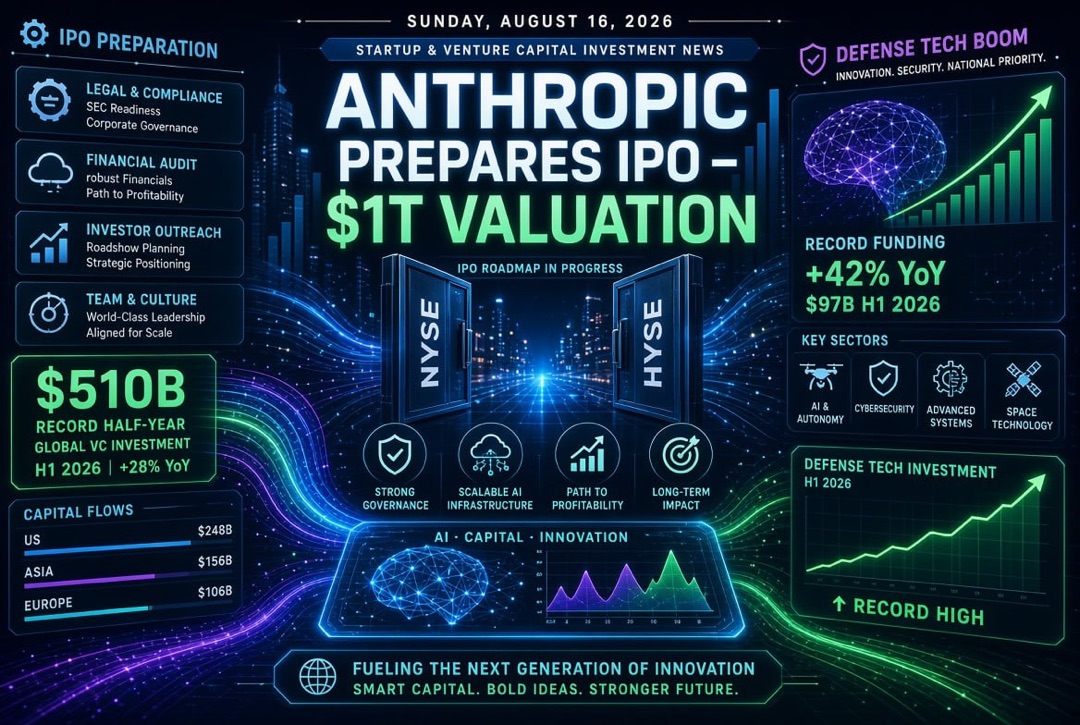
- Anthropic — raised $13 billion in September 2025 (Round F) at a valuation of approximately $183 billion, with investors including Iconiq Capital, Fidelity, and Lightspeed. Such a high valuation reflects the frenzy surrounding developers of advanced large language models.
- Project Prometheus — a new startup led by Jeff Bezos, launched at the end of 2025 with $6.2 billion in funding. The company aims to apply AI to solve physical problems, and such generous initial financing shows investors' willingness to back ambitious long-term projects.
In addition, the market has also been drawn to large rounds from xAI (Musk's startup has raised over $22 billion since its inception), Databricks ($4 billion in December 2025 at a valuation of $134 billion amid explosive revenue growth from its AI data platform), and other deals. Even relatively young ventures are raising enormous sums: for instance, the startup Thinking Machines Lab, founded by former OpenAI CTO Mira Murati, secured $2 billion in seed funding at a valuation of $10 billion—setting a record seed round in the market. The dominance of AI is evident: the overwhelming majority of mega-deals are in this sector. Venture investors globally agree that a few outstanding AI companies can yield disproportionately high returns, so funding is concentrated around them. However, experts warn that not every hot AI startup will meet expectations, and investors are increasingly selective in identifying “valuable” teams among numerous similar players.
Diversification: Defense, Energy, and Crypto
Not only artificial intelligence can attract large sums—significant deals also took place in other segments of the tech market in 2025. Notably, the defense technology and energy sectors stood out, as well as individual projects in the crypto and fintech industries:
- Defense Technology. The geopolitical landscape has spurred unprecedented investments in defense tech. The American startup Anduril Industries raised $2.5 billion in Round G (June 2025) while doubling its valuation to over $30 billion. According to Forbes, at least 10 new “unicorns” emerged in the defense sector in 2025, with total venture investments in defense technologies exceeding $48 billion. Funds that invested in military technologies long before the trend (such as Lux Capital) are now reaping the rewards—investors see sustained government demand for security innovations.
- Energy and Climate Technologies. The transition to clean energy received a boost from AI technologies. British energy giant Octopus Energy spun off its technology platform Kraken into a separate company, securing around $1 billion in investments at a valuation of $8.65 billion by the end of 2025. The Kraken platform uses AI to optimize energy grids and customer service, signaling the market’s readiness to invest large sums in climate tech that offers scalable solutions. In the same clean energy sector, Octopus Energy previously raised $320 million for expansion in the U.S. markets. A prominent deal was also noted in Europe: chip manufacturer ASML invested $2 billion in French AI startup Mistral AI, valuing it at $13.2 billion and reinforcing the development of European AI and hardware capabilities.
- Cryptocurrencies and Fintech. Despite declining interest in crypto assets, some major players are making strategic investments. In October 2025, New York Stock Exchange operator ICE announced plans to invest up to $2 billion in the blockchain platform Polymarket (prediction market), valuing the startup at around $8 billion and indicating traditional financial institutions’ interest in Web3 infrastructure. Additionally, Abu Dhabi's MGX fund invested $2 billion in global cryptocurrency exchange Binance in March, supporting it amid regulatory challenges. No new mega rounds were observed in the fintech sector, but it continues to show momentum: in India, fintech startup Knight FinTech raised $23.6 million, while payment and neobank services expand their customer bases, and the most valuable fintech unicorns (Stripe, Revolut, etc.) are preparing for an IPO as market conditions improve.
Overall, 2025 demonstrated that investors are willing to fund not only software AI companies but also “real sector” projects if they possess technological breakthroughs. The synergy of AI with industries traditionally distant from IT has led to significant rounds in agtech (e.g., Indian startups Arya and Unnati raised tens of millions for agricultural platforms), healthcare (biotech companies worldwide continued attracting capital, albeit with less media attention), and industrial automation. Robotics is also on the verge of growth: declining sensor costs and AI advancements promise to launch a new generation of robotics startups with serious investment in 2026. Thus, aside from the AI internet for investors, demand is forming for projects in defense, climate, and other niches capable of solving tangible problems.
Revival of the IPO Market
After nearly a two-year hiatus, venture stars are once again making their appearance on global exchanges—the IPO market started to revive in the second half of 2025. A decrease in inflation and stabilization of interest rates created conditions for the return of liquidity, with several tech companies successfully going public, instilling optimism in the venture community. In the U.S., several “unicorns” took the plunge: companies from the Lightspeed Venture Partners portfolio—cybersecurity firm Rubrik, cloud service Netskope, and corporate travel startup Navan—conducted IPOs in 2024–2025, demonstrating sustainable growth to investors and providing much-anticipated exits. These listings confirmed that investors are once again willing to buy shares of high-tech firms with strong fundamentals.
Movement is also observed in other markets: Indian OYO (an online hotel booking platform) resumed IPO plans at the end of 2025, signaling a revived appetite for public offerings even in developing ecosystems. In Europe, cautious optimism abounds—several IPOs of tech companies occurred on the London and Amsterdam exchanges with moderate success, though levels remain far from the booms of 2021. Nevertheless, it is expected that the wave of IPOs will continue into 2026. Analysts are naming candidates among the largest private startups that might decide to go public: financial giant Stripe, data platform Databricks, software robotics manufacturer Automation Anywhere, and several companies from the artificial intelligence sector. The revival of the IPO catalog is crucial for venture funds—successful listings increase valuation multiples and allow LP investors to finally realize returns. Concurrently, the M&A market is also becoming active: many “stuck” late-stage startups prefer strategic M&A if IPO is not available, also providing exits for venture players.
Growth in Number of Unicorns and New Valuations
Despite more selective funding, the total number of “unicorn” startups (valued over $1 billion) has reached a new high. According to industry trackers, by the end of 2025, there were over 1,300 private companies worldwide valued at over $1 billion, compared to around 1,100 at the beginning of 2023. Throughout 2025, the market “gave birth” to at least 80 new unicorns, with a significant portion in the AI and defense sectors. Some companies even skipped the unicorn status and immediately became “decacorns” (valuations over $10 billion) or higher. For instance, the already mentioned Anthropic and xAI surpassed valuations in the tens of billions well before going public. Such rapid valuation rises have led to the emergence of the term “pegasus”—a designation suggested by some investors for startups that attract $1 billion in funding even at the seed stage. While this remains a semi-joking label, the market indeed sees increasing cases of massive rounds at the very early stage, especially if the founders are industry stars with previous successes.
However, such explosive growth in valuations is not uniform across the entire market. For most startups, access to capital has become more difficult than during the low-interest era a few years ago. Investors are demanding convincing metrics and uniqueness: the hundredth AI startup with a similar idea is hardly going to achieve a high valuation. Nonetheless, companies that offer groundbreaking solutions can still reach a valuation of over a billion in record time. In 2025, startups demonstrated several times revenue growth from $0 to $100 million within just one or two years, which previously seemed incredible. In 2026, the trend for “accelerated unicorns” is expected to persist, especially if generative AI technologies continue to rapidly integrate into business and life.
Concentration of Capital Among Market Leaders
One of the key themes in the venture industry has been the concentration of capital in the hands of the largest players and changes in investor strategies. Traditional “middle” venture funds are experiencing pressure—limited partners (LPs) prefer to invest in fewer large funds that have access to top deals and can write checks for hundreds of millions. As a result, the majority of venture capital is flowing to a handful of renowned firms or specialized niche funds, while new teams face difficulties in fundraising. This trend amplifies the influence of large institutional LPs (pension funds, sovereign wealth funds), which dictate stringent terms and demand proven results from VC managers.
In response to such capital redistribution, the venture industry is seeking new approaches. Some top firms are expanding their product lines: ideas for launching their own mutual funds or platforms to attract retail investors' capital (including changes in 401(k) retirement accounts in the U.S.) are emerging. The goal is to tap into even broader resources beyond traditional LPs, as management fees for a large fund are more easily predictable than profit-sharing (carry) in an uncertain future. At the same time, small and new funds are experimenting with fee structures and strategies to attract capital amid market consolidation. In 2025, according to PitchBook, the number of new funds halved, but the amounts per individual fund increased—forcing young teams to either find their niche or partner with larger players.
The influx of capital from non-financial investors has also become noticeable. Family offices and sovereign funds are filling the gaps left by the exit of several traditional LPs: direct investments from wealthy families and states into startups have increased. For example, Middle Eastern funds are actively participating in major deals (including the aforementioned investments by Qatar's QIA in xAI, MGX in Binance, etc.), providing checks worth hundreds of millions when traditional venture funds are being cautious. This leads to late-stage startups increasingly being financed by consortia of several mega funds and sovereign investors, changing the power dynamics in venture capital.
Discipline and Efficiency Among Startups
For startups themselves, the new reality of the venture market means heightened demands for efficiency. Whereas capital was once given for bold ideas with minimal metrics two or three years ago, both funds and shareholders now expect teams to demonstrate business sustainability. The best founders in 2025 displayed the ability to run a company with a focus on financial discipline: optimizing costs, extending the runway through expense cuts, improving gross margins, and enhancing customer retention. Investors are increasingly interested not only in market potential but also in how close a startup is to break-even or whether it has a clear path to profitability.
In conditions where the market is still recovering, success stories about smart strategy execution appear more advantageous than mere ambitious visionary ideas. Startups that managed to grow in 2025 while simultaneously improving key metrics (EBITDA, LTV/CAC, unit economics) are now in high demand among investors. In 2026, this trend is likely to intensify: investors want to see companies that not only “burn” the funds raised but rationally build their business processes. For instance, in many hot segments (AI, SaaS, fintech), the race to capture market share at all costs has ended—now, those who can retain customers and generate stable cash flow are the ones winning. Even among AI startups, where competition is particularly fierce, investors have begun to prefer not the tenth similar prototype but teams offering narrowly specialized solutions or proprietary technologies that are difficult to replicate.
Thus, the global startup market enters 2026 at a new stage of maturity. Large sums of capital have not disappeared—they remain plentiful and are ready to support breakthrough innovations across various sectors. However, capital has become “smarter”: it is concentrated among the largest funds, selecting the best of the best and demanding returns. For venture investors and funds, this means needing to stay abreast of new trends (whether in generative AI, defense, or climate technologies) while being prepared for more thorough engagement with portfolio companies. For startup founders, a successful strategy in the coming year involves balancing bold innovations with stringent operational discipline. It is this combination of bright ideas and business rigor that will attract investors and turn a startup into a sustainable growth company on the global stage.