Oil Market: Brent Surpasses $84 Amid Hormuz Premium
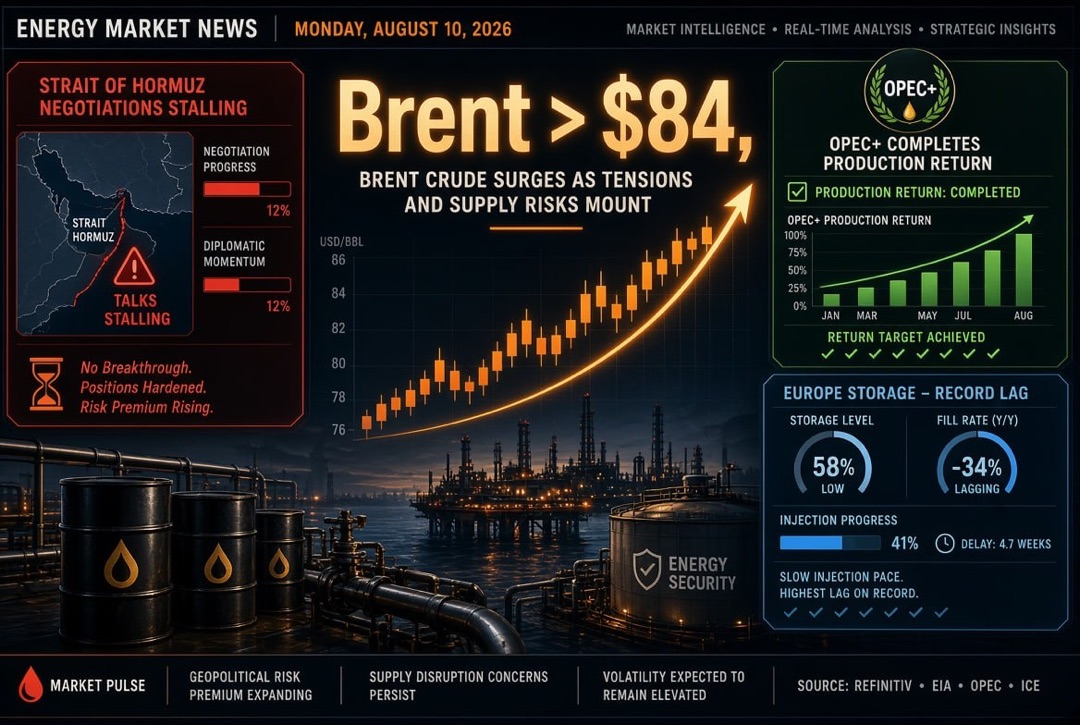
Oil prices are opening the week with an upward trend. October futures for Brent are up about 1%, trading around $84.4 per barrel, while September WTI contracts are approximately $78.8. The spread between the benchmark grades remains elevated: Middle Eastern risks are weighing more heavily on Brent-linked barrels than on U.S. production. The range of Brent fluctuations over the past 52 weeks — from $58.7 to $126.4 — clearly illustrates how sharply the oil market has overvalued the geopolitical premium over the year.
Key pricing factors for this week include:
- Hormuz Factor: The sixth month of U.S.-Iran conflict keeps the market on edge — shipping through the strait, which is critical for global oil and LNG supplies, remains constrained and risky.
- Shipping Attacks: Reports of attacks on vessels in the strait and ongoing actions by the Houthis in the Red Sea support the risk premium in freight and insurance.
- Stocks and Demand: Global commercial oil inventories have been depleted by months of export disruptions from the Persian Gulf, limiting the scope for price declines even amid weak macro data.
OPEC+: Return of Voluntary Cuts Completed
At the meeting on August 2, seven countries of the alliance — Saudi Arabia, Russia, Iraq, Kuwait, Kazakhstan, Algeria, and Oman — agreed to increase quotas by 188,000 barrels per day starting in September. This marks the sixth consecutive increase, completing the phased return to the market of 1.65 million b/d of voluntary cuts introduced in 2023. Meanwhile, a separate package of restrictions of approximately 2 million b/d, effective since 2022, remains in place until the end of 2026.
There are three key points for market participants in the energy sector:
- The increase in quotas is largely symbolic: due to attacks on energy infrastructure and logistical constraints, actual production among some countries lags behind permitted levels.
- Analysts expect a pause in changes to quotas until the end of the year — the next meeting is scheduled for September 6, with attention shifting to the revision of baseline production levels for 2027, where Iraq is already seeking to increase its share.
- A potential de-escalation in the Middle East could quickly return significant volumes to the market, shifting the balance towards a surplus — this scenario is reflected in models by all major investment houses.
Geopolitics: Negotiations Over the Hormuz Strait — Mixed Signals
The diplomatic intrigue surrounding the strait remains the main driver of volatility in energy markets. The U.S. administration claims that an agreement to restore shipping is near, while Qatari intermediaries indicate that a draft agreement is being prepared. However, the Iranian foreign minister has stated that there are currently no direct negotiations with the U.S., and the conditions for transit published by Tehran have proved stricter than market expectations: a ban on the passage of U.S. and Israeli vessels, restrictions for "unfriendly" states, and fines for violators. The parties remain far from a compromise, with sanctions and military pressures persisting, and every news update regarding negotiations is swiftly reflected in oil and gas prices.
Gas Market: Europe Enters Winter with Minimal Stocks
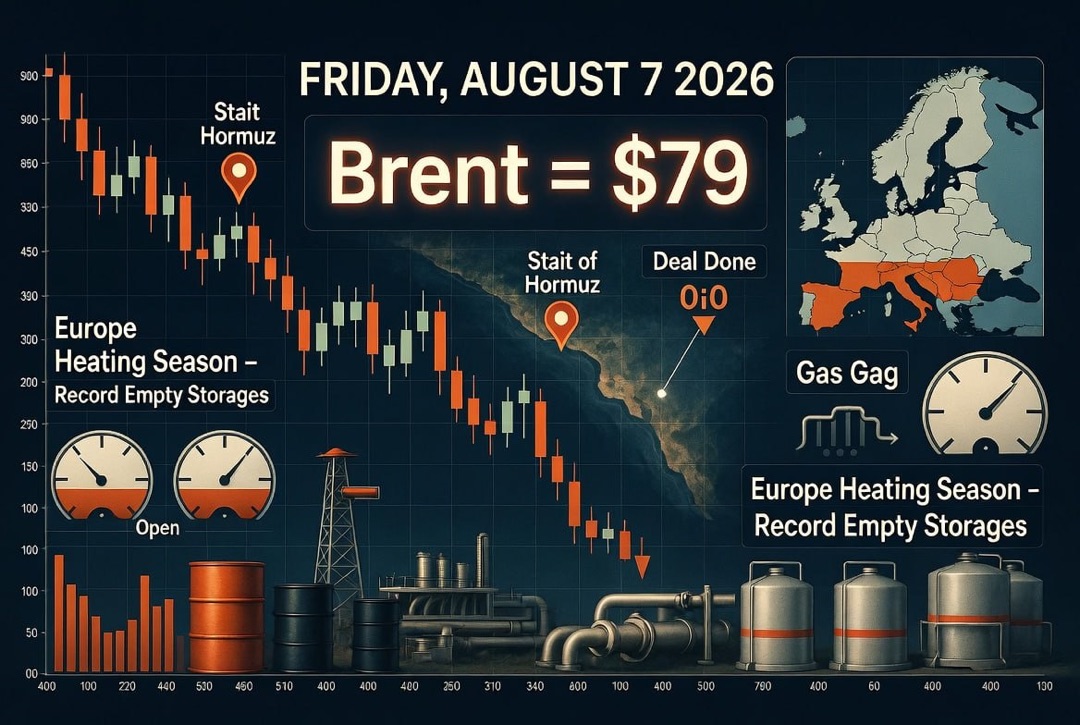
The European natural gas market is experiencing the most strained summer season in recent years. Prices at the TTF hub fluctuate between €52 and €57 per MWh — approximately double the levels at the beginning of the year. EU underground gas storage is only ~58% full — this is the lowest rate for August in nearly two decades, while the five-year average is over 70%.
- Reduced Target Level: The mandatory filling level for UGS by November 1 has been lowered from 90% to 80%, but achieving this also requires accelerated injections before the end of the season.
- LNG Shortage: Liquefied natural gas shipments from Qatar through the Hormuz Strait are delayed, and LNG imports to Europe are significantly lagging behind long-term averages.
- Competition with Asia: The hot summer in the Asia-Pacific region intensifies the scramble for available LNG cargoes, supporting global gas prices.
- Weather Factor: Abnormal heat in Central and Southern Europe increases demand for electricity for air conditioning and slows down stock accumulation.
The potential opening of the Hormuz Strait could quickly cool the gas market — hence the TTF prices sharply reacted last week to news regarding the negotiations, dropping to three-week lows before rebounding again.
Power Generation and Renewables: Records in Solar Generation on Both Sides of the Atlantic
The global energy transition continues to gain momentum despite geopolitical turbulence. By the end of 2025, renewable energy sources will surpass coal in the global energy balance for the first time in a century, accounting for over a third of electricity generation. This trend is expected to strengthen in 2026:
- Solar generation in June covered about a quarter of electricity consumption in the EU for the first time;
- In Germany, the share of renewables in production reached nearly 62% in the first half of the year — a historic high;
- California and Texas power systems have repeatedly set records for solar generation and industrial battery discharges over the summer;
- China maintains its global leadership, accounting for more than half of global solar capacity growth.
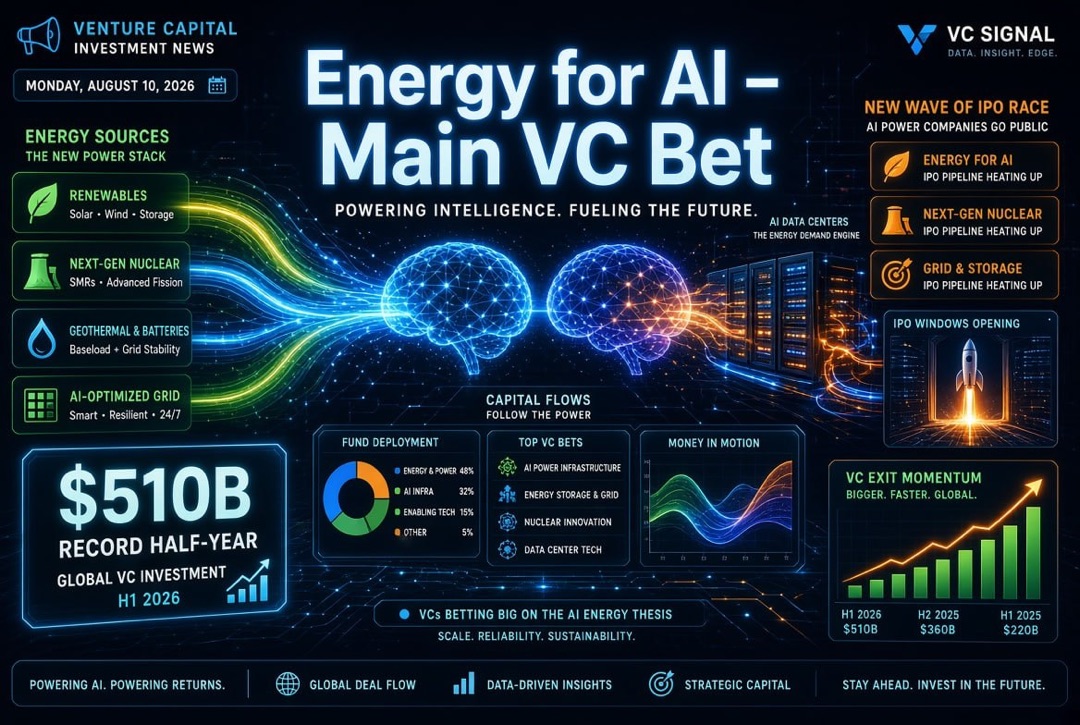
At the same time, the sharp increase in energy demand from data centers and the artificial intelligence industry is becoming a structural factor in electricity demand, supporting investments in both renewables and storage, as well as in gas and nuclear generation.
Coal: Asian Heat and Supply Disruptions Keep Prices Near Annual Highs
The energy coal market remains strong. Newcastle futures trade around $127–130 per ton — approximately 16% higher than last year's level. Prices are supported by a heatwave in China, which has increased the load on coal-fired power plants, shipping disruptions in Indonesia due to low water levels in the Kalimantan rivers, and production cuts in China following tighter safety inspections at mines. A limiting factor is India: coal production in the country rose by more than 7% year-on-year in July, reducing the need for imports. Overall, coal continues to play a key role in Asia's energy balance, serving as a backup for energy systems during peak demand periods.
Russian Fuel Market: Acute Phase of the Crisis Has Passed
The domestic fuel market in Russia is gradually emerging from its worst crisis in recent years, triggered by drone attacks on refineries and a decline in gasoline and diesel production. According to estimates by the Ministry of Energy, the situation has stabilized: regions are lifting limits on fuel supply at gas stations one after another, and queues are diminishing. Contributing to stabilization are:
- A complete ban on gasoline and diesel exports, keeping resources within the country;
- Record imports of automotive gasoline from Belarus and exploring additional external supplies;
- Accelerated restoration of damaged oil refining capacity;
- Increased government oversight of fuel distribution and exchange trading.
The downside of normalization is significantly higher prices for petroleum products, which are already being transmitted in logistical costs and overall inflation. Experts associate the full restoration of market balance with the completion of refinery repairs and the end of the peak demand season.
Calendar for the Week: What Investors Should Watch
- U.S.-Iran Negotiation Track: Any statements regarding the parameters of opening the Hormuz Strait are the main trigger for oil, gas, and freight rates.
- IEA and OPEC Reports: August reviews will clarify the demand and supply balance in the oil market for the second half of the year.
- U.S. Inventory Data: The weekly EIA statistics will show the resilience of American gasoline demand amid the peak driving season.
- Gas Injection Rates in EU UGS: Delays from the schedule will increase winter premiums in TTF prices.
Conclusion: The Energy Market Awaits a Resolution
Energy markets are balancing between two scenarios. The success of negotiations over the Hormuz Strait could return millions of barrels of Middle Eastern oil and Qatari LNG to the market, provoking a correction in oil and gas prices. Prolonged conflict, on the other hand, would preserve the high risk premium and complicate Europe’s preparations for the heating season. OPEC+, having completed the return of voluntary cuts, is adopting a wait-and-see stance. Meanwhile, structural trends — renewable records, increasing demand from data centers, and coal’s resilience in Asia — continue to reshape the global energy landscape. For investors and participants in the energy market, the coming weeks will be a test of readiness for sharp reversals in both directions.