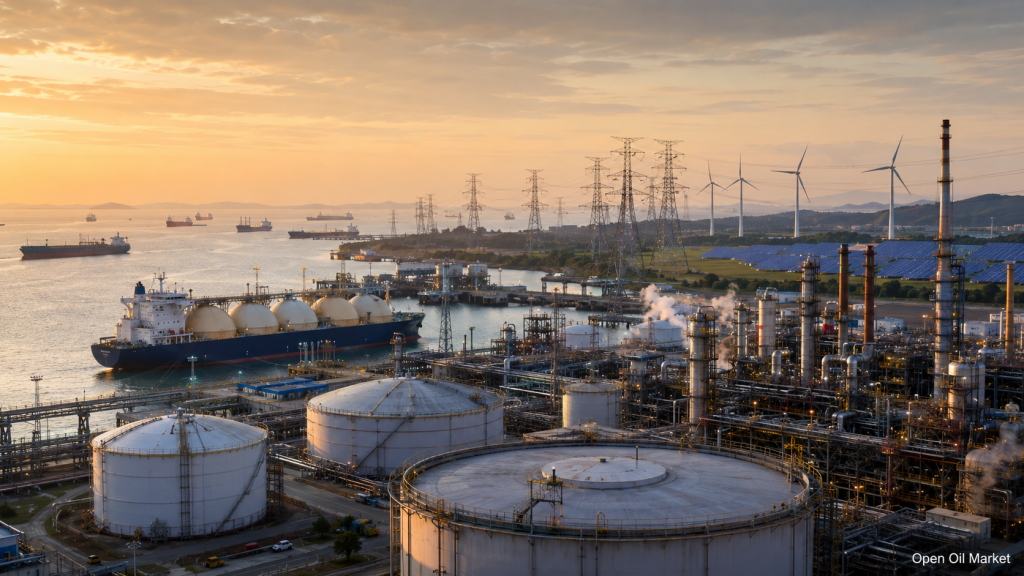
Global Fuel and Energy Complex on May 11, 2026: Oil Storage, Refineries, LNG Carriers, Power Grids, Solar Panels, and Wind Turbines
The global fuel and energy complex kicks off Monday, May 11, 2026, in a state of rare contradiction: while exchange prices for oil and gas are partially declining amid hopes for political de-escalation surrounding Iran and a potential resumption of shipping through the Strait of Hormuz, the actual markets for raw materials, oil products, and liquefied natural gas (LNG) remain tense. For investors, oil companies, fuel suppliers, refinery operators, the power sector, and renewable energy (RE) sectors, this indicates that a short-term price correction does not equate to a restoration of balance.
Not only Brent quotations and OPEC+ production dynamics are coming to the forefront, but also a broader set of factors:
- the accumulated oil deficit following supply disruptions from the Middle East;
- the squeeze in the LNG market due to damage to Qatar's export infrastructure;
- low gasoline and jet fuel inventories in several regions;
- increased electricity demand driven by data centers, heat, and industrial loads;
- accelerated investments in solar generation, wind energy, and energy storage systems;
- the return of coal as a backup resource in Asia amidst high gas prices.
The main feature of the current moment is that the global energy market has shifted from the question of "how high will prices rise" to "how quickly can physical supply chains return to normal operations."
Oil Market: Geopolitical Premium Declines, but Fundamental Deficit Persists
The oil market remains a central theme for the global fuel and energy complex. After a sharp increase in prices in previous weeks, markets pulled back in anticipation of a potential agreement concerning Iran and prospects for the gradual restoration of tanker movements through the Strait of Hormuz. However, the physical market remains significantly tighter than short-term futures dynamics suggest.
Industry participants estimate that the global market has missed out on around 1 billion barrels of oil during the disruption period. Even with political easing, logistics, insurance, freight, terminal loads, and refinery operations will not normalize instantly. As a result, oil prices may drop on news, but oil products will maintain elevated cost for a long time.
For investors, three signals are crucial:
- regional export restorations will occur slower than the improvement in rhetoric;
- low commercial inventories amplify market sensitivity to any new disruptions;
- the summer season's increased demand for gasoline, diesel, and jet fuel can support refining margins even with crude oil stabilization.
OPEC+, Saudi Arabia, and UAE: Production Increases but Market Looks at Real Barrels
OPEC+ has agreed to a further production increase starting in June, continuing to gradually return previously reduced volumes to the market. However, in the current circumstances, not only the formal quota increases matter but also the countries’ actual ability to deliver oil to consumers.
Saudi Arabia is already operating the East-West pipeline at full capacity, redirecting crude to the Red Sea, circumventing the Strait of Hormuz. This infrastructural flexibility strengthens the kingdom's strategic role in global energy and partially alleviates the deficit. Concurrently, the UAE's exit from OPEC and the country's ambition to produce without previous constraints create new long-term intrigue for the oil market: after the normalization of logistics, supply may be able to grow faster than previously expected a few months ago.
Thus, in the short term, the oil market remains supported by deficit conditions, while in the medium term, investors are beginning to assess the risk of transitioning from shortages to a more competitive struggle between producers for market share.
Gas and LNG: Europe Again Faces Storage Filling Challenges
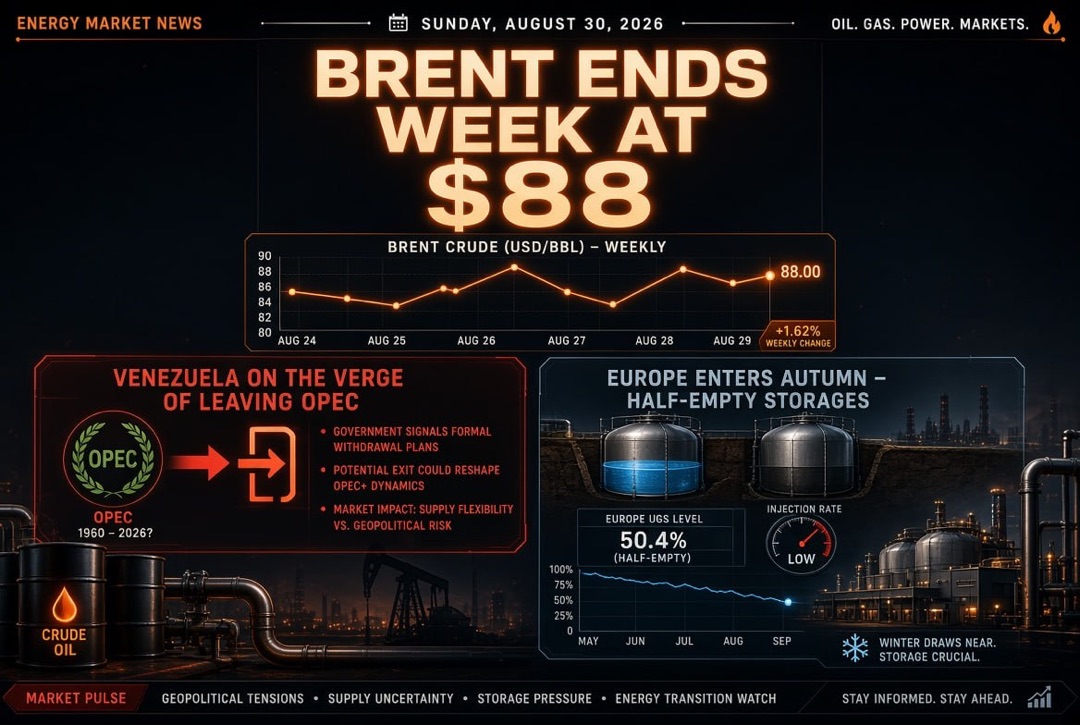
The gas market in May 2026 appears more vulnerable than anticipated at the beginning of the year. Europe enters the gas injection season with inventories at about 30%, significantly below comfortable levels for this time of year. Market incentives for actively replenishing supplies remain weak, and the situation in the global LNG market is complicated by reduced export capabilities from Qatar following infrastructure damage.
For European consumers and energy companies, this means a return to competition for LNG with Asia. If summer heat increases electricity consumption, and Asia-Pacific countries continue to ramp up LNG purchases, European importers may encounter higher gas prices in the latter half of the year.
The following factors are particularly significant:
- some LNG supplies are already being redirected to Asia, where demand is supported by prices and energy security;
- future supply losses between 2026-2030 could be substantial;
- Europe will require accelerated gas injections to reduce risks for the upcoming heating season.
Oil Products and Refineries: Fuel Becomes the Main Indicator of Tension
Unlike the crude oil market, the oil products segment remains extremely sensitive. In the United States, gasoline inventories are heading towards seasonally low levels, while refiners are reallocating capacity toward more profitable diesel fractions and jet fuel. In Europe and Asia, the deficit of aviation fuel and specific distillate types is already becoming a separate concern for transportation companies.
For refinery operators and oil traders, the current landscape signifies:
- the high significance of crack spread—the margin between crude oil and refined products;
- the increased value of flexible refining capacities;
- rising interest in regional fuel flows, especially from the U.S. and the Middle East;
- the likely preservation of premiums on gasoline, diesel, and jet fuel longer than on crude oil.
For fuel companies, this period dictates that profitability depends not only on sales volume but also on access to logistics, inventories, and resilient supply chains.
Asia: China Reduces Imports, but Energy Security Remains a Priority
Asia continues to play a key role in global demand for oil, gas, coal, and oil products. In April, China reduced its imports of oil and gas due to disruptions in Middle Eastern logistics, simultaneously sharply limiting fuel exports to secure its domestic market. This serves as an important signal: even the largest energy consumers, under conditions of instability, are transitioning from conventional trading logic to policies aimed at preserving internal reserves.
For the region overall, several trends are intensifying:
- growing interest in alternative oil and LNG suppliers;
- increased roles for Norway, the U.S., and other non-Middle Eastern producers;
- continued demand for coal as a more accessible resource for power generation;
- accelerated investments in solar energy to reduce import dependency.
It is Asia that will define how quickly the global balance restores after the Middle Eastern crisis: if the region's imports begin to recover actively, pressure on prices for oil, gas, and LNG may persist even after transport routes stabilize.
Electricity: Data Centers, Heat, and Industry Intensify Demand
The electricity sector remains one of the fastest-changing segments of the global fuel and energy complex. In the United States, electricity consumption growth is increasingly linked to the development of data centers, artificial intelligence, and digital infrastructure. This adds strain to networks and heightens the need for reliable base generation, including gas-fired and partially coal-based capacity.
Simultaneously, the approach of the summer season intensifies demand for air conditioning in North America, Asia, and the Middle East. Amid the expected El Niño weather phenomenon, market participants are closely monitoring the potential rise in electricity consumption in hot countries and the effect of drought on hydropower generation.
For energy companies, this suggests that the issue of power supply reliability has returned to being on par with decarbonization efforts.
Renewables and Storage: Energy Transition Accelerates but Becomes More Complex
The renewable energy sector continues to solidify its position. Modern solar and wind projects, in combination with energy storage systems, are already capable of competing cost-effectively with traditional generation in various regions. This fuels investments in renewables, particularly where fuel imports are expensive or insecure.
However, the rapid growth of solar generation presents new challenges. In Europe, the surplus of daytime solar energy is increasingly altering the price curve in electricity markets: prices may drop during the day and surge in the evening due to a lack of flexible capacity. Consequently, the next stage of the energy transition will not only involve constructing new solar and wind stations but also developing:
- batteries and storage systems;
- flexible gas generation capacities;
- inter-system connections;
- demand management and network digitization.
Coal: Backup Resource Regains Importance
Despite the steady growth of renewables, coal remains a vital component of the global energy balance, especially in Asia. High LNG prices and supply risks make coal more attractive to countries needing to quickly satisfy rising electricity demand. India is already emphasizing coal supply sufficiency ahead of the hot weather period, while in other countries in the region, coal generation may receive temporary additional support.
For investors, this means that the global energy transition remains a non-linear process, combining decarbonization with pragmatic energy security policies.
What Investors and Energy Companies Should Monitor on May 11
- The dynamics of negotiations surrounding Iran and tangible signs of restoring shipping through the Strait of Hormuz.
- The oil products market, particularly gasoline, diesel, and jet fuel, where deficits may persist longer than in the crude oil market.
- The pace of gas injections into European storage facilities and competition between Europe and Asia for LNG.
- Supply decisions from producers — from OPEC+ to Saudi Arabia and the UAE — regarding actual supply increases.
- Electricity demand associated with heat, data centers, and industrial activity.
- Investments in renewables, storage solutions, and networks, as infrastructure flexibility will become the next bottleneck in the energy transition.
On Monday, the global fuel and energy complex remains a market of two speeds. Financial quotations are already reacting to hopes for reduced geopolitical risks, but the physical sector—oil, gas, oil products, refineries, electricity, and LNG—will continue to bear the consequences of already occurred shocks for some time. For investors, this underscores the significant importance of companies with resilient logistics, diversified assets, access to refining capabilities, and the ability to operate concurrently in traditional energy and emerging segments of the energy transition.