Global Oil and Gas Energy News for Friday, May 29, 2026: The Strait of Hormuz, Oil Volatility, LNG Market, Refineries, Petroleum Products, Electricity, Coal, and Renewables in Focus for Investors
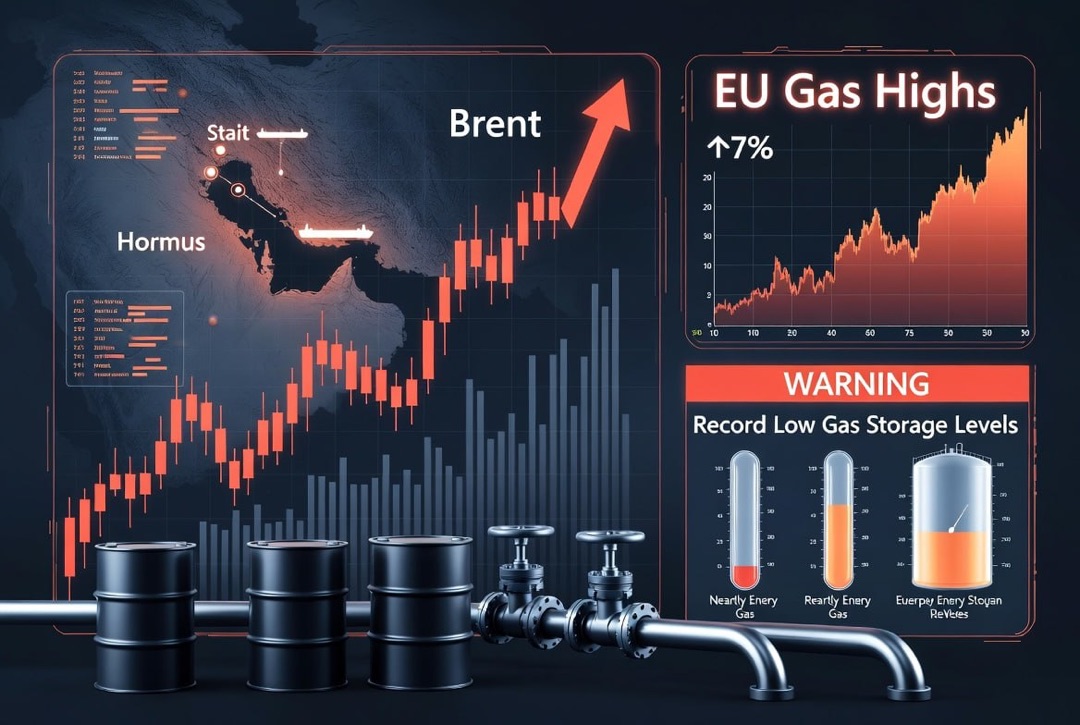
Friday, May 29, 2026, marks a significant period for the global fuel and energy sector, characterized by heightened geopolitical premiums, unstable logistics, and a reassessment of investment priorities. For investors, participants in the energy market, fuel companies, oil firms, refinery owners, and traders, the key focus remains on the Strait of Hormuz. Any signals of reduced tensions around this route are immediately reflected in oil, gas, LNG, petroleum products, freight, and electricity.
The global energy market today is driven not only by classic supply and demand balances. Physical availability of raw materials, supply routes, tanker insurance, stock levels, and the ability of countries to quickly replace lost volumes have taken precedence. This is why Brent and WTI crude oil prices remain volatile, European electricity is becoming more expensive for winter contracts, Asia is competing for LNG supply, and coal is once again regarded as a component of energy security.
Oil Market: Brent and WTI Reliant on Diplomacy and Physical Logistics
The oil market is closing the week in a state of nervous anticipation. Brent remains around a high price zone, while WTI is sensitive to any news regarding negotiations, military activity, and tanker movements through the Strait of Hormuz. Following sharp fluctuations in the past few days, investors are assessing two opposing scenarios: partial recovery of supplies or a new round of disruptions.
For oil companies and traders, it is crucial that the current premium in oil prices is no longer purely speculative. Restrictions on shipping, extended routes, rising insurance costs, and reduced availability of raw material batches create real costs for refiners. Even if the diplomatic backdrop improves, the market will require time to normalize flows, replenish stocks, and restore confidence in supplies from the Middle East.
- Key factor of the day – news regarding the security of shipping through the Strait of Hormuz;
- Main risk for investors – a repeat surge in oil prices if negotiations fail;
- Main support for the market – ongoing scarcity of available Middle Eastern batches;
- Restraining factor – signs of reduced demand in specific segments of Asia and aviation.
Strait of Hormuz: Energy Logistics as the Key Market Indicator
The Strait of Hormuz remains a central risk point for the global oil and gas industry. Traditionally, this route has accommodated large volumes of oil, LNG, naphtha, diesel, and other petroleum products. Now, even individual tanker passages are perceived by the market as an important signal: deliveries are possible, but normal shipping patterns have yet to be established.
For Asia, this is particularly sensitive. China, India, Pakistan, Japan, and South Korea rely on sustainable fuel and raw material imports. Any reduction in Middle Eastern flows compels buyers to seek alternatives in Africa, Latin America, the United States, and Russia. This shifts the map of global oil and petroleum trade: raw materials travel further, freight costs rise, and refineries are forced to adapt their processing baskets.
For global investors, the conclusion is straightforward: in the coming weeks, logistics costs may prove as important as the price per barrel itself. Companies with access to alternative routes, their own fleets, export terminals, and flexible procurement systems gain a competitive edge.
Gas and LNG: Investments Rise, but the Market Remains Tense
The gas market enters the summer of 2026 in a state of structural tension. Demand for LNG from Asia remains high, Europe is forced to compete for available batches, and new projects in the US, Qatar, and other regions become strategic assets. This transition for the gas market signifies a shift from a 'price versus demand' logic to an 'availability versus security' framework.
Investments in natural gas in 2026 are projected to reach a decade high, according to industry organizations. This reflects a more pragmatic approach rather than a departure from the energy transition: gas is again viewed as a balancing fuel for power generation, industry, data centers, and countries needing reliable alternatives to coal or unstable imported supplies.
- LNG is becoming a key tool for energy diversification.
- Gas generation receives support due to rising electricity demand.
- Storage and regasification infrastructure garner increased investor interest.
- Long-term contracts are becoming more attractive than short-term spot markets.
Europe: Electricity Prices Rise Due to Gas, Hydrology, and Low Reserves
The European energy market remains one of the most vulnerable segments of the global energy sector. Winter contracts for electricity are trading at a significant premium compared to further-out periods, reflecting concerns about gas reserves, limited hydropower generation, and potential competition with Asia for LNG.
For industries in Germany, Italy, France, the Netherlands, and other major economies, this escalates the risk of rising production costs. Energy-intensive sectors—chemicals, metallurgy, fertilizer production, oil refining, and transportation—are again obliged to incorporate elevated electricity prices into their budgets. For investors, this necessitates a close examination of not only company revenues but also energy margins.
Europe's main challenge is not only the price of gas but also the limited buffer ahead of the next heating season. If summer storage refills proceed slower than normal, the winter premium in electricity may persist or escalate.
Petroleum Products and Refineries: Diesel, Jet Fuel, and Gasoline Remain at Risk
The market for petroleum products is under more strain than the crude oil market. Particular attention is directed toward jet fuel, diesel, and naphtha. Disruptions in Middle Eastern logistics are affecting not only raw material supplies but also exports of finished fuels. For airlines, transport operators, industrial consumers, and fuel companies, this implies rising purchase prices and the need to seek alternative suppliers.
The European jet fuel market is already encountering risks of tightening supply balances if the situation in the Strait of Hormuz does not improve. In Asia, high fuel prices are pressuring demand but simultaneously support margins for refineries that can access cheap raw materials and stable logistics.
- American refineries benefit by exporting fuel to deficit regions;
- Asian refineries face expensive raw materials and weak domestic demand;
- European processors are dependent on imports of middle distillates and gas prices;
- The jet fuel market remains one of the most sensitive to supply disruptions.
OPEC+ and Oil Producers: Quotas Matter, but Physical Deliveries Matter More
OPEC+ decisions regarding production remain significant for the market; however, under current conditions, quotas take a backseat to the physical availability of barrels. Even if producers officially raise target production levels, the real impact depends on whether these volumes can be delivered safely to consumers.
For Saudi Arabia, Iraq, Kuwait, Oman, and other producers, the export question becomes not only economic but logistical. For buyers in Asia and Europe, alternative oil grades, supplies from the Atlantic Basin, and the use of strategic reserves gain increasing importance. This enhances the role of the US, Brazil, Guyana, Nigeria, Angola, and other suppliers capable of offering raw materials outside of the Middle Eastern routes.
For investors in oil companies, it is vital to evaluate not just production but the route to monetization: the availability of pipelines, terminals, fleet access, and stable buyers becomes a key factor in business valuation.
Coal: Asia Continues Demand Despite the Rise of Renewables
The coal market remains a critical part of the energy balance, especially in Asia. In India, amidst hot weather and record loads on the energy system, coal supplies to power plants are ramping up. China, despite its extensive development of renewable energy, continues to be the largest coal consumer, with temporary halts at mines due to safety inspections creating local supply pressures.
For the electricity market, this indicates that coal cannot yet be considered a fading asset in the short term; it remains a backup and baseload resource for countries with rapidly growing electricity demand. However, long-term challenges persist in the sector, including environmental regulation, competition from solar and wind generation, rising capital costs, and investor pressure.
Renewables and Electric Grids: Energy Transition Becomes a Matter of Security, Not Just Climate
Renewable energy maintains strategic significance, yet its role is shifting. Where previously renewables were primarily viewed through a climate agenda, solar and wind generation are increasingly seen as instruments of energy independence. For Europe, China, India, the US, the Middle East, and Latin America, the development of renewables decreases reliance on imported gas, oil, and coal.
Nonetheless, key constraints extend beyond just new solar panels or wind farms; electricity networks, storage, balancing, and flexibility of energy systems become critical. Rising electricity demand from data centers, industries, electric vehicles, and air conditioning necessitates substantial investments in grids. Therefore, investors are most interested not only in generation but also in infrastructure, including batteries, transformers, cable systems, software load management, and distributed energy resources.
What Investors and Energy Market Participants Should Monitor
As of May 29, 2026, the global markets for oil, gas, electricity, renewables, coal, petroleum products, and refineries remain highly sensitive to news events. The main takeaway for investors is that the energy sector is once again trading as a security sector rather than only as a cyclical commodity market.
- The dynamics of tanker movement through the Strait of Hormuz will directly impact oil, LNG, and petroleum products;
- Prices for Brent and WTI will remain dependent on diplomacy and actual raw material flows;
- European electricity prices will respond to the pace of gas storage fills;
- Asian demand for LNG and coal will continue to pressure global commodity markets;
- Refineries with flexible logistics and access to export markets may demonstrate more resilient margins;
- Renewables, networks, and storage remain a long-term investment direction despite the short-term return of interest in gas and coal.
Thus, Friday, May 29, 2026, reflects a new balance in the global energy sector: oil and gas remain critically important for energy security, coal retains its role as a backup fuel, petroleum products become bottlenecks in global logistics, and renewables and electric grids achieve strategic infrastructure status. For investors and fuel companies, the coming weeks will experience heightened volatility, with winners emerging not only among resource producers but also among those controlling routes, storage, refining, and supply flexibility.