Global Startup and Venture Investment News — Friday, December 26, 2025: The Venture Boom, AI Mega Rounds, IPO Revival, and Global Trends. An Overview for Venture Investors and Funds.
By the end of 2025, the global venture capital market is showcasing a strong recovery after the downturn of recent years. Analysts estimate that the total volume of venture investments worldwide has significantly increased compared to last year, with the fourth quarter confirming the trend of a resurgence. The prolonged "venture winter" of 2022-2023 is behind us, and the influx of private capital into technology startups is accelerating. Large deals worth hundreds of millions and billions of dollars are once again becoming a reality, and the IPO plans of promising companies are back on the agenda. Leading venture funds and corporations have resumed large-scale investment programs, and governments in various countries have intensified support for innovative businesses. Young companies are receiving sufficient liquidity for growth and scaling, signaling the definitive exit of the industry from the downturn period.
Venture activity today encompasses all regions. The U.S. maintains its leadership, primarily due to colossal investments in the field of artificial intelligence. In the Middle East, the volume of investments in startups has multiplied, thanks to generous financing from government funds. In Europe, power is shifting: for the first time in a decade, Germany has overtaken the United Kingdom in total venture deal volume, strengthening the positions of continental hubs. In Asia, growth is shifting from China to India and Southeast Asia—these markets are attracting record capital, while the Chinese market has somewhat cooled amid regulatory risks. Africa and Latin America are also not lagging behind: the first "unicorns" have emerged in these regions, confirming the truly global nature of the current venture upturn. The startup scenes in Russia and the CIS countries are striving to keep pace, despite external constraints, relying on local initiatives and support from partner countries. Overall, the global picture indicates the formation of a new venture boom, although investors are proceeding with caution, selecting the most promising and resilient projects.
- The Return of Mega Funds and Large Capital. Leading venture players are launching record funds and once again saturating the market with liquidity, fueling the appetite for risk.
- Record Rounds in AI and New Unicorns. Unprecedented investments in artificial intelligence are soaring to unseen heights, creating a wave of new unicorn companies and raising valuations of industry leaders.
- Revival of the IPO Market. Successful public offerings of tech companies and an increase in listing applications signify that the long-awaited "window of opportunity" for exits has reopened.
- Diversification of Investments: Not Just AI. Venture capital is being directed not only towards AI but also to fintech, climate projects, biotech, defense technologies, and other sectors, expanding market horizons.
- A Wave of Consolidation and M&A Deals. Major mergers, acquisitions, and strategic alliances are reshaping the industry landscape, creating new opportunities for exits and accelerated growth of companies.
- Revival of Interest in Crypto Startups. After a long "crypto winter," blockchain projects are once again attracting significant funding in the wake of a rising digital asset market and regulatory easing.
- Global Expansion of Venture Capital. The investment boom is engulfing new regions—from the Gulf States and South Asia to Africa and Latin America—forming local tech hubs worldwide.
- Local Focus: Russia and the CIS. New funds and initiatives for developing local startup ecosystems are emerging in the region, gradually increasing investors' interest in local projects.
The Return of Mega Funds: Big Money Back in the Market
The largest investment players are triumphantly returning to the venture arena, marking a new surge in appetite for risk. After several years of quiet, leading funds are once again attracting record capital and launching mega-pools, demonstrating confidence in the market’s potential. For instance, Japan's SoftBank is forming its third Vision Fund with a volume of about $40 billion, focusing on cutting-edge technologies (primarily AI and robotics projects). Investment firms that had previously taken a pause are emerging from their waiting mode: for example, Tiger Global has announced a new fund of approximately $2.2 billion—a more modest amount than its previous colossal pools but with a more selective strategy. In December, Lightspeed Venture Partners raised a record $9 billion in new funds—the largest funding round in the firm's history—to invest in promising projects (with a significant focus on AI as well). Sovereign funds in the Middle East are also becoming more active: governments in oil-producing countries are pouring billions of dollars into innovation programs and tech parks, building powerful regional startup hubs.
Simultaneously, dozens of new venture funds are popping up worldwide, attracting significant institutional capital for investments in high-tech companies. The largest funds in Silicon Valley and Wall Street have amassed unprecedented reserves of free capital (“dry powder”)—hundreds of billions of dollars are ready for deployment as the market revives. The influx of this "big money" is already palpable: the ecosystem is filling with liquidity, competition for top deals is intensifying, and the industry is receiving a much-needed boost of confidence. It's also important to note state participation: for instance, the German government has launched the Deutschlandfonds—a €30 billion fund to attract private capital into tech projects and modernize the economy—highlighting the authorities' commitment to supporting the venture market.
Record Investments in AI: A New Wave of Unicorns
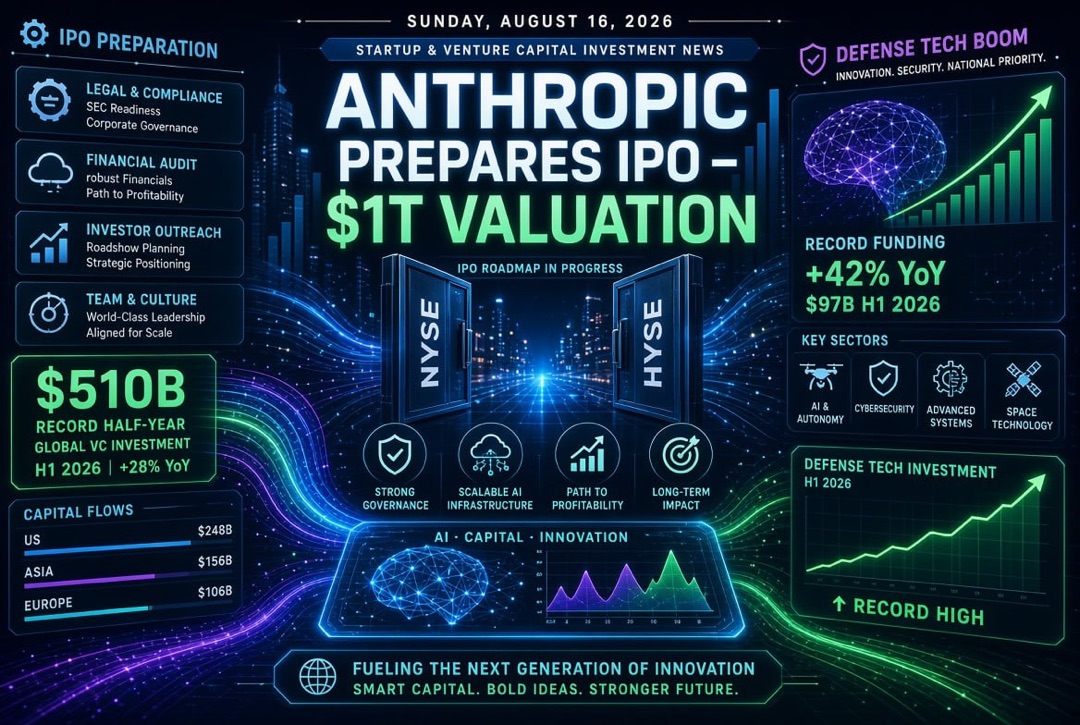
The artificial intelligence sector has become the main engine of the current venture upturn, demonstrating record levels of funding. Investors worldwide are striving to establish a foothold among AI market leaders, directing colossal funds into the most promising projects. In recent months, several AI companies have attracted unprecedentedly large rounds: language model developer Anthropic received about $13 billion in investment (raising the company’s valuation to around $180 billion), Elon Musk's xAI project attracted around $10 billion (partially through debt financing, with a valuation of about $200 billion), and one of the AI infrastructure startups managed to secure over $2 billion, increasing its valuation to approximately $30 billion. Special attention is focused on OpenAI: a series of mega-deals this year have skyrocketed this company's valuation to an astronomical ~$500 billion, making OpenAI the most valuable private startup in history. In one funding round, Japan's SoftBank led an investment of approximately $40 billion (valuing OpenAI at around $300 billion), and now, according to reports, Amazon is willing to invest up to $10 billion. SoftBank is aggressively trying to close its portion of the deal (~$22.5 billion) by the end of the year—this move will further solidify OpenAI's position at the top of the market and confirm SoftBank's role as a key player in the AI industry.
Such giant deals confirm the frenzy around AI technologies, pushing company valuations to unprecedented heights and spawning dozens of new unicorns. Moreover, venture investments are being directed not only towards applied AI services but also towards the critically important infrastructure for them. “Smart money” is flowing into the proverbial “shovels and pickaxes” of the digital gold rush—ranging from the manufacture of specialized chips and cloud platforms to optimizing energy consumption tools for data centers. As such, the race for leadership in AI is being waged on all fronts, and access to capital and technologies is becoming a decisive factor for success. By the end of 2025, the AI segment is estimated to account for about half of all global venture financing (up from ~34% the previous year), and the volume of investments in the AI sector has increased by more than 70% compared to the previous year. This surge sets the tone for the entire industry, and in 2026, market attention will remain focused on the opportunities and risks associated with artificial intelligence.
Revival of the IPO Market: The Exit Window is Open
After a prolonged pause, the market for initial public offerings is experiencing a resurgence. In 2025, the number of tech IPOs in the U.S. increased by more than 60% compared to the previous year. In recent weeks, several major companies have successfully debuted on the stock market, convincingly demonstrating that the "window of opportunity" for venture investors has truly reopened. Hong Kong saw a series of high-profile listings: several tech firms went public, collectively attracting billions of dollars in investments. For instance, Chinese battery manufacturer CATL raised about $5 billion during its IPO—investors in the region are once again ready to actively participate in new public deals.
In the U.S. and Europe, the situation with IPOs has also significantly improved. Several highly valued startups have successfully conducted IPOs, confirming the restoration of appetite for new issuers. For example, fintech unicorn Chime saw its stock price rise by about 30% on its first day of trading after going public. Design platform Figma attracted ~$1.2 billion during its offering (with a market capitalization of around $15–20 billion), and its value steadily increased in the initial trading days. The success of such companies is restoring investors' confidence in the potential for profitable exits and encouraging other unicorns to consider going public.
Upcoming high-profile listings are on the horizon. Expected IPOs include payments giant Stripe, as well as a number of other large private companies eager to take advantage of favorable market conditions. Attention is particularly drawn to SpaceX: Elon Musk's space company has officially confirmed plans for a major IPO in 2026, aiming to raise over $25 billion—this could become one of the largest offerings in history. The crypto industry is also not left out: stablecoin issuer Circle successfully went public last summer (with its stock rising significantly post-IPO), and crypto exchange Bullish has filed for a listing in the U.S. with a target valuation of around $4 billion. The revival of activity in the IPO market is extremely important for the entire startup ecosystem: successful public exits enable funds to realize profits and redirect freed-up capital into new projects, closing the cycle of venture financing and supporting further industry growth.
Diversification of Investments: Not Just AI
In 2025, venture investments encompass a much broader range of sectors and are no longer limited to artificial intelligence alone. Following the downturn of previous years, fintech is back on the rise: major funding rounds are taking place both in the U.S. and Europe as well as in emerging markets, stimulating the emergence of new digital financial services and banks. Concurrently, there is strengthening interest in climate technologies and "green" energy—projects in renewable energy, eco-friendly materials, and agri-tech are attracting record investments amidst the global trend towards sustainable development.
Investors’ appetite for biotechnology is also returning. The emergence of breakthrough developments in medicine and growth in valuations in the digital health sector is once again attracting capital and reviving interest in biotech. Additionally, heightened attention to security is fomenting funding for defense tech projects—ranging from advanced drones to cybersecurity systems. The partial stabilization of the digital asset market and regulatory easing in several countries have allowed blockchain startups to begin attracting capital once more. Such diversification of sectoral focus makes the entire startup ecosystem more resilient and reduces the risk of overheating in specific segments of the economy. As a result, the venture market is diversifying, covering everything from fintech and climate tech to biomedicine and defense projects, laying the groundwork for long-term balanced growth.
Mergers and Acquisitions: A New Phase of Consolidation
Major mergers and acquisitions, as well as strategic alliances among technology companies, are coming to the forefront. High valuations of startups and fierce competition for markets have led to a new wave of consolidation. Major corporations are actively scouting for promising assets: for instance, Google has agreed to acquire Israeli cybersecurity startup Wiz for approximately $32 billion—a record sum for the tech sector in Israel. There have also been reports of other IT giants looking for significant purchases: for example, Intel is rumored to be negotiating to acquire AI chip developer SambaNova for around $1.6 billion (this startup was valued at $5 billion back in 2021).
This new wave of acquisitions demonstrates the intent of large players to acquire key technologies and talented teams. In general, the increase in M&A activity signifies awaited opportunities for venture investors to achieve profitable exits. In 2025, there has been noticeable revivification of mergers and acquisitions in various segments: more mature startups are either merging with each other or becoming targets for corporations, reshaping the balance of power in markets. Such moves help companies accelerate development by consolidating resources and audiences, while enabling investors to enhance the returns of their investments through successful exits. As such, M&A is once again becoming an important exit mechanism alongside IPOs, complementing the overall picture of industry growth.
The Revival of Interest in Crypto Startups: The Market Thaws
After a prolonged "crypto winter," the blockchain startup segment is beginning to revive. Gradual stabilization and growth in the digital asset market (Bitcoin crossed the historical threshold of $100,000 for the first time this year, and by the end of December has consolidated around the $90,000 mark) have reignited investor interest in crypto projects. Additional momentum has come from the relative liberalization of regulation: in several countries, authorities have softened their approach to the crypto industry, establishing clearer "rules of the game" for market participants. As a result, in the second half of 2025, several blockchain companies and crypto fintech startups were able to secure significant funding—a signal that after several years of dormancy, investors are once again seeing potential in this sector.
The return of crypto investments is broadening the overall landscape of tech financing, reintroducing a segment that has long remained in the shadows. Now, alongside AI, fintech, and biotech, venture capital is actively exploring the realm of crypto technologies once again. This trend opens new opportunities for innovation and profits outside mainstream directions, complementing the overall picture of global technological development. Investors have indeed become more discerning: they are now evaluating crypto startups more carefully, paying special attention to the real utility of products and the sustainability of business models.
Global Expansion of Venture Capital: The Boom is Reaching New Regions
The geography of venture investments is rapidly expanding. Beyond traditional tech centers (the U.S., Europe, China), the investment boom is sweeping through new markets across the globe. Gulf countries (such as Saudi Arabia and the UAE) are investing billions of dollars in creating local tech parks and supporting startup ecosystems in the Middle East. India and Southeast Asian countries are witnessing a true flourishing of their startup scenes, attracting record amounts of venture capital and birthing new unicorns. Rapidly growing tech companies are also emerging in Africa and Latin America—some of them achieving valuations exceeding $1 billion for the first time, solidifying these regions' status as full-fledged players in the global market. For example, in Mexico, fintech platform Plata recently raised about $500 million (the largest private deal in the history of Mexican fintech) ahead of launching its own digital bank—this case vividly demonstrates the growing interest of investors in promising markets.
Thus, venture capital is now more global than ever. Promising projects can now receive funding regardless of geography, as long as they demonstrate potential for business scaling. For investors, this opens new horizons: they can search for high-yield opportunities worldwide, diversifying risks among different countries and regions. The spread of the venture boom to new territories also facilitates the exchange of experience and talent, making the global startup ecosystem more interconnected and dynamic.
Russia and the CIS: Local Initiatives Amid Global Trends
Despite external sanctions pressure, startup activity in Russia and neighboring countries is gradually reviving. In 2025, several new venture funds were announced (with a total volume in the tens of billions of rubles) aimed at supporting early-stage technological projects. Major corporations are establishing their own accelerators and corporate venture divisions, while governmental programs help startups secure grants and attract investors. For example, the Moscow program "Academy of Innovators" has attracted over 1 billion rubles in investments for local technological projects.
Although the scale of venture deals in the region currently lags behind global figures, they are steadily increasing. The relaxation of several restrictions opens up opportunities for incoming capital from "friendly" countries, partially offsetting the exodus of Western investments. Some tech companies are considering taking their divisions public with the improvement of market conditions: for instance, management at VK Tech (a subsidiary of VK) recently acknowledged the possibility of an IPO in the foreseeable future. New governmental support measures and corporate initiatives are designed to provide an additional boost to the local startup ecosystem, integrating its development with global trends.
Conclusion: Cautious Optimism on the Edge of 2026
As we approach the end of 2025, moderately optimistic sentiments prevail in the venture industry. Record funding rounds and successful IPOs have clearly demonstrated that the downturn period is behind us. At the same time, market participants continue to exercise caution. Investors are paying increased attention to project quality and business model sustainability, trying to avoid unwarranted hype. The focus of the new upturn in venture investments is not on the chase for inflated valuations, but on finding genuinely promising ideas capable of generating profits and transforming entire industries.
Even the largest funds are advocating for a balanced approach. Many participants note that the valuations of several startups remain very high and are not always supported by strong business performance. Aware of the risk of overheating (especially in the AI segment), the venture community intends to act thoughtfully, combining bold investments with thorough "homework" in market and product analysis. Thus, on the threshold of 2026, the industry meets the new year with cautious optimism, hoping for sustainable growth without repeating past excesses.