Startup and Venture Capital News for Monday, December 29, 2025: Record AI Rounds, Venture Capital Activity, Key Deals, and Global Investment Trends for Venture Investors.
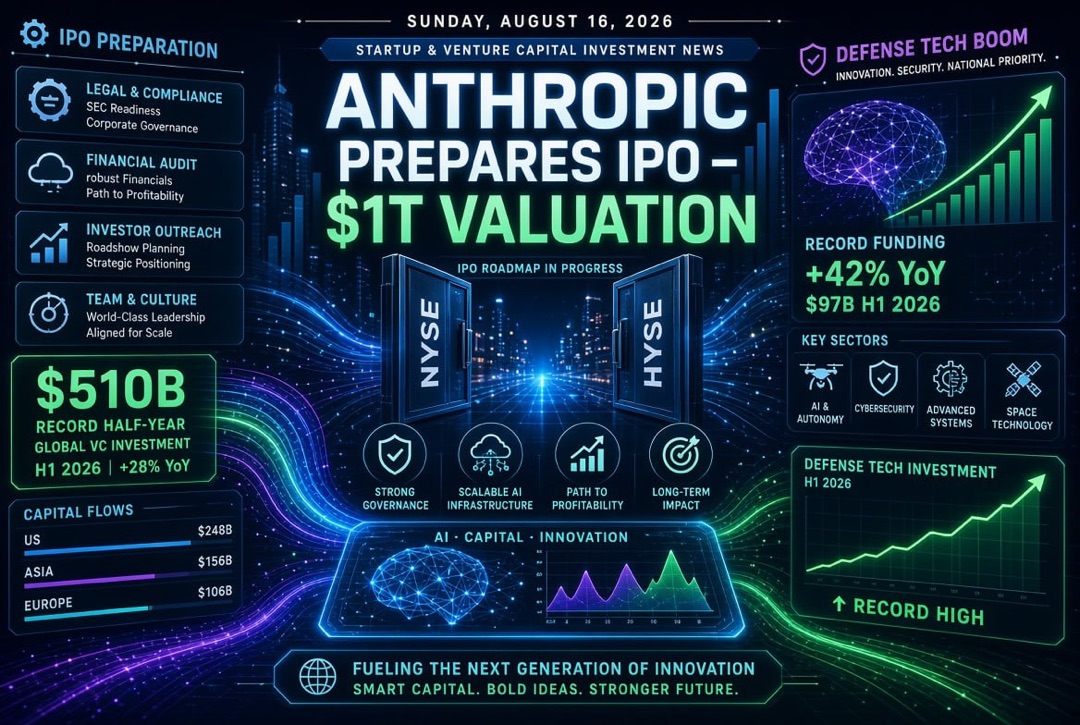
By the end of 2025, the venture capital market is demonstrating a recovery after a prolonged downturn. Major funds and corporations are announcing substantial investment programs, while governments are launching new incentives for technology startups. Investors around the world are once again actively financing high-tech businesses. The US remains a leader, driven by a boom in artificial intelligence, while the Middle East sees record inflows from sovereign funds. In Europe, defense and medical technologies are gaining momentum. India and Southeast Asian countries are attracting record amounts of capital, despite regulatory risks in China. Additionally, Chinese authorities are backing "hard-tech" with the launch of three national funds of 50 billion yuan each for investments in semiconductors, quantum technologies, biomedicine, and other innovative fields. This is shaping a new global venture boom with broad geographic scope.
Major Rounds of the Week
- Swedish startup Lovable — $330 million (Series B, valuation $6.6 billion). The company develops a software generation platform based on textual descriptions, achieving $100 million in annual revenue within just 8 months and $200 million within a year.
- American fintech Erebor Bank — $350 million (Series D, valuation ~$4.35 billion). Provides banking services to crypto and AI companies.
- ZeroAvia (US/UK) — $150 million (Series D) for the development of hydrogen engines for aviation, aimed at zero emissions.
- SanegeneBio (US) — $110 million (Series B) for the development of RNAi therapies and new medicines.
- Israeli Cyera — $400 million at a valuation of $9 billion. The startup is creating an AI cybersecurity platform to protect corporate data.
- Latin American fintech Plata — $500 million (round led by Nomura, valuation $3.1 billion). A company founded by former Tinkoff Bank executives, it issues bank cards (limit up to $200,000) with cashback and provides credit to 2.5 million customers in Mexico.
- Clio (Canada) — $500 million (Series I, valuation $5 billion). The corporate travel and expense service closed its round, expanding global sales after the recent IPO of competitor Navan.
These deals reflect the trend towards capital concentration: according to Crunchbase, in 2025, over 70% of all investments in American startups were in rounds exceeding $100 million (including a record $40 billion in OpenAI). Similar patterns are observed globally, with over 60% of global VC capital directed towards mega-rounds. The influx of private capital is secured by large funds (SoftBank, Mubadala, various US funds) and national institutions worldwide.
AI and Investment Boom
The artificial intelligence sector continues to be the driver of venture growth. According to analysts, in 2025 investors allocated over $200 billion to AI projects, accounting for nearly half of all global venture capital investments. This is reflected in numerous rounds and rising valuations: for instance, SoftBank and Nvidia are negotiating to invest over $1 billion in the Israeli startup Skild AI (valuation ≈ $14 billion) — a developer of universal models for robots.
Additionally, several notable projects attracted significant investments:
- Flex (US/India) — $60 million (Series B). The fintech startup is creating AI tools for managing finances for medium-sized businesses, consolidating the entire stack of corporate finance onto a single platform.
- GC AI (US) — $60 million (Series C, valuation ≈ $555 million). A LegalTech company utilizing AI for lawyers and office staff, closing an expanded round during a peak time in the industry.
- Google & Accel AI India (India) — Investments up to $20 million (at $2 million in 10 startups). A new program by Google in partnership with Accel aims to support early AI projects in the fields of creativity, entertainment, and automation.
Leading corporations are also expanding the AI ecosystem: Nvidia is licensing the technology of startup Groq while bringing its leadership into the team instead of making a full acquisition, and OpenAI along with major IT companies are actively investing in data center infrastructure (the Stargate project, investments from Meta/Google/Oracle). These events confirm that investments are going into the entire technological stack — from foundational models to supporting services and equipment.
Cybersecurity and Major Deals
The cybersecurity space continues to see an arms race with the consolidation of major players. Google announced the acquisition of Israeli startup Wiz for $32 billion, while Palo Alto Networks acquired CyberArk for $26 billion, marking record prices in the industry. Vendor ServiceNow agreed to pay $7.75 billion for Armis (a 9-year-old company developing software to protect critical infrastructure), more than double its recent valuation. Simultaneously, venture funding is increasing: Ukrainian-Israeli startup Cyera raised $400 million from Blackstone at its $9 billion valuation.
Overall, defense-cyber technologies remain a focus for investors: the increased demand for cyber protection is supported by new funds (e.g., €125 million from Keen VC for European defense startups) and active M&A deals that are paving the way for new growth opportunities.
Fintech, Cryptocurrencies, and New Banks
The fintech sector has been flooded with capital. Mexican fintech Plata, founded by former Tinkoff Bank executives, received a valuation of $3.1 billion after its recent $500 million round, becoming one of the market leaders in Latin America. American "crypto-bank" Erebor Bank raised $350 million to expand lending services for blockchain companies. Niche solutions are also receiving support: for instance, New York-based startup FINNY secured $17 million for its AI platform designed for financial advisors and CRM.
Following a deep downturn, 2025 has marked a time of renewed interest in crypto startups: as the market stabilizes, blockchain projects are once again attracting venture investments and are looking for long-term funding. This aligns with a global trend: as cryptocurrency services integrate into traditional finance, VC funds are reallocating resources towards DeFi, stablecoins, and related infrastructure solutions.
Medicine, Biotechnology, and Eco-technologies
Innovations in medicine and the "green" economy have also come under the spotlight of venture investors. The Boston biotech project SanegeneBio received $110 million for developing new RNAi therapies. New York-based startup Neurable (EEG neurointerfaces) closed a $35 million Series A round to launch wearable devices for monitoring brain states. The American platform Truemed (with Andreessen Horowitz among investors) raised $34 million for a service utilizing HSA accounts for wellness purchases. Additionally, venture funds are financing AI safety projects: Red Queen Bio (receiving $15 million from OpenAI) is developing AI tools for detecting biological threats.
In the realm of ecology and transport, a key event was the continued funding of "green" technologies. The startup ZeroAvia secured $150 million for the development of hydrogen engines for aircraft, reinforcing the investment trend in alternative energy and clean transport. Thus, diversification of investments extends beyond AI — climate and medical innovations are also coming into focus.
Government Support and Geographic Investment Trends
Alongside private investment, government initiatives aimed at supporting startups are growing. China announced the creation of three venture funds (each exceeding 50 billion yuan) for early-stage startups in "hard tech" (chips, quantum technologies, biomedicine, etc.). In India, Google, in collaboration with Accel, is launching a new AI fund, planning to invest $2 million in ten promising local startups. In Europe, specialization is emerging: for instance, Dutch fund Keen VC raised €125 million for defense and aerospace projects. Sovereign funds from the UAE, Saudi Arabia, and Singapore increased their presence in fintech and "green" technologies in 2025.
Regional ecosystems continue to grow: Latin America and Africa saw the emergence of their first unicorns (in Fintech, e-commerce, etc.), underscoring the global nature of venture growth. Russia and the CIS, despite sanctions, are witnessing a resurgence in startup activity: new local funds and accelerators aimed at integrating projects into the global trend are launching.
Corporate Deals and Outlook
Activity in the M&A and IPO markets is heating up the overall picture. Major tech companies continue to build their portfolios: Nvidia licensed the architecture of startup Groq and hired its founder instead of acquiring the entire business. Many startups are preparing for public listings: for example, Navan (formerly TripActions) and eToro completed successful IPOs, showcasing promising exit opportunities to investors. Corporations, meanwhile, are amassing funds for acquisitions — amidst heightened valuations and lower lending rates, a new wave of deals is anticipated in 2026.
As the New Year approaches, the startup market is set to meet a cautiously optimistic outlook: by the end of 2025, investments and deal ratings are nearing record levels, while funds and companies are preparing for lucrative exit strategies. Investors are focusing on proven sectors (AI, fintech, biotech, clean technologies), while also paying attention to diversification and risk assessment. The year concludes with strengthened confidence in the long-term potential of technological innovations and expectations for sustained investment momentum into 2026.