Current Startup and Venture Investment News as of February 14, 2026: Mega Rounds in AI, New Venture Funds, M&A Deals, and Global Capital Market Trends for Investors and Funds.
Today's Snapshot: Capital is Concentrating in Leaders Again
The key storyline at the end of the week is the return of "large checks" in venture investments, albeit with a new quality of selection. Funds are flowing not into trends but into companies that can demonstrate scalable revenue, a clear economic model, and an exit trajectory (IPO, M&A, or secondary). Dominating the global landscape is AI: major funding rounds are setting benchmarks for valuations, while applied startups must prove their product is not just a shell but essential infrastructure for businesses. Concurrently, the topic of liquidity is gaining momentum: M&A is emerging as a more realistic exit channel, and discussions around public offerings, particularly in fintech, are resurfacing.
Highlight of the Day: Record Round in AI Raises Valuation Benchmarks
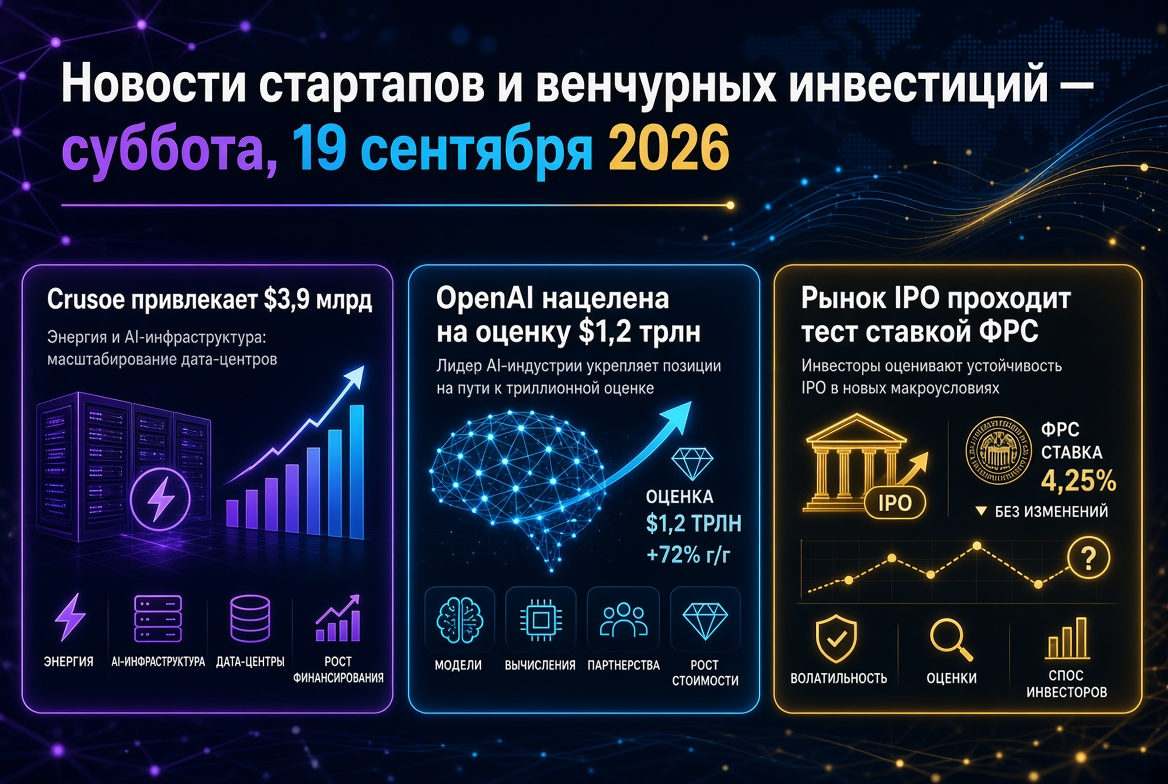
A pivotal event is significant funding in the fundamental AI sector, which amplifies the "winner-takes-most" effect. Such deals are reshaping expectations for multiples and round structures: investors increasingly demand a combination of three factors—access to computations, a controlled database/user base, and predictable monetization in the enterprise sector. For the venture market, this signifies intensifying competition for top engineers and mounting pressure on applied-level startups: they need to rapidly find distribution channels and demonstrate value to customers; otherwise, their margins and positions in the value chain could be eroded by platforms.
- What changes for investors: valuation benchmarks are rising, but metrics requirements are becoming stricter.
- What changes for founders: the path to revenue is more critical than showcasing a model; protecting against copying via data, integrations, and contractual foundations is required.
- What changes for the market: the gap between category leaders and the "second tier" is widening.
USA: A Focus on Hardware, Robotics, and AI Worker Agents
The American venture market continues to support two growth trajectories: (1) robotics and automation in the real world, and (2) agent solutions that are embedded in business processes and provide measurable savings in time and costs. Major deals surrounding humanoid robots and manufacturing scenarios indicate that investors are once again willing to fund capital-intensive sectors—if robust partners, clear pilots, and a commercialization roadmap are present. Simultaneously, interest is growing in AI agents in corporate functions (procurement, support, operations), where value is measured by KPIs rather than attractive demos.
- Signal #1: "robot + model" is becoming an independent investment thesis rather than an R&D experiment.
- Signal #2: agent products excel when integrated within control frameworks (audit, access rights, logging).
- Signal #3: exit strategies are increasingly discussed even at the funding round stage—through M&A or secondary deals.
Europe: Applied AI, Compliance, and Growth in Regulated Tech
The European venture market looks pragmatic in February: a significant focus on applied AI products and compliance infrastructure (KYC/KYB/AML, business identity, onboarding). Here, regulatory influence is stronger, so startups that package AI as a means of reducing compliance costs and accelerating procedures gain clearer sales economies. An important trend is "compliant AI": models and pipelines are initially designed for solution verifiability, traceability, and legal resilience. This enhances the likelihood of M&A deals with banks, payment systems, and large fintech platforms.
- Best Funded: identity infrastructure, automation of checks, tools against financial crimes.
- Weaker Performers: pure consumer fintech without unique distribution and sustainable margins.
- Competitive Advantage: not "model accuracy," but implementation speed and legal reproducibility of results.
Asia: Fintech Listings, Secondary Markets, and Consolidation
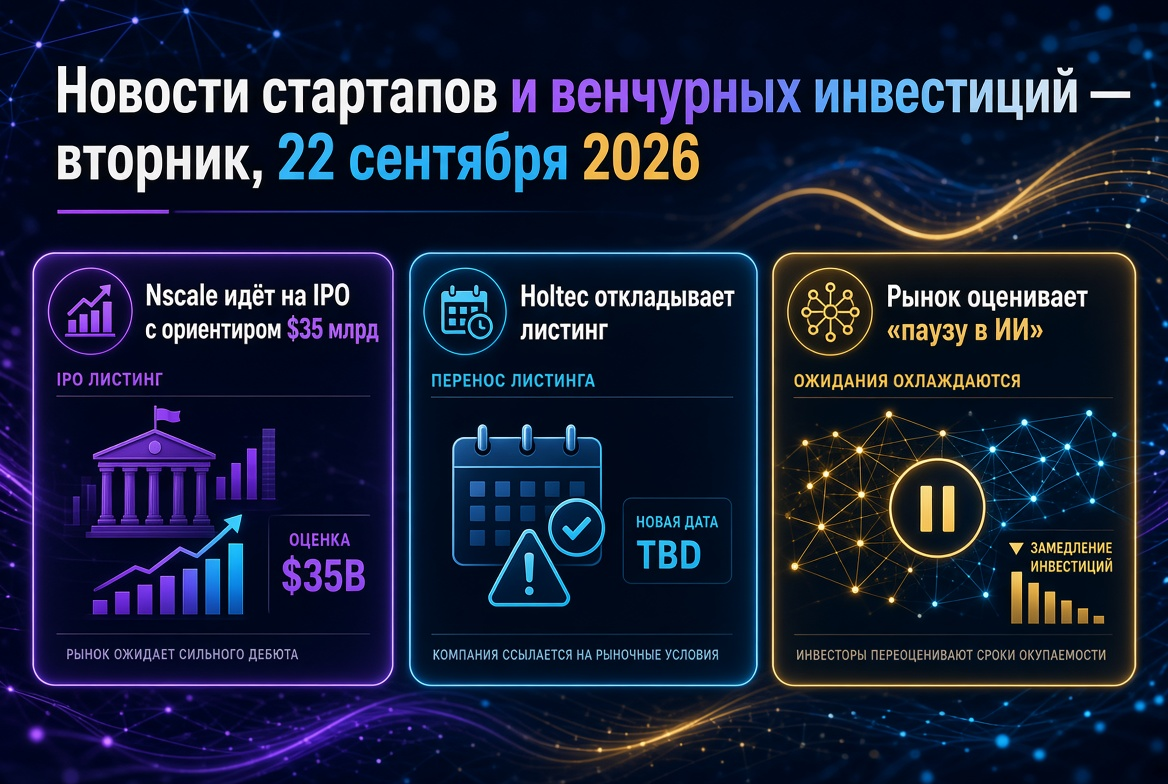
In Asia, investor attention is divided between two poles. The first is the movement of individual fintech leaders toward public markets, which could potentially "revalue" private multiples across the region and reactivate the IPO window. The second is the growing role of secondary markets and structures, where part of the capital is used to buy out shares of early investors and employees. This alleviates liquidity tension, aids in team retention, and makes late-stage funding rounds more manageable. Amid competition among platforms, the M&A agenda is intensifying as major players acquire services that provide rapid growth in product lines, monetization through subscriptions, and increased LTV.
Deals of the Week: Key Points in Venture Logic Terms
The list of high-profile deals from recent days illustrates how the structure of venture investments is shifting in 2026: large AI rounds set the tone, while applied products and trust infrastructure are also receiving active funding. The most notable patterns include:
- Mega Round in AI: establishes a new benchmark for valuations and intensifies competition for computations, data, and corporate clients.
- Robotics: increased interest in capital-intensive directions given strong strategic partners and industry pilots.
- Generative Video and Content Tools: the market is testing who will become the platform and who will remain a "feature" within ecosystems.
- RegTech and Identity: compliance infrastructure is becoming one of the most resilient segments for scaling in B2B.
- M&A in Fintech: acquisitions of assets with subscription models and clear customer bases are reigniting interest in exits beyond IPOs.
Funds and "Dry Powder": Where LP Demand is Shifting
Another significant line of activity this week involves major funds and institutional players. There is more capital in the market than may appear through the number of deals, but it is unevenly distributed. LPs increasingly wish to see discipline: a clear strategy, focus on strong categories (AI, fintech infrastructure, defense/dual-use technologies, cybersecurity), and transparent follow-on rules. This enhances the role of "platform" funds with developed expertise and intensifies competition for the best early-stage teams—pre-seed and seed.
For a global audience, it's important to note that fund strategies are becoming more "barbell": either betting on category leaders with large checks or on early stages where risk pricing is lower, and upside potential is higher. The average segment (companies without clear differentiation and without accelerating revenue) is receiving less attention and is facing tougher fundraising challenges.
Risks and Filters: What to Watch in 2026 Deals
The venture investment market in 2026 is increasingly focused less on "ideas" and more on execution. Investors and funds are enhancing their filters, particularly in the AI segment, where barriers to entry are lowering. Practical criteria that are frequently encountered include:
- Distribution: having sales channels and partnerships is more important than the uniqueness of the model.
- Data and Integrations: sustainable advantages are formed through data, workflows, and switching costs.
- Legal Resilience: compliance, rights to content/data, security, and audit are essential for enterprise.
- Liquidity Path: pre-calculated IPO/M&A/secondary scenarios increase the appeal of a round.
- Unit Economics: margin and CAC pressure remains high; only those who can manage LTV and retention will survive.
Conclusion for Venture Investors: How to Read the Market Next Week
This Saturday's edition confirms that the venture market has entered a phase of "quality concentration." Mega rounds in AI set the pace and elevate expectations, but in parallel sectors—robotics, RegTech, fintech infrastructure—capital is going to those who can quickly demonstrate scalable commerce. For funds, this is a time to formulate theses more precisely and actively manage portfolios: preparing companies for liquidity, building partnerships, accelerating go-to-market strategies, and proactively considering M&A as a viable exit channel.
The key focus in the coming days will be to monitor whether the window for IPOs in fintech will remain open and how quickly consolidation will continue through acquisition deals. In practice, it will be liquidity (exits and secondary) that determines how sustainable the growth of venture investments will be in the first half of 2026.