Global Startup and Venture Investment News for November 9, 2025: Record Investments in Artificial Intelligence, the Return of IPOs, Mega Rounds, M&A, and New Funds. A Detailed Overview for Venture Investors and Funds.
By early November 2025, the global venture capital market is showing a robust rebound after several years of decline. Investors worldwide are actively financing technology startups again: record deals are being struck, companies are returning to IPO plans, and the largest funds are triumphantly entering the market with sizable investments. Governments in various countries are increasing support for innovation, striving not to fall behind in the global tech race. As a result, private capital is once again flowing into startup ecosystems, providing young companies with resources for accelerated growth.
Recent data confirms the revival: in the third quarter of 2025, global venture investment reached approximately $97 billion, which is about 38% higher than the previous year and slightly above the previous quarter's figure. This is the best quarterly result since 2021 and marks the fourth consecutive quarter where investment volumes exceed $90 billion. After the "venture winter" of 2022-2023, startup financing has been steadily growing for four reporting periods, reflecting a return of investor confidence. AI mega rounds have mainly contributed to this growth; however, increases have been observed at all stages, especially in late-stage startup investments. About two-thirds of all venture investments in the last quarter were directed toward U.S. companies, but activity is also rising in Europe, Asia, the Middle East, and other regions, highlighting the global nature of this upswing.
Venture activity is growing across nearly all corners of the globe. The U.S. remains the leader (particularly in the rapidly developing AI segment), while investment volumes have almost doubled in the Middle East over the past year. In Europe, for the first time in a decade, Germany has surpassed the UK in total venture capital. Mexico has overtaken Brazil in capital raised in Latin America. India, Southeast Asian countries, and Gulf states are attracting record flows of venture capital amid a relative decline in activity in China. The startup scenes in Russia and neighboring countries are also striving to keep pace; new funds and initiatives to develop local ecosystems are emerging despite external limitations. Overall, the market is experiencing a global venture boom, although investors continue to exercise selectivity and caution in their project choices.
Below are key events and trends shaping the current agenda of the venture market on November 9, 2025:
- The Return of Mega Funds and Large Investors. Leading venture players are forming record funds and actively investing in startups again, saturating the market with capital and boosting risk appetite.
- Record Investments in AI and a New Wave of "Unicorns." Extremely large funding rounds are driving startup valuations to unprecedented heights, particularly in artificial intelligence, resulting in a surge of new unicorns.
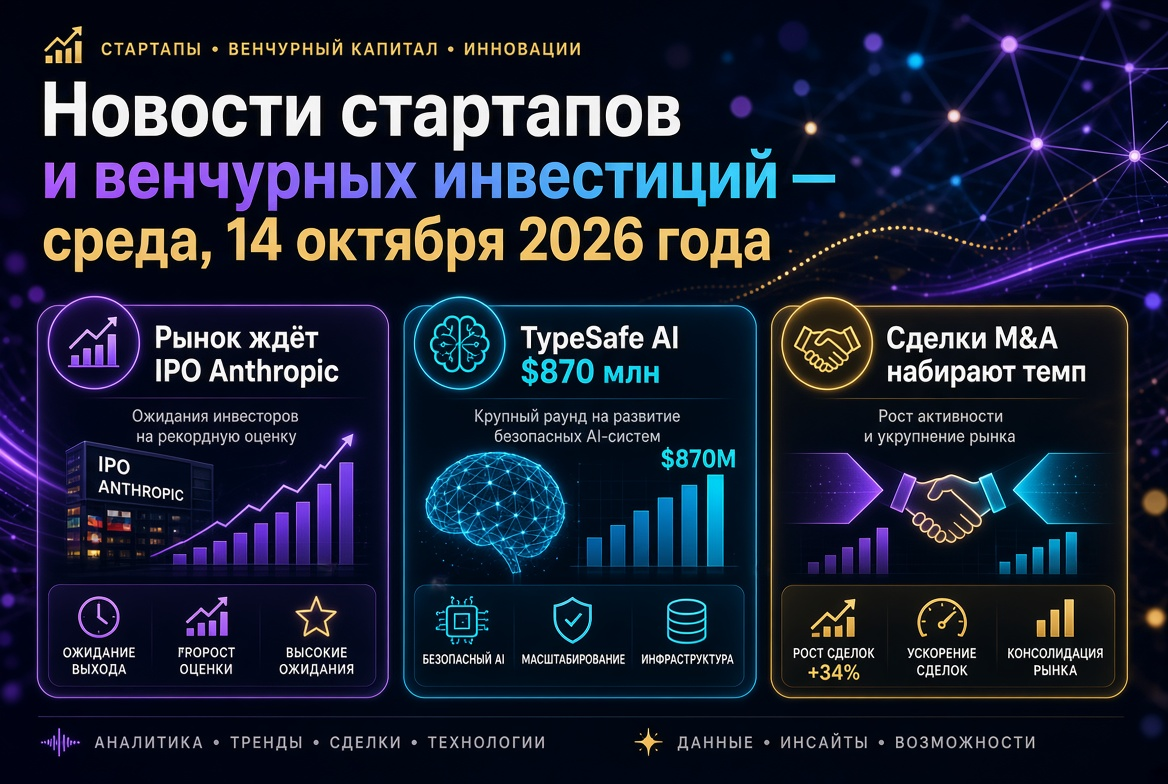
- The Resurgence of the IPO Market. Successful public listings by technology companies and new listing plans indicate that the long-awaited “window” for exits has reopened for venture investors.
- Diversification of Sector Focus. Venture capital is not only flowing into the AI sector but also into fintech, climate projects, biotechnology, space, and defense development, indicating an expanding investment horizon.
- A Wave of Consolidation and M&A. Major mergers, acquisitions, and strategic deals are reshaping the industry landscape, creating new opportunities for exits and accelerated growth for companies.
- A Return of Interest in Crypto Startups. Following a prolonged “crypto winter,” blockchain projects are again attracting significant funding and attention from both venture funds and large corporations.
- Local Focus: Russia and CIS Countries. New funds and programs are being launched in the region to develop local startup ecosystems, gradually attracting investor attention despite sanctions and other restrictions.
The Return of Mega Funds: Big Money Back in the Market
The largest investment funds and institutional players are confidently returning to the venture arena, signaling a renewed risk appetite. Following a downturn in venture fundraising from 2022 to 2024, leading VC firms are resuming capital raising and establishing new mega funds, demonstrating confidence in the market's prospects. For instance, the Japanese conglomerate SoftBank has established its third Vision Fund, amounting to about $40 billion, focused on cutting-edge technologies (with an emphasis on AI and robotics). In October, American Sequoia Capital announced the creation of two new funds totaling $950 million (including approximately $750 million for late-stage investments and $200 million for seed projects). Sovereign funds from Gulf countries have also become active, directing billions of dollars into innovative companies worldwide. The emergence of such mega structures suggests that startups will soon have even more opportunities to secure funding, as large investors accumulate significant "war chests" of capital in anticipation of another wave of technological growth.
Record Investments in AI and a New Wave of Unicorns
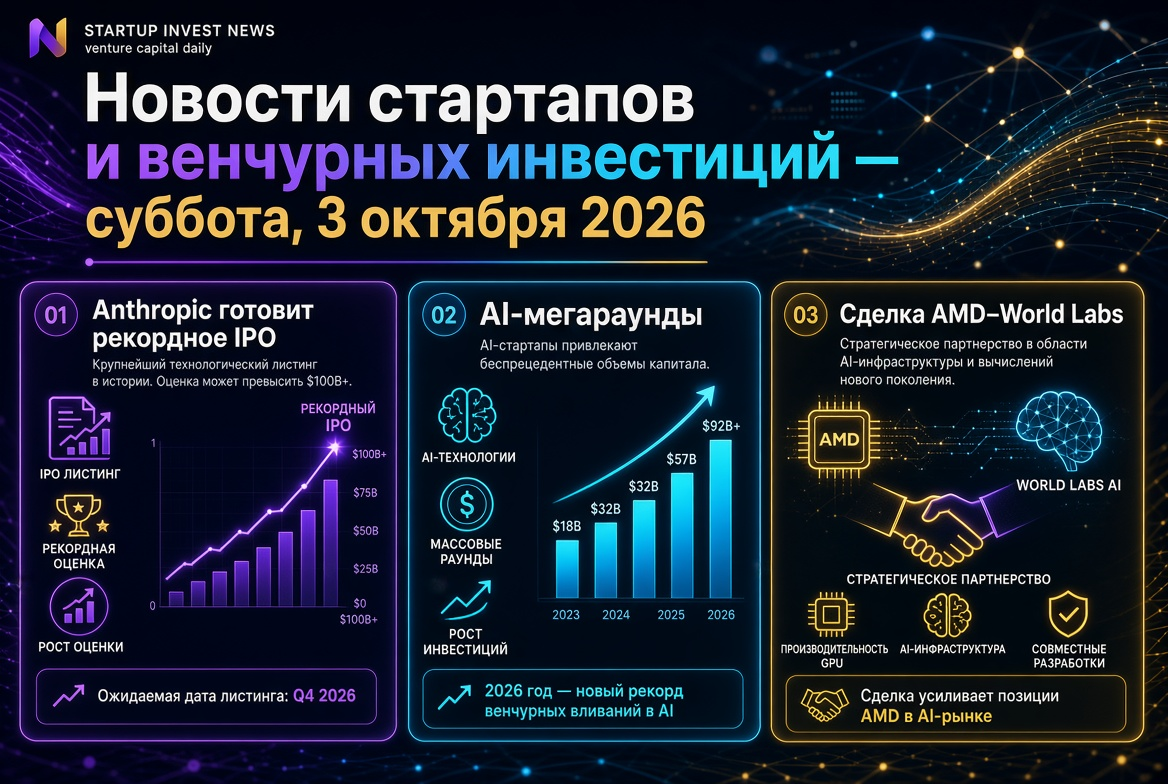
The artificial intelligence sector remains the main driver of the current venture boom, displaying unprecedented funding volumes. Since the beginning of 2025, AI startups have raised over $160 billion in the U.S. alone, accounting for about two-thirds of all venture fund investments in the country. Analysts estimate that by the end of the year, global investments in AI companies could exceed $200 billion — an unprecedented achievement for the industry. The combined valuation of the ten largest AI startups (including OpenAI, Anthropic, xAI, and others) has approached an astronomical $1 trillion. Investors attribute the excitement around AI to its potential to radically enhance efficiency across multiple sectors, unlocking multi-trillion dollar new markets — from software automation to personal virtual assistants. Despite the risks of overheating and discussions of a potential bubble, venture funds continue to actively invest in AI startups, fearing that they might miss out on the next technological revolution.
The influx of capital into AI is accompanied by the emergence of numerous new "unicorns" and a high concentration of investments. A significant portion of the funding is directed toward a narrow circle of industry leaders receiving the largest rounds. Recently, about 70% of all venture investments in American startups have been funneled into just a few most sought-after companies. For instance, in September, French generative AI developer Mistral AI raised around $2 billion, setting a record for the European market. An even more impressive instance is the American company OpenAI, which secured a staggering $13 billion in a single funding round — an unprecedented amount that sets a new benchmark for the industry. Such colossal deals inflate company valuations to astronomical heights. Nonetheless, the venture market as a whole benefits from this surge: capital and talent are concentrating around promising directions, which may lead to groundbreaking innovations in the future, even if some generously financed projects do not meet expectations.
In recent weeks, several startups have announced large-scale investments, confirming the return of “big checks” to the market. Among notable examples are:
– Harvey (USA) — raised $150 million at a valuation of approximately $8 billion to develop a legal AI platform (lead investor: Andreessen Horowitz).
– Synthesia (UK) — $200 million at a $4 billion valuation to scale a video generation service using AI (the round was led by GV— the venture arm of Alphabet).
– Fireworks AI (USA) — $250 million in a Series C round (valuation approximately $4 billion) for developing an AI platform in genomics and healthcare.
– Legora (Sweden) — $150 million (valuation $1.8 billion) for developing legal software with AI elements; founded in 2023 and has already entered the ranks of new unicorns.
– Armis (USA) — $435 million in a pre-IPO round at $6.1 billion valuation to strengthen the IoT cybersecurity platform (the round was led by Goldman Sachs with participation from CapitalG).
The Renaissance of IPOs and Exit Prospects
Against the backdrop of rising valuations and capital inflow, technology companies are once again eyeing public markets. Following a lull over the past two years, a resurgence of IPOs is emerging as a long-awaited exit pathway for venture investors. Earlier in 2025, several large unicorn startups successfully went public. For example, the stablecoin issuer Circle conducted an IPO with a valuation of about $7 billion, while the cryptocurrency exchange Bullish raised approximately $1.1 billion through its offering, reaching a capitalization of about $5-6 billion. These debuts demonstrated the market's renewed appetite for new public offerings, particularly in the fintech and cryptocurrency segments.
Now Major players are eager to take advantage of the newly opened "window" of opportunities. Insider reports suggest that the creator of ChatGPT, OpenAI, is considering a potential public offering as early as 2026 with a projected valuation of up to $1 trillion — an unprecedented level for the tech sector. In the blockchain industry, wallet developer ConsenSys has engaged JPMorgan and Goldman Sachs to prepare for an IPO slated for 2026. If it proceeds, this will mark the first public offering of such a substantial company from the Ethereum ecosystem, making it a landmark event for the entire crypto sector.
Improved market conditions and gradually clarifying regulatory requirements are also providing confidence to startups planning listings. Regulators in the U.S. are beginning to alleviate uncertainty; for example, the SEC recently settled claims against ConsenSys concerning its crypto services, removing one barrier to an IPO. Consequently, leading private companies are once again viewing the public market as a viable option for raising capital and providing liquidity to investors. Experts predict that in the next couple of years, the number of high-profile tech IPOs will increase as the "window" for exits remains open and market multiples favor high valuations.
Beyond AI: Healthcare, Climate, and Space
Despite the dominance of artificial intelligence, significant funds are also flowing into other high-tech sectors. For instance, healthcare and biotechnology attracted around $15-16 billion in venture capital in the third quarter of 2025 — the third-highest amount after AI and IT infrastructure. The synergy of technology and medicine is evident in rounds like the aforementioned Fireworks AI, which received $250 million for developing an AI platform for genomic medicine (combining advancements in AI and healthcare).
Venture funds are also actively supporting climate projects. For example, the Australian startup Uluu raised AUD 16 million to develop biodegradable plastic from algae, and the Indian electric vehicle component manufacturer Tsuyo Manufacturing secured INR 40 million to expand production. Although the scale of these deals is not comparable to the giant rounds in AI, they reflect sustained investor interest in sustainability and "green" technology themes.
Increased attention is also being directed towards space, defense, and other hardtech sectors. In Europe, the private space segment is rapidly growing; for instance, Bulgarian satellite startup EnduroSat raised $104 million (with involvement from funds like Google Ventures, Lux Capital, and others) to expand small satellite production in response to global demand for affordable communication solutions in space. Overall, deeptech sectors are experiencing a rise: in 2025, large funding rounds for manufacturers of robotics, semiconductor components, and quantum computing systems gathered tens of billions of dollars. While these sectors may currently lag behind AI in terms of investment volume, the distribution of venture capital is becoming increasingly diverse — ranging from medicine and climate solutions to space and defense technologies. A broad front of innovations is supported by investments, reducing the risks of overheating in one or two niches and promoting balanced technological progress.
Consolidation and M&A: Mega Deals Change the Landscape
High valuations of startups and fierce competition are stimulating a new wave of consolidation in the industry. Major mergers and acquisitions are once again taking center stage, reshaping the power dynamics in the market. Strategic M&A enables corporations and investors to accelerate growth, gain access to new technologies or enter adjacent markets, while for venture funds, large acquisitions provide much-needed exits.
Recently, several notable deals have occurred, confirming the trend of bridging traditional financial institutions and the startup world. For example, in October, the investment bank Goldman Sachs announced its acquisition of the venture firm Industry Ventures for nearly $1 billion. This deal has emerged as one of the largest acquisitions in the venture sector, reflecting the growing interest of banking capital in technologies and startup assets. Major tech giants are also reviving their activity in the M&A market, capitalizing on relatively stable valuations: over the past year, several industry leaders have acquired promising startups in a bid to strengthen their positions in key areas (e.g., AI and cybersecurity).
The wave of consolidation is also impacting the crypto industry. Traditional financial corporations are showing interest in acquiring blockchain startups amid the sector's recovery. Media reports indicate that Mastercard is in the final stages of negotiating the acquisition of several crypto projects (including the infrastructure startup ZeroHash) for nearly $2 billion, indicating serious intentions by major players to establish themselves in the realm of digital assets. Overall, the uptick in mergers and acquisitions — from banking investments in venture platforms to large tech deals — suggests the "maturation" of the market. Major players are ready to expand their presence through M&A, providing startups with more options for successful exits and integration into corporate businesses.
The Return of Interest in Crypto Startups
Following a prolonged "crypto winter," the market for blockchain startups is coming back to life: venture investments in the crypto industry are again on the rise. In October 2025, funding for cryptocurrency and blockchain companies saw a notable increase. In the first week of October alone, projects in this domain collectively attracted over $3 billion — a sharp jump compared to previous months. The American project Polymarket emerged as a leader, securing a record $2 billion in investments (valuation about $9 billion) from a consortium led by the operator of the New York Stock Exchange, ICE. This ranks among the largest venture deals of the year outside the AI sector. Following suit, the financial predictions platform Kalshi attracted $300 million (valuation about $5 billion), further confirming the market's readiness to invest in new fintech solutions that bridge traditional markets and cryptocurrency.
Overall, infrastructure solutions for digital assets are also beginning to gain venture capital support. For example, the American startup Hercle, creating infrastructure for stablecoins, raised $60 million in funding. Activity is also noticeable in the consumer crypto sector; for instance, the promising digital asset trading app Fomo raised $17 million in November (the round was led by Benchmark), signaling the return of top investors to a space they have long avoided. Moreover, leading companies in the crypto market are advancing to a new level of maturity. In addition to preparing for an IPO, ConsenSys, with participation from major banks, is seeing increased institutional investor interest in crypto assets. Easing regulatory uncertainty in the U.S. (progress in stablecoin rules, approval of Bitcoin ETFs) and the involvement of traditional financial giants in funding rounds instill additional confidence. The crypto startup sector, having undergone a cleansing from speculative projects, is gradually restoring trust and once again coming into focus for venture investors.
The Local Market: Russia and CIS Countries
Despite geopolitical constraints, Russia and neighboring countries are making efforts to develop their startup ecosystems. In a climate where international capital is largely inaccessible, local investors and institutions have focused on the domestic market. Over the past year, several new venture funds have emerged in Russia — industry reviews indicate an increase in active players from approximately 35 to 43. This implies that some Russian capital, "locked" within the country, has begun to flow into the tech sector, fostering the formation of new investment teams and strategies. Large companies are establishing corporate funds, while regional venture funds aimed at supporting innovation are being launched with local government backing.
Development institutions (such as the Skolkovo Foundation, the Russian Venture Company, the Internet Initiatives Development Fund, and others) have ramped up accelerators, competitions, and grant programs to compensate for the shortfall in external funding. In 2025, new startup studios have been launched at leading universities, and regional venture funds have been initiated with the support of local authorities. However, the overall venture investment volume in Russia remains modest compared to global standards. There are also significant barriers; high interest rates and economic stagnation hinder private capital attraction, while tech companies face restrictions in accessing global markets and technologies. Nevertheless, the most resilient Russian startups continue to evolve, adapting to local niches. In the long term, the formation of a domestic venture market — albeit reluctantly — could lay the groundwork for future growth when external conditions improve.
Conclusion: Cautious Optimism
After a year of impressive deals and a resurgence of investment activity in the venture market, there is a prevailing sense of cautious optimism. On one hand, the unprecedented surge in valuations and funding volumes — especially in the AI segment — draws parallels with the dot-com boom of two decades ago. The risk of overheating and forming a "bubble" exists, and some investors are calling for prudence, pointing to excessively inflated expectations in certain niches. On the other hand, many venture capitalists note that periods of excitement have positive effects as well: they attract vast resources and talent into new sectors, laying the foundation for future technological breakthroughs. Even if some projects inevitably fail, one or two wildly successful "hits" can compensate for dozens of failures.
On the eve of 2026, investors worldwide are striving to find a balance between the desire not to miss the next revolutionary idea and a sober assessment of risks. One thing is clear: the startup market has notably revived after a challenging period. New records are being set for funding volumes, high-profile IPOs are on the horizon, and venture funds are once again forming large pools of capital. At the same time, the approach has become more selective — capital is being directed primarily toward the most promising companies and sectors. The key intrigue remains whether high expectations surrounding the AI boom will be met and whether other sectors can catch up in terms of funds raised. For now, however, the appetite for innovation is robust: both startups and investors are looking to the future with cautious yet palpable enthusiasm.