Current news on startups and venture investments as of February 16, 2026: mega rounds in AI, rising valuations, market consolidation, and strategies of global venture funds. Analysis for investors and VC funds.
VC Market: Capital is Available, But Discipline is Tightening
Venture investments are entering mid-February 2026 with a mixed signal: funds still have significant capital, but the criteria for deal selection are becoming stricter. Turbulence has intensified in the public software market, which directly impacts private valuations, funding round conditions, and companies' readiness to go public. For venture funds, this means a return to "quality investing," with a focus on revenue, retention, unit economics, and proven effectiveness of AI products, rather than mere promises of growth.
- Key shift: an increase in the proportion of structured rounds (tranches, performance criteria, stricter liquidation preferences).
- Secondary market: more active discussions on partial stake sales and risk-shifting deals among investors.
- Fund strategy: focus on "AI infrastructure" and applied verticals where AI provides measurable efficiency gains.
AI Mega Rounds: Record Valuations and Capital Concentration
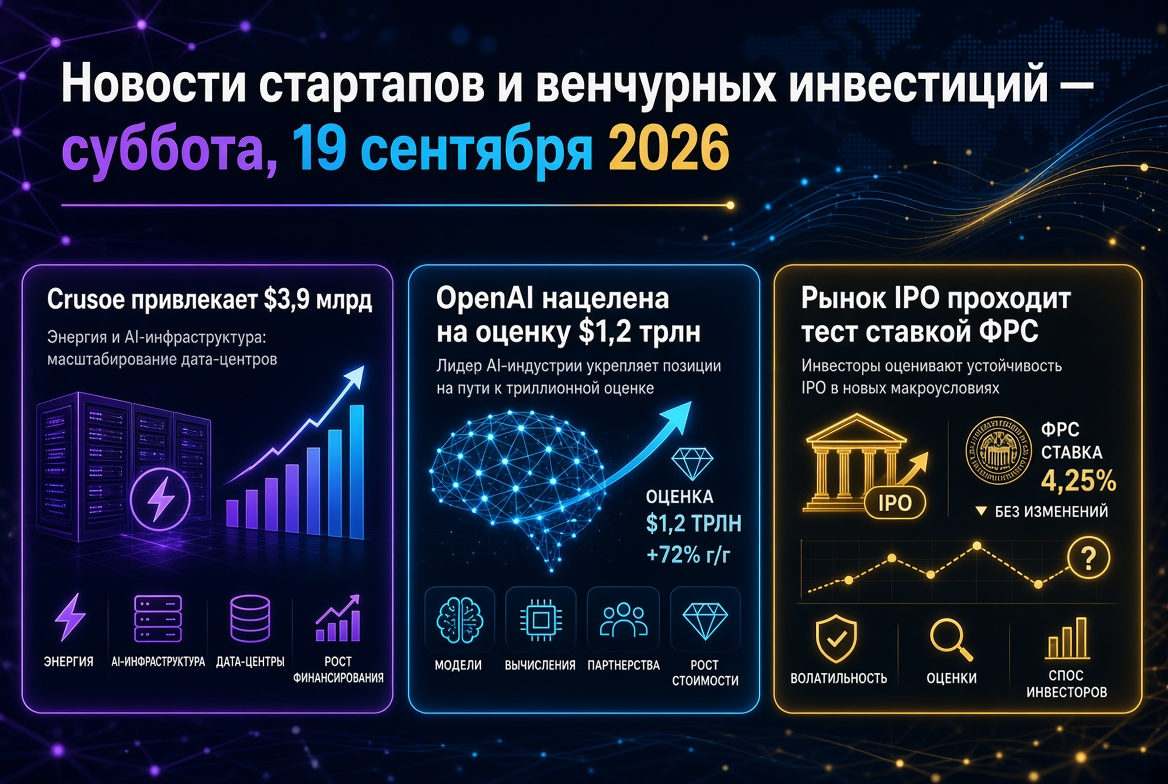
The most talked-about topic of the week is the continuation of the mega rounds era in generative AI. The largest deals are further consolidating capital around a few leaders, forming a "market top" where valuations are increasing faster than the industry average. Investors are effectively paying not only for current metrics but also for strategic positioning within the value chain: models, data, computations, corporate integrations.
Investor focus is shifting towards companies that:
- have sustainable enterprise revenue and a clear implementation economy;
- control critical resources (training, inference, infrastructure, partnerships with cloud providers);
- turn AI into product packages for specific functions (coding, support, sales, analytics).
AI Infrastructure: Computations, Chips, and the "Energy" Side of AI
In 2026, the venture market is increasingly pivoting from "wraps" to fundamentals: chips, data centers, cloud infrastructure, and energy efficiency. Investors are assessing not only the technology itself but also the startup's ability to scale in a capital-intensive environment.
- Cerebras Systems closed a late funding round of $1 billion with an estimated valuation of around $23 billion, underscoring the demand for alternatives in AI computations and the market's desire to diversify supply chains.
- Neysa (AI-cloud infrastructure) secured a significant investment package aimed at a $1.4 billion company valuation, reflecting the growing interest in regional AI platforms and infrastructure for models.
- C2i Semiconductors raised $15 million for power management solutions for AI data centers — a signal that "energy efficiency" is becoming as much an investment thesis as model training speed.
For venture investors, this is an important marker: the rise of AI increases demand for specialized components and infrastructure optimization, creating more opportunities in niches previously dominated by corporations.
Voice AI and "Enterprise Packages": Betting on Revenue, Not Demos
The voice AI segment is transitioning from the "wow effect" phase to systematic implementation: contact centers, employee training, sales, content localization, and multilingual interfaces. Notably, large funding rounds are being secured by players developing corporate products and scalable sales channels.
ElevenLabs raised $500 million in Series D funding at an estimated valuation of around $11 billion. This deal confirms two trends:
- investors are willing to pay for a sustainable enterprise trajectory and clear monetization scenarios;
- the market expects voice to become the standard interface for AI agents in support and sales, rather than a separate "feature."
Fintech and M&A Deals: The Market is Re-evaluating Risk and Asset Quality
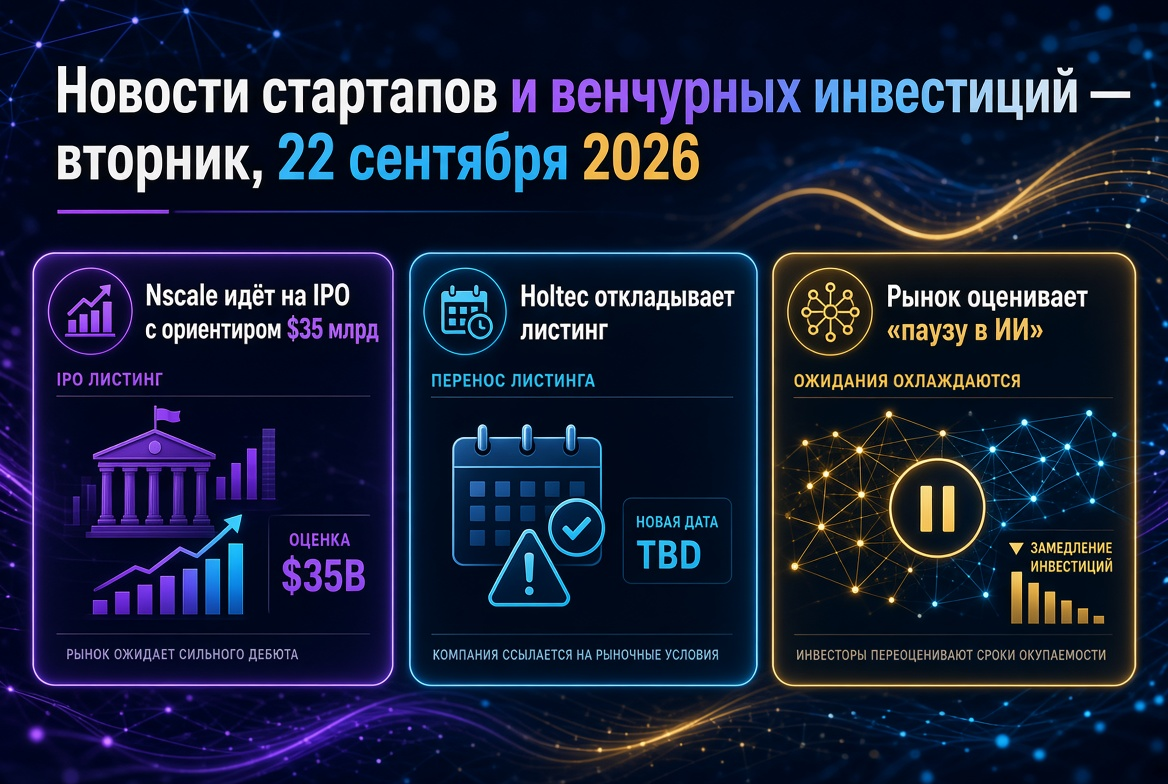
Amidst software volatility, pressure on valuations is intensifying, particularly in B2B SaaS and fintech. This is influencing negotiations surrounding M&A deals and plans for public placements. Some companies are delaying IPOs or reducing placement parameters to avoid locking in "negative" valuations compared to the expectations of previous years.
For the venture market, this indicates an increased likelihood of two scenarios:
- Consolidation — strong players are acquiring products/teams to quickly address functional gaps and reduce development costs;
- Down-round or flat-round — rounds without valuation growth but with runway preservation and a focus on profitability.
Europe and the UK: Capital is Flowing into Energy, Sustainability and Industrial Cases
In Europe, including the UK, venture investments remain focused on areas where innovations are packaged into a clear regulatory and corporate logic: energy infrastructure, greentech, recycling, and industrial efficiency. This reflects a more "conservative" demand structure from large clients and government.
- Growing interest in platforms for energy markets and transaction management.
- Technologies related to circular economy and recycling are receiving funding due to ties with contracts and industry pilots.
Venture Funds Interest Map for the Week
If we summarize the key signals, the global venture market in mid-February 2026 looks like this:
- Top sector: AI (models, agents, infrastructure, chips, energy savings in data centers).
- Growth strategy: enterprise sales, partnerships with cloud providers and major integrators.
- Deals: large rounds for leaders and stricter conditions for "mid-market" players.
- Exits: the IPO window remains selective; M&A is becoming more realistic where there are synergies and cost savings.
What This Means for Investors: Practical Takeaways
For venture investors and funds, the key task in the coming weeks is to avoid overpaying for "narratives" while maintaining access to AI growth. In a context where public multiples fluctuate and IPOs are postponed, the cost of mistakes is rising, but the value of discipline is also increasing.
- In late-stage investing, check how a company defends itself against price competition and what the cost of inference is at scale.
- In growth/Series B-C, seek vertical AI cases with measurable ROI for clients and short implementation cycles.
- In seed, prioritize teams with rare expertise (chips, infrastructure, security, industrial AI), where barriers are higher and the risk of "commoditization" is lower.
- For the portfolio, prepare a plan for the next 12-18 months: extending the runway, optional bridges, engaging with the secondary market, and M&A scenarios.
The main takeaway of the day: venture investments in 2026 remain globally active, but the market demands proof. Startups that transform AI from a loud promise into operational efficiency, revenue, and scalable products will emerge victorious.