Current Startup and Venture Investment News as of January 24, 2026: Mega-Rounds in AI, IPO Wave, VC Activity, and Key Global Trends for Investors
As we enter 2026, the global venture market is displaying robust growth following a period of decline. Investors worldwide are actively financing technology startups—record deals are being made, and plans for IPOs are taking center stage. Major players are making a comeback with significant investments, while governments are increasing their support for innovation. As a result, private capital is actively returning to the startup ecosystem.
Venture activity is rising across all regions. The United States maintains a confident lead (especially in the AI sector), while investment volumes in startups have surged dramatically in the Middle East. In Europe, a shift in power is occurring: Germany has overtaken the UK in terms of venture deals. India, Southeast Asia, and Gulf countries are attracting record capital amidst waning activity in China. A new global venture boom is forming, although investors remain selective and cautious about deals.
Below are key events and trends shaping the venture market landscape as of January 24, 2026:
- Ongoing IPO Market Activation. Successful public debuts by tech 'unicorns' and new filings confirm that the long-awaited "window" for exits remains open.
- Record Funding Rounds in AI and Robotics. Unprecedentedly large deals are raising startup valuations to new heights, especially in the AI and robotics segments.
- Diversification of Sector Focus. Venture capital is being directed not only to AI but also to fintech, climate projects, biotechnology, defense technologies, and other sectors.
- Wave of Consolidation and M&A Activity. Major mergers, acquisitions, and strategic investments are reshaping the industry landscape, providing pathways for exits and consolidation of companies.
- Global Venture Capital Expansion. The investment boom is reaching new markets—from Gulf countries and South Asia to Africa and Latin America—developing their own tech ecosystems.
- Local Focus: Russia and the CIS. Despite restrictions, new funds and initiatives are emerging in the region to develop local startup ecosystems, drawing investor attention.
Continued IPO Wave: New Listings on the Stock Exchange
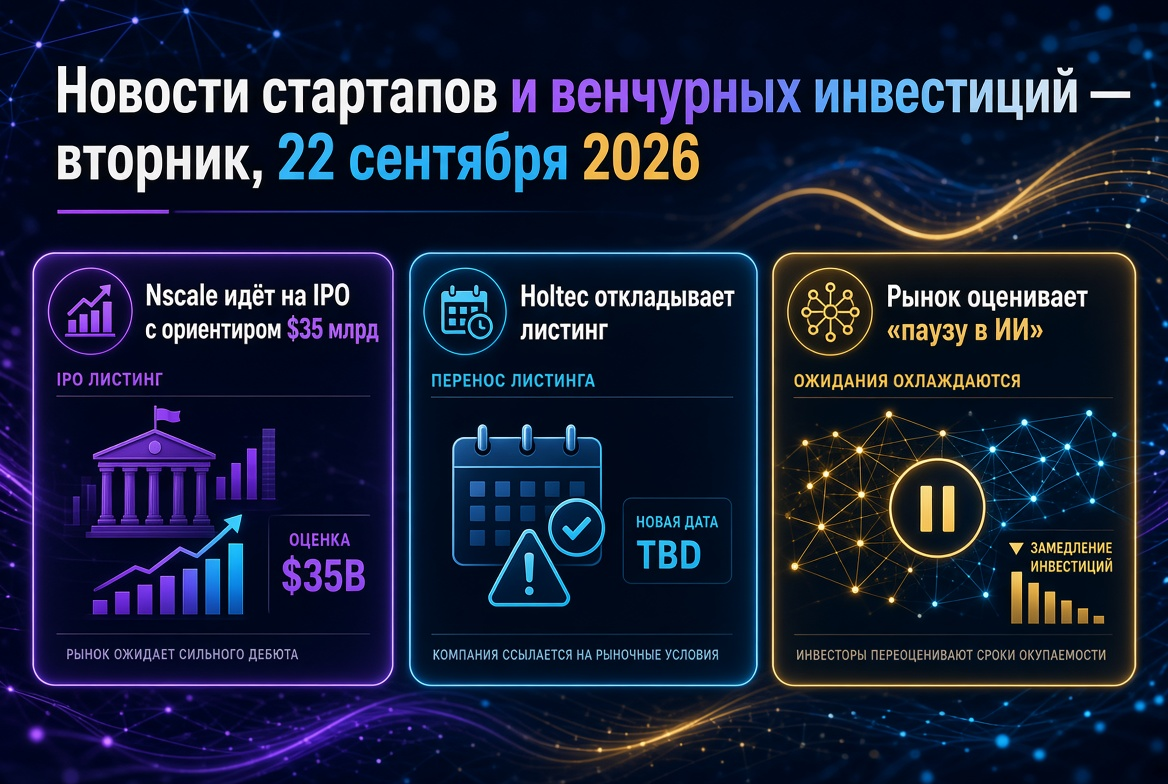
The IPO market is experiencing a resurgence after a prolonged lull, and this wave is continuing into 2026. In recent months, several major 'unicorns' have successfully debuted on the stock exchange, sparking optimism within the venture community. In the U.S., notable events included the IPOs of design platform Figma and fintech company Chime—both debuts were successful. These successful offerings have prompted other 'mature' startups to prepare for public listing.
A series of high-profile listings is anticipated in 2026. Among the candidates for IPOs are payments giant Stripe, social platform Reddit, AI company Anthropic, and even space leader SpaceX. Many of them are looking to capitalize on the opportunity created by market growth to attract capital for further development. The activation of the IPO market is crucial for the venture ecosystem: successful exits allow funds to realize profitable returns and reinvest in new projects. As long as the "window" remains open, increasing numbers of startups are seriously considering public offerings.
Record-Breaking Mega-Rounds in AI and Robotics
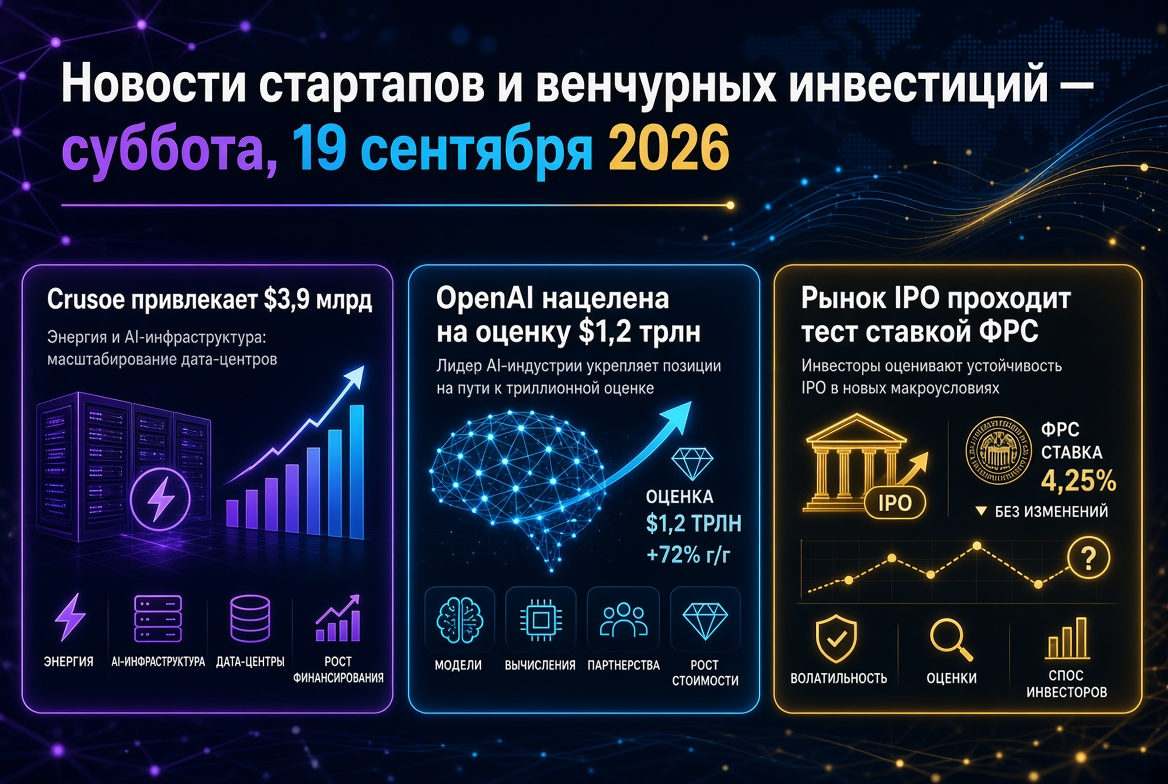
The artificial intelligence sector continues to attract unprecedented volumes of venture funding, setting records in 2025 and maintaining momentum at the start of 2026. Major AI startups collectively raised approximately $150 billion last year, with the lion's share coming from several mega-rounds. OpenAI executed the largest private round in history—around $40 billion in investments. Its competitor Anthropic is also rapidly attracting capital: at the end of 2025, the company secured strategic funding of up to $15 billion from NVIDIA and Microsoft at a valuation of approximately $350 billion, and is reportedly negotiating for an additional $25 billion.
Other players are also securing enormous sums. Swiss startup Skild AI, which is developing a "brain" for robotics, raised a record $1.4 billion in a funding round led by SoftBank. A true boom is also observed in AI infrastructure—from cloud services and semiconductors to data centers for training models—investors are eager to invest even in the "shovels and picks" of the AI market. The pool of new "unicorns" is rapidly expanding.
Diversification: Climate, Biotech, and Fintech Return to Focus
While artificial intelligence remains the primary "star" of the venture market, investment capital is increasingly diversifying across sectors. Following a period of decline, financing in fintech is revitalizing. Climate and environmental startups have also gained momentum: the total volume of venture capital investment in climate tech exceeded $40 billion over the year, with a portion stemming from several mega-deals related to the application of AI for energy and resources (such as the startup Crusoe Energy, which raised $1.4 billion for the development of "green" data centers).
In biotechnology and medtech, investor interest is returning amid new scientific breakthroughs. Large rounds in pharmaceutical startups and companies developing new therapies indicate venture capitalists’ readiness to finance healthcare again after a brief pause. Moreover, defense technologies and space projects are attracting increasing amounts of funding, partly due to government contracts and geopolitical demand. Overall, the venture market is becoming broader and more balanced: capital is being directed not only to AI but to other promising segments as well.
Consolidation and M&A: Major Deals Transforming the Market
Against the backdrop of high startup valuations and fierce competition, there is an escalating trend toward consolidation. Major tech corporations and high-valuation 'unicorns' are increasingly acquiring promising teams or merging for synergy. One of the largest acquisitions of the past year was Meta's purchase of the startup Scale AI (a data annotation platform) for nearly $15 billion—this move underscored IT giants' desire to acquire key assets in the AI sector. Many late-stage startups are opting for sale to a strategic investor or fund instead of an IPO to secure liquidity. The wave of M&A activity is providing funds with new exit pathways while simultaneously consolidating market players into larger, more mature entities capable of competing on a global scale.
Global Venture Capital Expansion: New Regions on the Rise
The venture boom today is encompassing more countries and continents, extending beyond traditional hubs. The Middle East has transformed from a capital exporter into a creator of its own startup ecosystems: large government programs in Saudi Arabia and the UAE are stimulating technology development and attracting talent. India and Southeast Asia are setting records in venture investments, with cities like Singapore, Bangalore, and Jakarta establishing themselves among the largest tech hubs. New 'unicorns' are also emerging in Africa and Latin America—although investment volumes there are currently more modest, the growth rates are impressive, and global funds are showing increasing interest in these regions. Europe is also experiencing shifts: Germany and France have ramped up venture activity, while the UK has lost some of its leadership. Venture capital has become truly global—innovative companies can find support from almost anywhere in the world.
Russia and the CIS: Local Initiatives Amid Global Trends
Despite ongoing restrictions and geopolitical tensions, the venture market in Russia and neighboring countries is striving to develop, relying on internal resources. Industry estimates suggest that the volume of venture investments in Russia in 2025 amounted to about 7 billion rubles, slightly less than the previous year due to limited access to external capital. Nevertheless, new funds and support programs for startups are emerging. Major banks and corporations are launching their own venture units and funds to finance promising projects across various sectors.
The government is also intensifying its focus on technological entrepreneurship. In 2025, the government established several new accelerators and grant programs for key technologies. The Russian Ministry of Finance has announced plans to conduct 2-3 public offerings of state companies in 2026 worth up to 200 billion rubles. The region aims to harness global trends for its own needs, establishing local analogs of successful models. While the scale of Russian venture is incomparable to global leaders, local players are hopeful of laying the foundation for future ecosystem growth.
Looking Ahead: Cautious Optimism Among Investors
As of early 2026, the venture market is characterized by cautious optimism. Recent successes—from high-profile IPOs to record funding rounds—instill confidence in continued growth. However, lessons from past years compel investors to remain vigilant. The concentration of vast capital in a few AI startups serves as a reminder of the associated risks: if expectations are not met, sudden corrections in valuations could occur. In response, funds are increasingly focusing on the quality of business models and actual performance metrics of startups, avoiding the pursuit of growth at all costs. Despite this caution, the overall situation is favorable: substantial capital is available, technological breakthroughs are occurring, and interest in innovation remains high. Should the macroeconomic environment remain stable, 2026 could witness further market revitalization—investors intend to capitalize on new opportunities while tempered enthusiasm at the first signs of overheating.