Global Startup and Venture Investment News for Tuesday, January 13, 2026: The Continuation of the Venture Boom, Record Rounds in AI, IPO Revival, M&A Wave, and Global Market Expansion. An Overview for Venture Investors and Funds.
By mid-January 2026, the global venture capital market is demonstrating robust growth, leaving behind a period of decline. In the fourth quarter of 2025, over $100 billion was invested in technology startups, approximately 40% more than the previous year—marking the best quarterly result since 2021. The prolonged "venture winter" of 2022-2023 has ended, and private capital is rapidly returning to the tech sector. Major funds are actively investing in promising companies again, and investors are willing to take risks for high potential returns. The industry confidently enters a new phase of growth, although caution in project valuations remains prevalent.
Venture activity is increasing across all regions of the world. The United States is leading, largely due to colossal investments in artificial intelligence. In the Middle East, investment in startups is sharply rising due to generous funding from state megafunds. Europe is experiencing a reshuffling of leaders: Germany has surpassed the UK in venture deal volume for the first time in a decade, strengthening the positions of continental tech hubs. In Asia, growth is shifting from China to India and Southeast Asia, which balances the relative cooling of the Chinese market. Africa and Latin America are also making their mark—these regions have seen the emergence of their first "unicorns," highlighting the truly global nature of the current venture boom. The startup ecosystems in Russia and the CIS countries are striving to keep pace; with support from the government and corporations, new funds, accelerators, and programs are being launched in the region aimed at integrating local projects into global trends.
Below are the key events and trends shaping the current venture market agenda as of January 13, 2026:
- The Return of Megafunds and Major Investors. Leading venture players are forming unprecedentedly large funds and ramping up investments, once again injecting capital into the market and heating up appetite for risk.
- Record Rounds in AI and a New Wave of Unicorns. Colossal investments in artificial intelligence are skyrocketing company valuations to unprecedented heights and generating a surge of unicorn startups.
- IPO Market Revival. Successful debuts of tech companies on the stock exchange and the rise in the number of listing applications signal that the long-awaited "window of opportunity" for exits is once again open.
- Diversification of Venture Investments. Capital is directed not only towards AI but also fintech, climate technologies, biotech, defense developments, and even crypto startups, broadening market horizons.
- A Wave of Consolidation and M&A Deals. Major mergers, acquisitions, and strategic investments are reshaping the industry landscape, providing investors with long-awaited exits and accelerating company growth.
- Global Expansion of Venture Capital. The investment boom is reaching new regions—beyond the US, Western Europe, and China, startups in the Middle East, South Asia, Africa, and Latin America are receiving significant funding.
- Local Focus: Russia and the CIS. Despite limitations, new funds and initiatives are emerging in the region to develop local startup ecosystems, sustaining investor interest in local projects.
The Return of Megafunds and Major Investors: Big Money Back in the Market
The largest investment players are triumphantly returning to the venture arena, signaling a resurgence in risk appetite. Japanese conglomerate SoftBank has announced the creation of a third Vision Fund, valued at around $40 billion, focused on advanced technologies (primarily artificial intelligence and robotics). Sovereign funds from Gulf countries are also becoming active, pouring billions into tech projects and launching extensive startup sector development programs—resulting in the formation of local tech hubs in the Middle East. Concurrently, dozens of new venture funds are being established globally, attracting significant institutional capital for investments in high-tech sectors.
Renowned Silicon Valley firms are also strengthening their presence. In the US, venture funds have accumulated an unprecedented level of dry powder—hundreds of billions ready for investment as market confidence grows. Some well-known VC firms, previously cooling their activity, are returning with new mega-rounds. For instance, Tiger Global has formed a new fund of $2.2 billion after a pause and has promised a more selective, "modest" investment approach. American giant Andreessen Horowitz (a16z) has raised over $15 billion across five new funds—a record for the company, accounting for approximately 18% of all venture investments in the US for 2025. Meanwhile, a16z's total assets have surpassed $90 billion. The massive influx of "big money" has noticeably invigorated the ecosystem: the market is again saturated with liquidity, competition for the best deals is intensifying, and the industry is regaining much-needed confidence in future capital inflows.
Record Investments in AI and a New Wave of Unicorns
The artificial intelligence sector remains the main driver of the current venture boom, setting new records for funding volumes. Investors are eager to secure a place among the leaders in the AI market by directing colossal resources toward the most promising startups. In recent months, a number of AI companies have attracted unprecedentedly large funding rounds. For example, OpenAI secured a record private round of approximately $40 billion (the largest in venture history), infrastructure developer Anthropic received around $13 billion in investments, and Elon Musk's xAI project raised about $10 billion. Such mega-rounds, often accompanied by oversubscription from eager investors, affirm the buzz surrounding AI companies.
Venture capital is flowing not only into applied AI services but also into the critically important infrastructure for them. Investors are willing to finance the "shovels and picks" of the new digital age—from the production of specialized chips and cloud platforms to energy optimization solutions in data centers. Analysts estimate that the total amount invested in AI startups exceeded $150 billion in 2025. This current investment boom is generating a wave of new unicorns—startups valued over $1 billion. While experts warn of overheating risks, investor appetite for companies in the artificial intelligence sector remains unrelenting.
The IPO Market Revives: The "Window of Opportunity" for Exits is Open
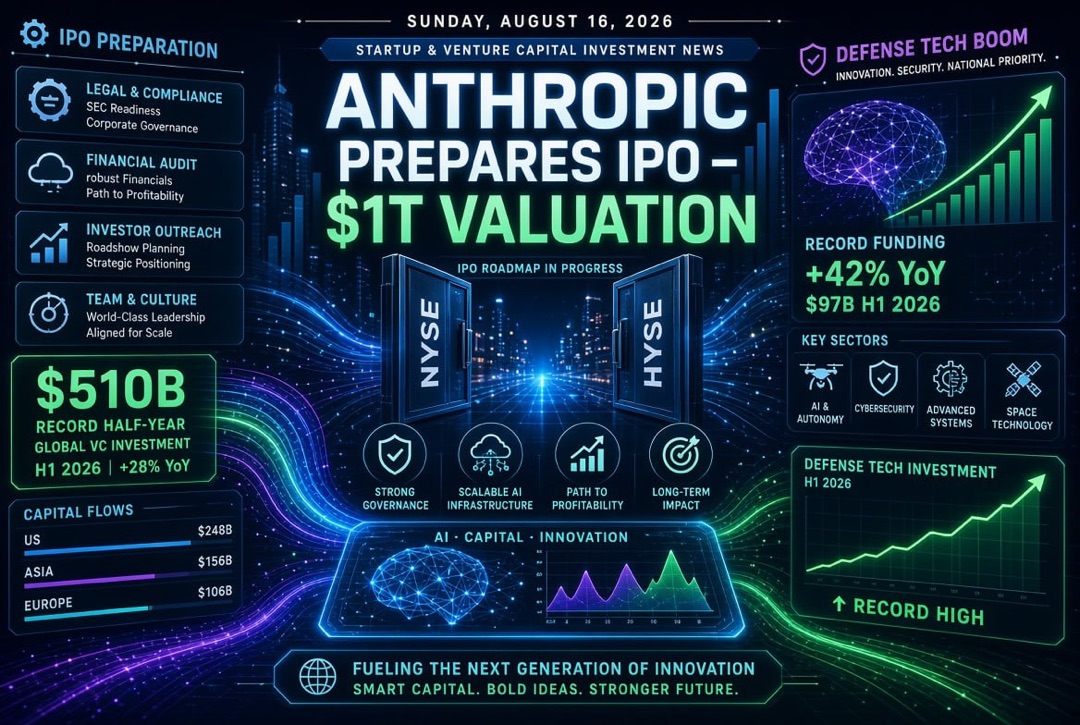
The global market for initial public offerings (IPOs) is experiencing a long-awaited revival after a prolonged pause in recent years. Successful debuts on the stock exchange of several major tech companies in 2025 have shown that the downturn period is behind us. For instance, the American fintech unicorn Chime executed one of the year's most spectacular IPOs: its shares surged by over 30% on the first trading day, bolstering investor confidence in new listings. The Asian region is leading the surge in listings—several major startups have gone public in Hong Kong in recent weeks, collectively raising billions of dollars. Among these is the Chinese battery maker CATL, which sold shares for approximately $5.2 billion, confirming investors' readiness to actively participate in IPOs on Eastern markets once again. Following Asian companies, other well-known unicorns are preparing for public offerings: discussions of a possible IPO for payment service Stripe occurred in the second half of 2025, while debuts of AI leaders (including OpenAI and Anthropic) and major fintech companies are expected in 2026.
The resurgence of activity in the IPO market is crucial for the venture ecosystem. Successful stock market debuts provide funds with lucrative exit opportunities, freeing up capital for new projects. The number of listing applications has significantly increased, and startups that have long postponed public exits are eager to take advantage of the newly opened "window." It is anticipated that the market will see new major listings in 2026. The extended functioning of the "IPO window" instills optimism in the industry, although investors remain vigilant in assessing the fundamental metrics of companies going public.
Diversification of Venture Investments: Fintech, Climate, Biotech, and More
Venture investments are no longer concentrated solely on artificial intelligence—capital is actively being directed across a broad array of sectors, making the market more balanced. Signs of recovery are evident in fintech: financial technologies are drawing significant capital once again thanks to adaptation to new regulatory conditions and AI integration (for instance, in payment services and neobanks). Interest in climate-related projects continues to grow: "green" technologies are receiving increasing support amid the global push for decarbonization—investors are financing innovations in renewable energy, emissions reduction, and sustainable infrastructure.
- Fintech: Financial services and platforms are regaining investor attention, partly due to AI adoption in banking and payments.
- Climate Projects: "Green" technologies are receiving record funding due to the global trend towards sustainability (renewable energy, carbon footprint reduction, eco-friendly agrotechnologies).
- Biotech and Health: Biotech is back in focus thanks to breakthroughs in medicine (new vaccines, gene therapy) and the application of AI in pharmaceuticals, attracting fresh rounds of investment.
- Defense and Aerospace Developments: Geopolitical factors are driving growth in investments in military technologies, cybersecurity, space projects, and dual-use robotics—both from state and private funds.
- Crypto Startups: Despite volatility, the cryptocurrency and blockchain sector is experiencing a new wave of investments, especially in infrastructure solutions and stablecoins (for example, the stablecoin platform Rain raised $250 million in a Series C round).
The broadening industry focus makes the venture market more resilient and diverse. The variety of sectors reduces the risks of overheating in any one segment and creates conditions for more qualitative and balanced growth of the startup ecosystem in the long term. For investors, this means more opportunities to discover promising projects across various domains—from finance and energy to medicine and defense—thereby enhancing overall investment efficiency.
A Wave of Consolidation and M&A: Consolidating Players
Amid the overall industry upswing, consolidation has intensified: the number of major mergers and acquisitions of startups surged sharply in 2025, reaching a peak in the past several years. Tech giants and financial corporations are again actively acquiring promising young companies in a bid to strengthen their positions in strategic niches. The scale of the deals is impressive: for instance, Google consented to acquire the cloud cybersecurity startup Wiz for approximately $32 billion—one of the largest purchases in the history of the tech sector. In the crypto-finance industry, a significant deal occurred: South Korean exchange Upbit (operator Dunamu) was acquired by internet giant Naver for about $10 billion, marking the largest fintech exit in the region. Additionally, at the end of 2025, Meta announced a strategic purchase of a 49% stake in the American AI startup Scale AI for approximately $15 billion, aiming to secure access to key technologies and expertise in artificial intelligence.
Consolidation is affecting various segments—from fintech and healthcare to AI. Major players are acquiring startups to accelerate innovation and expand product lines. For venture investors, the wave of M&A means long-awaited exits (profit can be realized through company sales, not just via IPOs). For the startups themselves, integration into corporations opens access to extensive resources, a global customer base, and infrastructure, speeding up their development. The rise in mergers and acquisitions reflects the maturity of certain market segments: the most successful companies are being integrated into larger structures, providing investors with additional means of returns alongside public listings. Although some deals are driven by necessity (startups seek "rescue" through sale amid challenges with further independent growth), the overall trend toward consolidation adds dynamism to the venture market and creates new opportunities for all participants.
Global Expansion: New Centers of Venture Growth
The venture boom of recent months has achieved a truly global scale, spreading far beyond traditional tech hubs. Countries outside of the US now account for over half of global venture investments—new growth points are emerging. The Middle East is rapidly transforming into a significant investment hub: funds from Gulf states are investing billions in creating local tech parks and developing startup ecosystems. India and Southeast Asia are setting records in venture deal volumes, annually creating new unicorns and attracting global investors. The tech scenes in Africa and Latin America are also actively developing—these regions have already seen the emergence of startups valued over $1 billion, marking them as new players on the world stage. Even in Europe, continental efforts are intensifying: national and corporate funds (such as Bpifrance in France, High-Tech Gründerfonds in Germany) are investing tens of billions of euros in tech startups, aiming to nurture their own tech champions and reduce dependence on foreign capital.
Thus, venture capital has become geographically distributed like never before. Promising projects can attract funding regardless of their country of origin if they demonstrate scaling potential. For investors, this opens new horizons: the pursuit of high-yield opportunities is now conducted worldwide, and risks are diversified across different regions. The global expansion of the venture market fosters an influx of talent and knowledge exchange—technology ecosystems from different countries are becoming increasingly interconnected, enhancing the world's innovative potential. Heightened competition for promising startups at a global level ultimately stimulates project quality and creates more balanced conditions for the growth of new companies.
Russia and the CIS: Local Initiatives Amid Global Trends
Despite external constraints, local activity in the startup sector is gradually reviving in Russia and neighboring countries. Although the total volume of venture investments in Russia has decreased over the past few years, private investors and funds maintain cautious optimism. In 2025, new funds emerged in the region, collectively valued at billions of rubles, aimed at financing early-stage tech projects. Major corporations are getting involved by launching their own accelerators and venture divisions, while government programs provide grants and investments for startups. For instance, in Moscow, one initiative attracted about 1 billion rubles to local IT projects—an important signal of market support.
There is a shift in focus toward more mature and sustainable companies. Venture investors in Russia and the CIS prefer startups with proven revenue and viable business models—those capable of growing even with limited new capital inflows. The easing of some barriers has opened opportunities for investments from friendly countries, partially compensating for the exit of Western capital. Some large tech companies in the region are considering going public: discussions are underway for the IPO of specific IT subsidiaries of major holdings, which could inject additional life into the local market as conditions improve. Gradually, a new local venture ecosystem is forming, relying on internal resources and regional players. The emergence of significant deals and new funds instills cautious optimism: even amid limited connectivity to global financial flows, the Russian and neighboring markets are laying the foundation for future innovation growth.
Focus on Efficiency and Outlook: Discipline at the Forefront in 2026
By the end of 2025, the global startup market demonstrated a vigorous recovery. In North America, total investments reached a record ~$280 billion (an increase of 46% compared to the previous year), with about 60% of this amount directed towards AI-driven companies. Similar trends are observed in other regions. The influx of capital is, however, accompanied by larger deals: the total number of rounds has decreased by ~15%, but the share of mega-rounds has noticeably increased. Late-stage funding grew particularly rapidly, with the investment volume in late-stage rounds increasing by approximately 75%, reaching around $191 billion for the year.
- North America: ~$280 billion in investments in 2025—the highest figure in the last four years, primarily due to AI-sector deals.
- AI Share: over half of venture capital has been allocated to companies implementing artificial intelligence in their products.
- Late-Stage Boom: funding for large late-stage rounds grew by ~75%, reaching about $191 billion, reflecting a shift in investor focus toward more mature projects.
- Focus on Sustainability: funds are paying increased attention to the efficient use of capital and speed to achieve profitability when selecting projects.
Experts forecast that in 2026, interest in infrastructure technologies and the AI sector will remain high, and the market will continue to attract large rounds. At the same time, even amid overall optimism, a startup's success in 2026 will depend on prudent management and solid business foundations. Investors demand discipline from companies, frugality in spending raised funds, and clear execution of growth strategies. Thus, the new phase of the venture boom combines lessons from previous years: to succeed in a wealth of opportunities, startups must maintain a focus on quality, efficiency, and sustainable development.