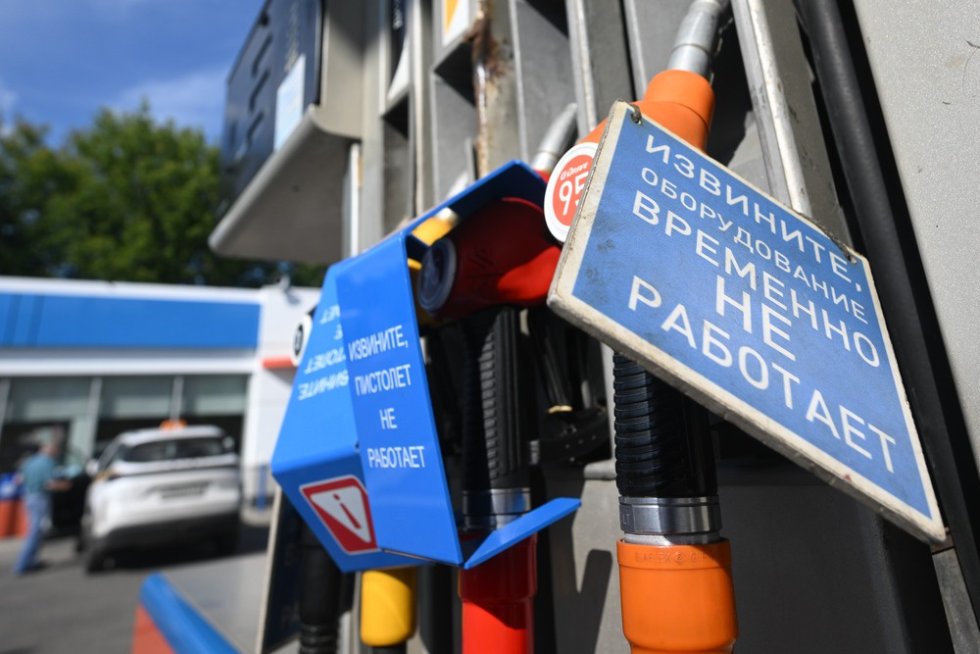
The number of gas stations (GS) for sale in Russia is increasing. This applies not only to individual independent gas stations not owned by major oil companies but also to networks that are "lightening their load"—disposing of the least profitable assets.
The number of listings for the sale of gas stations across various marketplaces and oil company websites has increased 5.5 times over the past five years. However, merely listing a property does not guarantee its sale. Rather, it indicates that owners are looking to exit the business.There are generally two main reasons for this move: the desire to profit from the sale of a promising business or, conversely, an attempt to shed a loss-making enterprise. In the latter case, if the property fails to sell, it is highly likely that it will be closed down. This impacts fuel supply, particularly in regions lacking major networked gas stations. Furthermore, a reduction in the number of players inevitably leads to decreased competition, which may result in either price increases or maintaining prices at elevated levels.
Gas stations for sale include not only single locations but also entire regional networks.The number of gas stations in our country began to decline in 2025. According to "OMT-Consult," there was a decrease of 1.6%. This downward trend continued in the first half of this year with an additional drop of 1%. Notably, mobile gas stations (container-based) saw the most significant decline.
By the second half of 2026, there were approximately 28,000 fuel stations in Russia, just over 23,400 of which were traditional gas stations (selling gasoline and diesel at non-mobile locations).
The share of independent players among the total number of stations is around 65%. Most of these are located in the east and south of Russia. However, in terms of gasoline and diesel sales volumes, independents account for only 30% of the market. Primarily, these independent gas stations purchase fuel through small wholesale channels, a segment where significant price increases were recorded this summer and where supply disruptions occurred. This could explain the owners' desire to sell their businesses, although the issue also affects larger players.
For instance, last week, operational gas stations, land plots for business along federal highways, and production facilities of "Bashneft-Retail" were put up for sale or lease. The considerable number of listings reflects their geographic distribution across Sverdlovsk, Chelyabinsk, Kurgan, Orenburg, Samara, Ulyanovsk, Penza, Vladimir, Moscow, Ryazan, and Smolensk regions, as well as in the republics of Tatarstan, Mordovia, Udmurtia, Chuvashia, and Mari El. Earlier, it was reported that "Gazprom" and "Lukoil" also sold "non-core" gas stations. To date, Lukoil still has listings for the sale of eight gas stations on its website.
Regarding independent players, everyone is familiar with the challenges faced by one of the largest independent gas station networks, "Trassa," which has encountered a debt crisis and may receive external management or be sold off. Overall, around 170 gas stations are currently listed for sale on various marketplaces.
However, as noted in an interview with "RG" by Yuri Stankevich, Deputy Chair of the State Duma's Energy Committee, labeling this a "mass sale" may not be entirely accurate. Presently, fuel retail is characterized by a heterogeneous competitive landscape where segments within different regions of the country significantly vary. The fuel shortage has primarily impacted independent gas stations. It is these stations that have often "rolled up their hoses," leading to the perception of market saturation, with properties effectively finding no buyers.
Nevertheless, the geography of gas station sale listings covers almost the entire country. According to Sergey Tereshkin, CEO of Open Oil Market, the situation is attributed to declining margins for gas station operations and issues related to fuel availability for trade. Exchange prices for gasoline and diesel have risen by 30-37%, even higher in the small wholesale market segment, placing fuel retail in a more challenging position compared to the oil refining sector, which is subsidized.
Additionally, the decline in fuel availability on exchanges has been affected by reduced mandatory sale quotas for major oil companies. The lower the quotas and the more significant the relaxations permitted for over-the-counter transactions, the lesser the amount of fuel available for traders. Ultimately, independent gas stations that purchase gasoline and diesel from traders bear the losses. The decrease in physical sales volume indicates that gas station operators earn less on each liter of fuel sold.
According to Sergey Frolov, managing partner at NEFT Research, the redistribution of ownership in the retail fuel market under current conditions was anticipated. Presently, private owners of individual gas stations or small networks with low efficiency are predominantly exiting the business. Major oil companies are also optimizing unprofitable locations and restructuring their networks to adapt to new conditions.
The expert believes that the reduction in the number of gas stations is unlikely to significantly affect the overall situation in the fuel sector, as many of these stations were already standing idle. Should fuel supply conditions improve, the number of private gas stations will likely rise again, especially if high prices persist.
It is unlikely that gas stations can be sold now; this should have been done the year before last when the business was profitable, believes Dmitry Gusev, Deputy Chairman of the Supervisory Board of the "Reliable Partner" Association and a member of the expert council for the "Gas Stations of Russia" competition. However, the problem lies not in the attempts to sell but in the uncertainty regarding the demand for all these stations. At present, priorities for the internal fuel market are defined. The primary task is to ensure the supply to large companies, agricultural producers, and industrial enterprises, and not independent gas station networks, the expert clarifies.
A similar view is expressed by Stankevich. "Unfortunately, the situation in 2026 demonstrated that the retail fuel market has developed chaotically for many years. We lack a qualified understanding of the adequate number of gas stations needed to ensure infrastructure accessibility for consumers. Systematic planning for the development of the retail network is not being conducted, resulting in many municipalities, even in Central Russia, lacking adequately functioning stations. For instance, in energy and heating supply facilities, such planning occurs at the level of documents regularly updated by the government (placement schemes for facilities). The situation in fuel retail also needs rectification," he stated.
Source: RG.RU