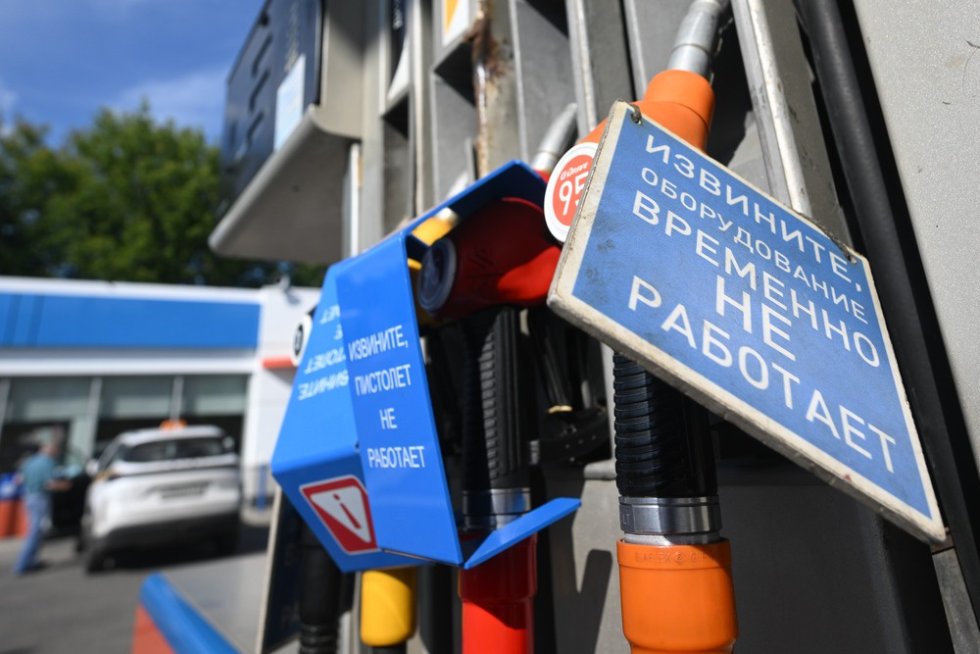
The situation may significantly change in July. To enhance the fuel supply in the domestic market, the list of fuel producers eligible for budget subsidies has been expanded. Additionally, gasoline importers into Russia will also be eligible for these subsidies. However, a rise in tax revenues from the oil and gas sector is not expected; rather, a decline is more likely.
Taxes are paid based on the previous month’s performance, meaning June’s payments will be for May, while July’s payments will be for June. The price of Russian oil, Urals, used for calculating fiscal payments, dropped from $94.87 per barrel in April to $86.52 in May and then to $63.52 in June. Taxes are paid in rubles based on the average monthly exchange rate against the dollar. The volume of oil production, which remains relatively stable since the beginning of the year according to OPEC—9.02 million barrels per day in April and 9.01 million barrels per day in May—also plays a critical role. While June statistics are not yet available, it is likely that production may experience a slight decline.
In June, revenues from the main industry tax on mineral extraction (MET) decreased by 45.6 billion rubles month-over-month. Further declines are anticipated in July due to the drop in Russian oil prices in June, which may be somewhat offset by a slight depreciation of the ruble against the dollar (by 54 kopecks). It will be important to monitor how much the budget subsidies for oil producers can increase, as these are correlated with oil and petroleum product prices, as well as the ruble exchange rate.
Two types of payments are under discussion: the aforementioned reverse excise tax and the damping mechanism (budget compensation to oil producers for the difference between domestic fuel prices and export prices). Large oil refineries received these payments contingent on signing investment agreements with the state to modernize production and meet fuel quality standards of at least "Euro-5," while also committing to supply a specified amount to the domestic market. The size of the reverse excise tax payments is linked to the volume of oil processed at these refineries. Now the quality requirements for obtaining the reverse excise tax and damping payments have been lowered, making them accessible to those producing fuel by mixing straight-run gasoline (the primary product of oil refining) with other components. This results in increased sulfur content in the gasoline and reduced storage life.
Additional budget payments are meant to incentivize oil producers to increase fuel output.As explained in a conversation with "RG" by Konstantin Simonov, head of the National Energy Security Fund, these measures are designed to enable oil companies to quickly ramp up gasoline production, even at lower quality, during periods of fuel shortages without losing reverse excise tax payments. The expert emphasized that the requirements for modernizing production have not been waived; they remain as a final goal for Russian refineries.
To augment fuel supply, the damping mechanism will now be available to importers. This decision will help prevent internal prices for gasoline and diesel from soaring and make such imports profitable for intermediaries. Previously, only Russian and Belarusian refineries were eligible for damping payments. The mechanism now extends to imported gasoline: for fuel from EAEU countries, a coefficient of 0.9 will be applied starting June 1, 2026, while a separate formula through import parity will be introduced for supplies from other countries.
According to Daniel Tyun, CEO of DA-Consulting, the budgetary impact could be noticeable but not disastrous in the first month. Based on May’s parameters, every additional 100,000 tons of fuel qualifying for support could cost the budget approximately 2.5-2.7 billion rubles. If mixing and imports can add 500,000 tons per month, that amounts to an additional burden of 12-14 billion rubles. If the volume reaches 1 million tons, this could escalate to 25-30 billion rubles per month.
A similar view was expressed by Sergey Frolov, managing partner at NEFT Research, albeit with a caveat. Payment to importers and fuel terminals (via mixing gasoline) will not significantly increase the revenue shortfall for the budget, provided these temporary measures do not extend beyond 3-4 months, he believes.
However, as Simonov notes, payments related to the excise tax are tied to the price of our oil, while damping payments are linked to the export price of petroleum products, meaning their payouts will decline, albeit in tandem with oil and gas revenues. Overall, these payments should not pose a severe challenge to budget revenues. The key is for them to serve as an incentive for oil companies to boost production, the expert asserts.
According to Sergey Tereshkin, CEO of Open Oil Market, the current corrections in the oil market, reflected in the dynamics of external petroleum product prices, will influence the scale of payments. Thus, the damping payments for fuel producers are unlikely to exceed 200 billion rubles (210.6 billion rubles in June). As for payments to importers, the limiting factor will be the relatively low volumes of shipments.
Tyun believes that the implemented measures can function without significant harm to the treasury only as a short-term crisis scheme—for a few months—while refineries recover and seasonal fuel shortages are addressed. If Urals remains above $60-65 per barrel, and mixing or imports stay targeted, the budget can withstand an additional 10-30 billion rubles per month in payouts. However, if oil prices drop below $55-60, the ruble remains strong, and damping payments exceed 200 billion rubles monthly, this mechanism could rapidly eat into oil and gas revenues. The main risk is that the adopted solutions currently address symptoms, not the root cause; the decline in fuel output is attributable to issues faced by refineries. In this context, while damping and reverse excise taxes can help stabilize prices and incentivize supply, they do not substitute for actual processing, the expert underscores.
Source: RG.RU