Current Cryptocurrency News for Sunday, February 1, 2026: Bitcoin and Ethereum Dynamics, Altcoin Market Situation, Top 10 Cryptocurrency Overview, Institutional Trends, and Global Factors Influencing the Crypto Market.
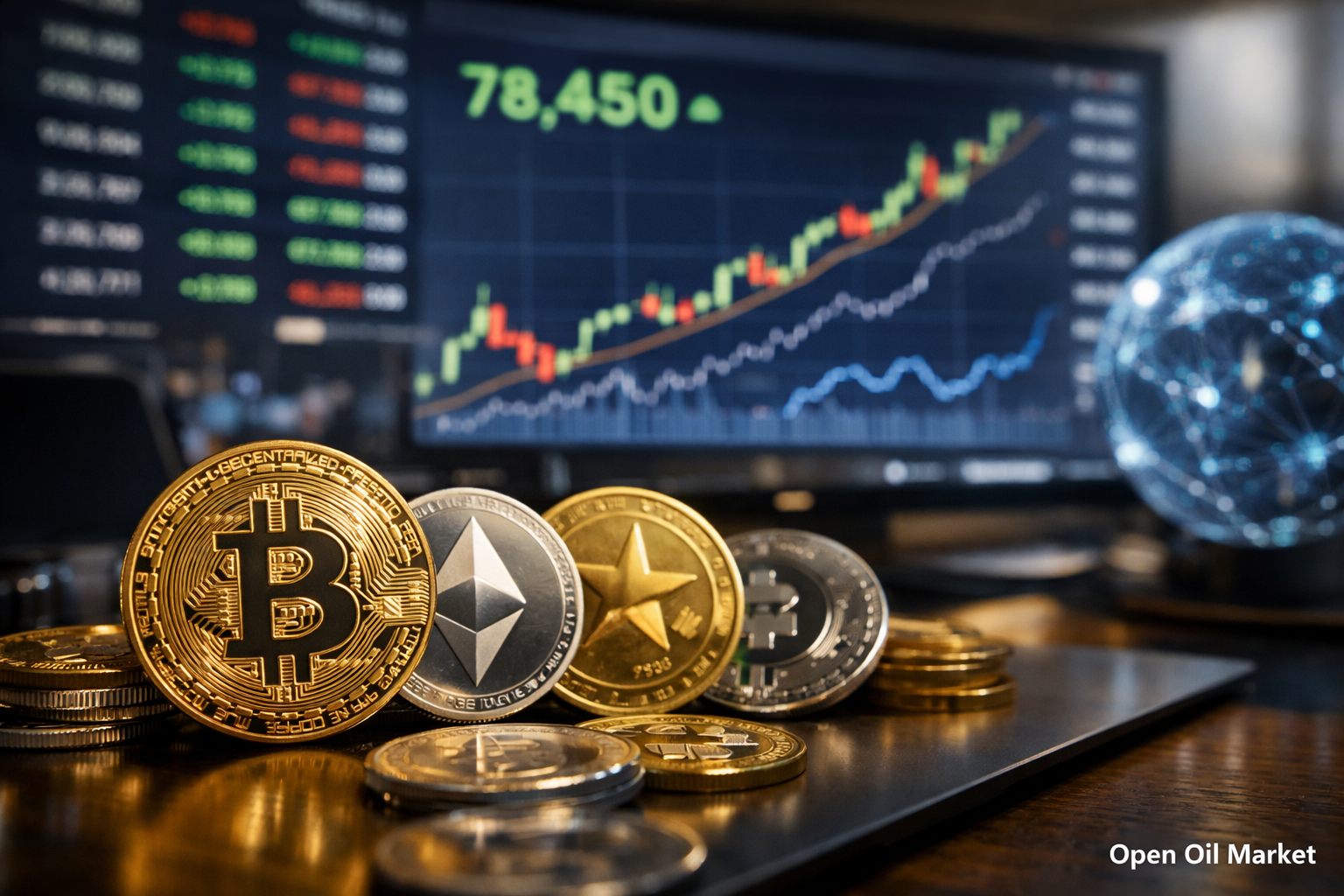
As of the morning of February 1, 2026, the cryptocurrency market is showing signs of stabilization following heightened volatility at the end of January. Bitcoin's price, after a significant correction mid-week, has rebounded to around $78,000. Major altcoins led by Ethereum are also recovering: Ether has returned above $2,800, while several other top assets have gained 5–10% from recent local lows. The total market capitalization of the cryptocurrency market stands at approximately $3.0 trillion, with Bitcoin's share holding steady near 59%. Investor sentiment is moderately optimistic: despite macroeconomic risks, institutional players continue to increase their investments in cryptocurrencies, signaling confidence in this asset class.
Bitcoin Recovers After Correction
Bitcoin (BTC) is making attempts to stabilize following a recent downturn: at the end of January, the price of the leading cryptocurrency had dipped below $80,000, approaching a critical support level, before buying signals activated at lower levels. At the time of publication, BTC is trading in a range of approximately $78,600–79,000, confirming current market quotes below $80,000, reflecting pressure from macroeconomic factors and investor sentiment. The current value is significantly lower than January's local highs of around $95,000 but remains considerably above levels at the beginning of the previous year when BTC traded much lower. The market capitalization of Bitcoin is nearing $1.6–1.7 trillion, with BTC's market share remaining dominant.
The main reasons for the recent downturn are both technical and fundamental. An increase in macroeconomic uncertainty and expectations of tighter monetary policy in the U.S. and Europe have led to a capital outflow from risk assets, including cryptocurrencies. However, around the $78,000–80,000 price point, we observed healthy demand from major holders and long-term investors viewing the price decline as an opportunity to increase their positions. Many analysts note that these levels act as an important support zone, confirming the market's receptiveness to buying even amid external uncertainties and pointing to the potential for further consolidation or trend reversal.
Ethereum Holds Steady
The second largest cryptocurrency by market capitalization, Ethereum (ETH), is showing relative resilience. At the peak of the January rally, Ether rose above $3,100; however, it subsequently corrected alongside Bitcoin, briefly falling to $2,700. Ethereum is currently trading around $2,800–2,900, demonstrating its ability to maintain key support levels. ETH’s market capitalization stands at approximately $340 billion (~12% of the market), and the network continues to attract high user activity due to its leading role in smart contracts, decentralized finance (DeFi), and NFTs.
Institutional interest in Ethereum remains high. In 2025, the first exchange-traded funds (ETFs) based on Ether were launched in the U.S., making access to this asset easier for investors. Additional support for the ETH market comes from fundamental factors: the total value locked (TVL) in Ethereum and staking volumes are close to record highs, reflecting participants' trust in the long-term development of the ecosystem. Several analysts consider Ethereum undervalued; for instance, in a recent appearance, Fundstrat co-founder Tom Lee stated that Ether is "dramatically undervalued" and has the potential for multiple growth in the coming years. Ethereum continues to confidently hold its second position in the market, and the anticipated launch of new scaling technologies and protocol improvements in 2026 fuels investor interest.
Altcoins on the Rise
The broad altcoin market is demonstrating positive dynamics at the start of February following the recovery of the flagship cryptocurrencies. Prices for most cryptocurrencies in the top ten have risen over the past day by 3–6%, compensating for last week's downturn. The total market capitalization of altcoins (excluding BTC) once again exceeds $1.2 trillion. Investors are gradually shifting their focus to alternative digital assets, anticipating a possible "altseason" in the second half of the year. The Altcoin Season Index rose to 55 points in January — a peak for the past several months — indirectly indicating the emergence of a new phase of intensified altcoin growth.
Major alternative coins are showing solid growth: for instance, Solana (SOL) remains around $150, recovering from recent lows amid the expansion of its ecosystem and discussions regarding the launch of an ETF based on Solana. Ripple (XRP) is trading near $2.50, remaining one of the leaders of the year due to last year’s legal victory by Ripple in its dispute with the SEC, which provided regulatory clarity for the token. Binance Coin (BNB) is consolidating around $600; despite ongoing regulatory pressures on Binance, the token remains in demand due to its key role in the exchange ecosystem and Binance Smart Chain. Among the notable growth leaders are payment and infrastructure tokens: for example, Polygon (MATIC) gained about 4% over the day amid positive news regarding network development, while Litecoin (LTC) strengthened by 3%, continuing its upward trend of recent weeks. Overall, the altcoin sector is moving upward, although the growth rates are currently more restrained compared to the "bull markets" of previous years.
Institutional Investments at Record Levels
A key market trend remains the increase in institutional participation. In recent days, record volumes of cryptocurrency purchases by large players have been reported. For example, MicroStrategy, under the leadership of Michael Saylor, announced the acquisition of approximately $2.13 billion in Bitcoin during January, marking one of the largest single investments in BTC. This "Bitcoin shopping spree" by a public company confirms the growing appetite for crypto assets among businesses. Additionally, the Intercontinental Exchange (owner of the New York Stock Exchange) announced plans to develop a new platform for trading and settling tokenized securities, further blurring the line between traditional finance and the cryptocurrency industry.
In 2025, the first spot Bitcoin ETFs were approved in the U.S., and by early 2026, several exchange-traded funds tied to BTC and ETH are already trading in the market. Capital inflow into these instruments continues to grow: according to industry analysts, total assets under management of crypto-ETFs worldwide have surpassed $60 billion. Asset managers, hedge funds, and even pension funds are increasing their cryptocurrency holdings, viewing Bitcoin and Ether as "digital gold" and "digital oil" for diversification. The increasing institutional interest supports the market with liquidity and reduces volatility, gradually bringing cryptocurrencies closer to the status of a widely recognized investment asset class.
Regulation and Global Adoption
The regulatory environment for cryptocurrencies is becoming more defined worldwide. In the U.S., a comprehensive Crypto Market Structure Bill is expected to be passed soon, which will clarify the rules governing digital assets and enhance investor protection. In Europe, the MiCA regulatory framework is coming into force, establishing uniform standards for the regulation of cryptocurrencies and stablecoins across EU member states. These steps on both sides of the Atlantic are forming a solid legal foundation for the industry and reducing uncertainty for institutional investors.
Many countries that previously maintained a strict stance are revising their approach to cryptocurrencies. For example, reports indicate that authorities in Bolivia, which had long banned cryptocurrency operations, are beginning to explore the possibilities of integrating blockchain technology into the national financial system. In Africa and Asia, the expansion of digital assets continues: Kenya is considering the introduction of a state digital currency, while partnerships with international crypto companies are being established in Pakistan to develop local blockchain infrastructure. Even traditionally conservative financial centers like the UK and Canada are working on creating transparent licenses and requirements for the crypto business. Global adoption of cryptocurrencies is gradually increasing: the number of users of digital wallets worldwide has surpassed 500 million, and more companies are willing to accept Bitcoin and USDT as payment. The combination of increasing regulation and simultaneous adoption growth signals maturity in the industry and serves as a positive factor for the long term.
Market Sentiment and Volatility
Rapid price fluctuations in recent weeks have been accompanied by a surge in short-term volatility in the cryptocurrency market. The Fear and Greed Index, which reached the "greed" zone (above 70 out of 100) in early January, dropped to a value of 30 ("fear") by the end of the month. This indicates a noticeable cooling of sentiment following the correction, as some retail traders and speculators have reduced their risk positions. Nevertheless, market activity indicators remain healthy: daily trading volumes for Bitcoin and Ethereum are consistently high, and the share of long positions on derivative platforms has started to rise again, indicating a return of confidence among some participants.
Analysts note that the current correction is largely technical and temporary in nature. After months of rallying in 2025, the market is experiencing a phase of "digesting" profits and repositioning, which is a natural process. Volatility remains relatively lower than peak values of previous years, partly due to the increased presence of institutional liquidity. Macroeconomic uncertainty (central bank rates, inflation) continues to influence short-term price fluctuations, but many experts believe that if inflation slows and signals of monetary easing appear in the second half of 2026, demand for crypto assets may significantly strengthen. Overall, medium-term sentiment can be characterized as cautiously optimistic: market participants are closely monitoring external factors, but fundamental interest in cryptocurrencies remains high.
Forecasts and Expectations
Despite recent turbulence, many analysts maintain an optimistic outlook for the cryptocurrency market in 2026. Noted strategist Tom Lee (Fundstrat Global Advisors) believes that Bitcoin has not yet reached the peak of the current cycle: at the beginning of January, he predicted a new historical high for BTC by the end of the month. Although this bold forecast did not materialize in January, Lee continues to hold a bullish scenario and anticipates "a very strong second half of 2026" for cryptocurrencies following a period of volatile consolidation in the first half of the year. Several banks have also raised their price targets: for instance, analysts at Standard Chartered indicated that under favorable conditions, Bitcoin could exceed $150,000 within the next 12–18 months. Other forecasts suggest Ethereum may rise to new highs (some experts cite a range of $7,000–10,000 over the next two years), taking into account the reduction in ETH issuance and the expansion of its use cases.
Of course, experts’ opinions diverge on growth rates. The conservative camp of analysts warns that increasing regulation and a potential slowdown in the global economy could limit cryptocurrency growth in the short term. However, even they acknowledge that fundamental drivers — the growing adoption of blockchain, an increasing number of users, and the limited supply of Bitcoin — create a solid foundation for long-term appreciation of digital assets. Ultimately, the consensus is that the market is entering a more mature phase where volatility will be somewhat reduced, and growth will be more gradual compared to previous cycles. Investors are advised to exercise caution in the short term but maintain strategic optimism regarding the role of cryptocurrencies in the global economy.
Top 10 Most Popular Cryptocurrencies
As of the morning of February 1, 2026, the following digital assets comprise the top ten cryptocurrencies by market capitalization:
- Bitcoin (BTC) – the first and largest cryptocurrency. BTC is trading around $78,000 after a recent period of volatility; its market capitalization is around $1.75 trillion (≈60% of the total market).
- Ethereum (ETH) – the leading altcoin and primary platform for smart contracts. The price of ETH is holding around $2,800, which is below its historical peak but reflects steady demand; market capitalization is approximately $340 billion (≈12% of the market).
- Tether (USDT) – the largest stablecoin, pegged to the U.S. dollar at 1:1. USDT is widely used for trading and settlements in the crypto market, with a market capitalization of around $150 billion; the coin consistently maintains a price of $1.00.
- Ripple (XRP) – the token of the Ripple payment network for instant cross-border settlements. XRP is trading around $2.50, with a market capitalization of approximately $130 billion. The legal clarity of XRP's status in the U.S. following Ripple's win in court has strengthened the token's position among industry leaders.
- Binance Coin (BNB) – the coin of the largest cryptocurrency exchange, Binance, and the native token of the BNB Chain network. The price of BNB is around $600 (market capitalization roughly $90 billion). Despite ongoing regulatory pressures around Binance, the token remains in the top five due to its widespread use in the exchange ecosystem and DeFi services.
- Solana (SOL) – a high-performance blockchain platform for decentralized applications. SOL is trading around $150 per coin (market capitalization ~$70 billion), recovering a significant portion of the drop from 2022. Interest in Solana is supported by the growing number of projects on its network and expectations regarding the approval of an ETF for SOL.
- USD Coin (USDC) – the second-largest stablecoin, backed by dollar reserves from Circle. The price of USDC consistently holds at $1.00, with a market capitalization of around $60 billion. USDC is in demand among institutional investors and DeFi protocols due to its high transparency of reserves.
- Cardano (ADA) – a blockchain platform focusing on a scientific approach to development. ADA is trading around $0.80 (market capitalization ~$28 billion) after a recent price recovery. Cardano attracts attention due to plans for launching an ETF for this asset and the community's activity, which believes in the project's long-term growth.
- TRON (TRX) – a platform for smart contracts and decentralized applications, particularly popular in Asia. TRX is around $0.33; market value ~ $30 billion. TRON maintains its top ten position, thanks to its use for issuing stablecoins (a significant portion of USDT circulates on the TRON blockchain).
- Dogecoin (DOGE) – the most well-known meme cryptocurrency, initially created as a joke. DOGE is trading around $0.18 (market capitalization ~$27 billion), supported by a loyal community and periodic attention from notable figures. Despite high volatility, Dogecoin remains among the top ten largest coins, demonstrating remarkable resilience in investor interest.
The Cryptocurrency Market as of the Morning of February 1, 2026
Major Cryptocurrency Prices:
- Bitcoin (BTC): $78,940
- Ethereum (ETH): $2,795
- Ripple (XRP): $2.48
- Binance Coin (BNB): $592
- Solana (SOL): $146
- Cardano (ADA): $0.81
Market Indicators:
- Total Cryptocurrency Market Capitalization: $2.95 trillion
- Bitcoin's Share: 59.2%
- Fear and Greed Index: 30 (Fear)
24-Hour Change Leaders:
- Gainer: Polygon (MATIC) — +4.3%
- Decliner: Conflux (CFX) — -5.7%
Analysis: Bitcoin and Ethereum are demonstrating relative stability near current levels, while the sentiment index remains in the moderate fear zone, reflecting the caution of some investors following the recent downturn. The local growth leader, MATIC, indicates interest in Ethereum scaling solutions amid positive technical updates for the project. Meanwhile, the decline in Conflux can be explained by profit-taking from traders or unfavorable news regarding the project. Overall, the market is in a consolidation phase: many major coins are holding their positions while investors await new drivers, evaluating the balance of risks and growth potential in the coming weeks.