Current Startup and Venture Capital News for Friday, December 5, 2025: Mega Funds, Record AI Rounds, New Unicorns, IPO Rebound, and Key Global Venture Market Trends
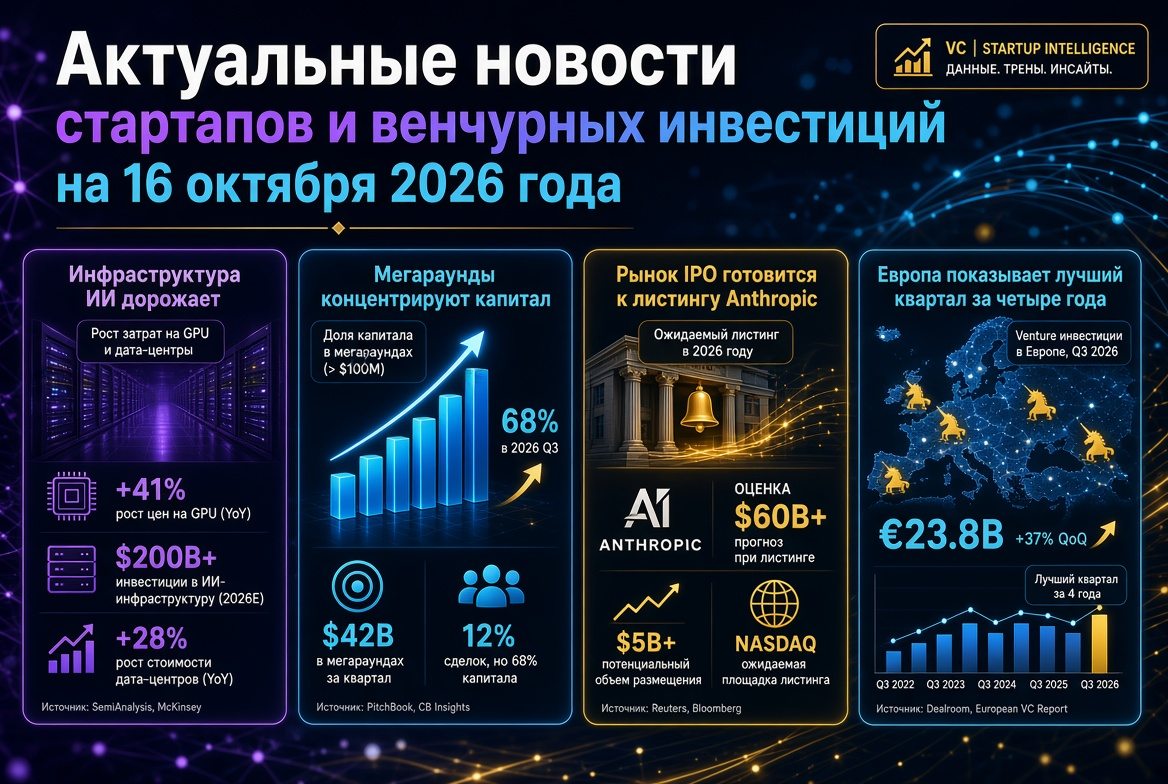
As we approach December 2025, the global venture capital market is experiencing a robust recovery following the downturn of recent years. According to industry analysts, the total amount of venture investments reached approximately $100 billion in the third quarter—an increase of almost 40% compared to the previous year—marking the best quarterly performance since 2021. The upward trend continued to strengthen in the autumn, as startups worldwide attracted about $40 billion in funding in November alone, with the number of mega-rounds hitting a three-year high. The prolonged "venture winter" of 2022-2023 is now behind us, as investors regain momentum and increase their investments in technology startups, though they remain selective, favoring the most promising and resilient projects.
The surge in venture activity is evident across most regions. The U.S. retains its leading position—especially in the artificial intelligence sector—while investment in the Middle East has increased manifold. In Europe, Germany has, for the first time in a decade, surpassed the UK in total venture capital. In Asia, investments are shifting from China to India and Southeast Asia, compensating for the relative cooling of the Chinese market. New technology hubs are also emerging in Africa and Latin America. Startup scenes in Russia and the CIS countries are striving to keep pace despite external constraints, launching new funds and support programs to lay the groundwork for future growth. Overall, the global market is gaining strength, although participants remain cautious and selective.
Below are the key trends and events in the venture market as of December 5, 2025:
- Return of Major Investors and Mega Funds. Leading venture funds are raising unprecedented amounts and re-injecting capital into the market, increasing appetite for risk.
- Record Investments in AI and a New Wave of Unicorns. Unprecedented funding rounds in the AI sector are inflating startup valuations and leading to the emergence of numerous new unicorns.
- Revival of the IPO Market. Successful public offerings by tech companies and new listing plans indicate that the long-awaited "window" for exits has reopened.
- Diversification of Industry Focus. Venture capital is being directed not only to AI but also to fintech, biotech, climate projects, defense technologies, and other sectors.
- Wave of Consolidation and M&A Deals. Major mergers, acquisitions, and strategic partnerships are reshaping the industry landscape, creating new opportunities for exits and business scaling.
- Investment Geography: New Global Hubs. The venture boom is spreading to new regions—from the Middle East and South Asia to Africa and Latin America.
- Revived Interest in Crypto Startups. After a prolonged "crypto winter," blockchain projects are once again attracting significant investments due to market growth and regulatory easing.
- Local Context: Russia and the CIS. New funds and initiatives are emerging in the region to support startup ecosystems, although overall investment levels remain modest.
Return of Major Investors and Mega Funds
The largest investment players are making a triumphant return to the venture arena, signaling a renewed appetite for risk. Japanese SoftBank is officially launching its third Vision Fund, worth about $40 billion, targeting projects in AI and robotics. American Andreessen Horowitz has closed a record fund of approximately $10 billion focused on AI infrastructure and rapidly growing tech companies. At the same time, leading Silicon Valley firms like Sequoia Capital are announcing new early-stage funds (totaling nearly $1 billion) to support promising startups. Sovereign funds from Gulf countries are also significantly increasing their presence in the tech sector, pouring billions into innovative projects and developing ambitious state programs (such as the Saudi “smart city” megaproject NEOM). Numerous new venture funds are emerging worldwide, attracting substantial institutional capital. As a result, the market is once again flooded with liquidity, intensifying competition for the most advantageous deals.
Record Investments in AI and a New Wave of Unicorns
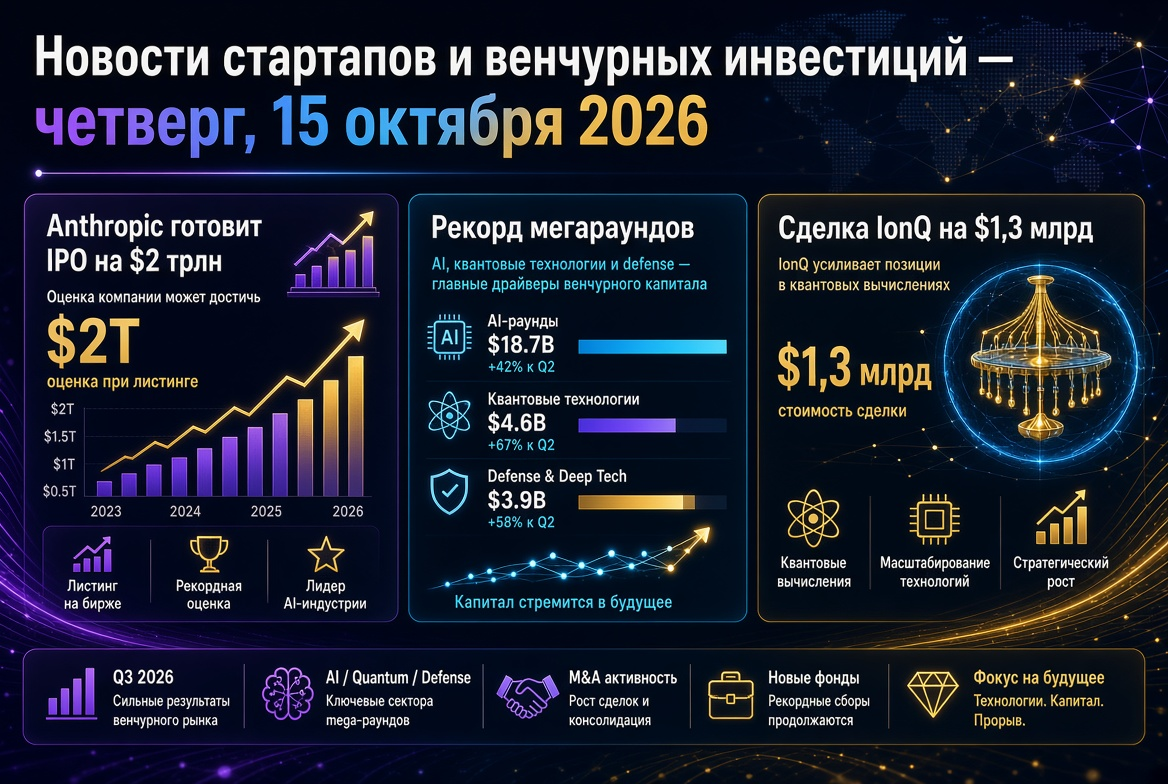
The artificial intelligence sector has become the main driver of the current venture upswing, demonstrating unprecedented levels of funding. By the end of 2025, global investments in AI startups are expected to exceed $200 billion, with the combined valuation of the top ten firms in this space approaching $1 trillion. In 2025, new records for venture rounds have been set: for instance, French startup Mistral AI raised around $2 billion, OpenAI received a total of approximately $13 billion in funding, and Jeff Bezos' new venture Project Prometheus launched with investments of $6.2 billion—these deals have skyrocketed company valuations. Similarly, startup Cursor attracted $2.3 billion (valuation ~$29 billion), entering among the largest rounds in history and underscoring the excitement surrounding AI. This influx of capital is giving rise to dozens of new "unicorns"—companies valued above $1 billion—many of which are connected to AI technologies. Investors are ready to inject substantial funds into the AI race, seeking to secure their niche in this technological revolution.
Revival of the IPO Market and Exit Prospects
After nearly two years of inactivity, the IPO market is showing signs of revival as a long-awaited exit mechanism for venture investors. In 2025, several large technological "unicorns" successfully debuted on the stock exchange, reigniting investor interest in new public companies. For instance, stablecoin issuer Circle went public with a valuation of around $7 billion, while cryptocurrency exchange Bullish raised approximately $1.1 billion through listing—these cases confirmed that investors are once again willing to buy shares in fintech and crypto companies on the open market. Following these early successes, many startups are eager to capitalize on the newly opened "window of opportunity." Insider sources suggest that even OpenAI is considering going public in 2026 with a potential valuation of up to $1 trillion—a precedent-setting move for the industry. The improving market conditions and clearer regulatory framework (such as the adoption of foundational laws concerning stablecoins and the anticipated launch of the first Bitcoin ETFs) are bolstering confidence among companies planning listings. Experts predict that the number of high-profile tech IPOs will increase in the coming years as the exit window remains open and the market warmly welcomes new issuers. The return of successful public offerings is crucial for the entire venture ecosystem because profitable exits allow funds to return capital to investors and reinvest in new projects, thereby closing the investment cycle.
Diversification of Industry Focus: Broader Investment Horizon
In 2025, venture investments are covering an increasingly broad array of industries and are no longer limited solely to artificial intelligence. In addition to dominant AI, significant capital is being directed toward other high-tech segments. After a decline in previous years, fintech has seen a noticeable revival: large rounds are taking place not only in the U.S. but also in Europe and emerging markets, stimulating the emergence of new financial-tech services. For example, the European neobank Revolut has recently achieved a valuation of about $75 billion, indicating that investor interest extends to leading fintech projects. Simultaneously, driven by sustainable development, more funds are being allocated to climate and "green" innovations—from renewable energy and waste recycling to new materials for electric vehicles. While the scale of such deals still lags behind the massive rounds in AI, interest in ClimateTech is steadily rising. Biotechnology and healthcare are also re-entering the sights of venture funds: in the third quarter, healthcare attracted around $15 billion in venture capital (second only to AI and IT infrastructure). Specific projects at the intersection of technology and biomedicine are securing significant checks—for instance, genomic medicine startup Fireworks AI raised $250 million to develop a platform that integrates AI and healthcare. Furthermore, investors are exhibiting increased interest in aerospace and defense developments: funds are more frequently financing aerospace projects, unmanned systems, cybersecurity, and other hardtech areas. Thus, the investment horizon has significantly expanded: alongside AI innovations, substantial investments are also being directed to startups in fintech, biomedicine, climate tech, defense, and other sectors. This diversification enhances the balance of the startup ecosystem and mitigates the risk of overheating within a single segment.
Wave of Consolidation and M&A Deals
The rapid rise in startup valuations and fierce competition for promising markets have prompted a new wave of mergers and acquisitions. Major tech corporations are intensifying strategic M&A efforts, seeking to acquire leading teams and technologies. For example, Google has agreed to acquire Israeli cybersecurity startup Wiz for approximately $32 billion—a record sum for Israel's tech sector. Significant deals are also occurring within the venture sector: investment bank Goldman Sachs has announced its acquisition of venture firm Industry Ventures for around $1 billion, reflecting traditional financial institutions' interest in the startup market. Consolidation is also impacting the crypto industry: for example, Mastercard is negotiating to purchase blockchain platform Zero Hash for $1.5 billion to $2 billion, aiming to strengthen its position in the digital assets space. This level of activity indicates that the ecosystem has matured; mature startups are either merging with each other or becoming acquisition targets for larger players. For venture funds, this means long-awaited profitable exits and the return of invested capital, thereby bolstering investor confidence and initiating a new investment cycle. The uptick in deals—from bank acquisitions of venture platforms to large tech "megadeals"—signals the "maturation" of the market and provides startups with more opportunities for scaling and successful exits.
Investment Geography: Emerging Global Hubs
The venture capital boom is spreading to new geographies, creating technology centers around the world. The Middle East stands out particularly: sovereign funds from Gulf nations are directing unprecedented levels of capital toward tech companies while concurrently developing ambitious megaprojects (such as the aforementioned NEOM in Saudi Arabia). Consequently, startup funding in the Middle East has increased dramatically in recent years, reflecting the region's desire to diversify its economy through innovation. Other regional shifts are also taking place: in Europe, as noted, Germany has surpassed the UK in total venture capital for the first time in a decade, confirming the continent's growing importance. In Asia, the primary growth points are shifting beyond China—record flows of capital are attracting India and Southeast Asia against a backdrop of relative activity decline in China. New startup ecosystems are emerging in Africa (Nigeria, South Africa, and Kenya have become leaders in attracting funding) and Latin America (with Brazil and Mexico strengthening their positions as regional hubs). Thus, innovation is no longer limited to Silicon Valley or traditional "capitals" of venture; the global market is becoming increasingly polycentric, and new technology clusters are arising worldwide.
Revival of Interest in Crypto and Blockchain Startups
Following a prolonged "crypto winter," the market for blockchain startups is showing renewed vigor. As of autumn 2025, funding for crypto projects has reached highs not seen in recent years. Regulators in many countries have brought more clarity to the rules of the game: foundational laws regulating stablecoins have been adopted, and the anticipated launch of the first crypto ETFs (on Bitcoin and Ethereum) is enhancing trust in the sector. Simultaneously, financial giants have once again turned their attention to the crypto market: their return to the industry is creating an additional influx of capital. Moreover, Bitcoin's price has, for the first time, surpassed the psychologically significant threshold of $100,000, fueling investor optimism. Blockchain startups that have survived the cleansing of speculative projects are gradually restoring market confidence and once again attracting venture and corporate financing. Interest in crypto technologies is returning, although investors are now more discerning when evaluating business models and the sustainability of projects. Many teams are preparing for increased regulatory scrutiny, yet the overall sentiment remains positive: the Web3 sector is once again being viewed by funds as a promising area for investment.
Local Context: Russia and the CIS
In Russia and neighboring countries, several new venture funds have been launched in the past year, while state institutions and corporations have intensified support programs for technology startups. Despite the relatively modest total volume of investments and continuing barriers (high rates, sanctions, etc.), the most promising projects continue to receive funding. According to industry research, in the first nine months of 2025, Russian startups attracted around $125 million in venture investments—30% more than the previous year—although the number of deals decreased (with 103 in 2025 compared to 120 the year prior) and there were almost no large rounds. The leaders in terms of investment volume in Russia became industrial technologies (IndustrialTech), medtech/biomedicine, and fintech, while AI/ML technologies topped the list as they garnered approximately $60 million—over 30% of total investments. Amidst the reduction of foreign capital, state institutions are attempting to support the ecosystem: Rosnano and the Russian Innovation Development Foundation are increasing funding in the sector (in particular, "Rоснано" plans to allocate about 2.3 billion rubles to startup projects by the end of the year). Similar initiatives are being realized through regional funds and partnerships with investors from friendly countries. The gradual development of its own venture infrastructure is already laying the groundwork for the future, ensuring that when external conditions improve, global investors will be able to return to the region more actively. The local startup ecosystem is learning to operate autonomously, relying on targeted government support and the interest of private players from new markets.
Cautious Optimism: A Look to the Future
As 2025 draws to a close, the prevailing sentiment in the venture industry is one of moderate optimism. The rapid growth in startup valuations (especially in the AI segment) evokes memories of the dot-com bubble and certain concerns about market overheating. However, the current upswing is simultaneously channeling colossal resources and talent into new technologies, laying the groundwork for future breakthroughs. The startup market has clearly regained its vitality, with record levels of funding recorded, IPOs resuming, and venture funds accumulating unprecedented reserves of capital. At the same time, investors have become significantly more selective, favoring projects with robust business models and clear monetization paths. The central question ahead is whether the high expectations for the AI boom will be justified and if other sectors will compete with it for attractive investment opportunities. For now, the appetite for innovation remains high, and the market looks to the future with cautious optimism.